

📝 Summary
A focus group discussion was held to discuss the challenges and emerging solutions in estate distribution in Malaysia, bringing together experts from various agencies and professional bodies. The discussion centered on the MyLand system, which was launched in 2024 to facilitate online estate applications, but still requires original hard copies of certain documents. Experts agreed that the proposed framework is conceptually sound but faces major constraints, including high implementation costs and difficulty in securing cooperation from all agencies involved.
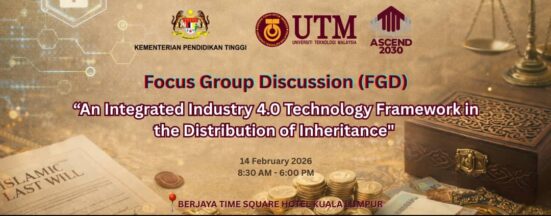
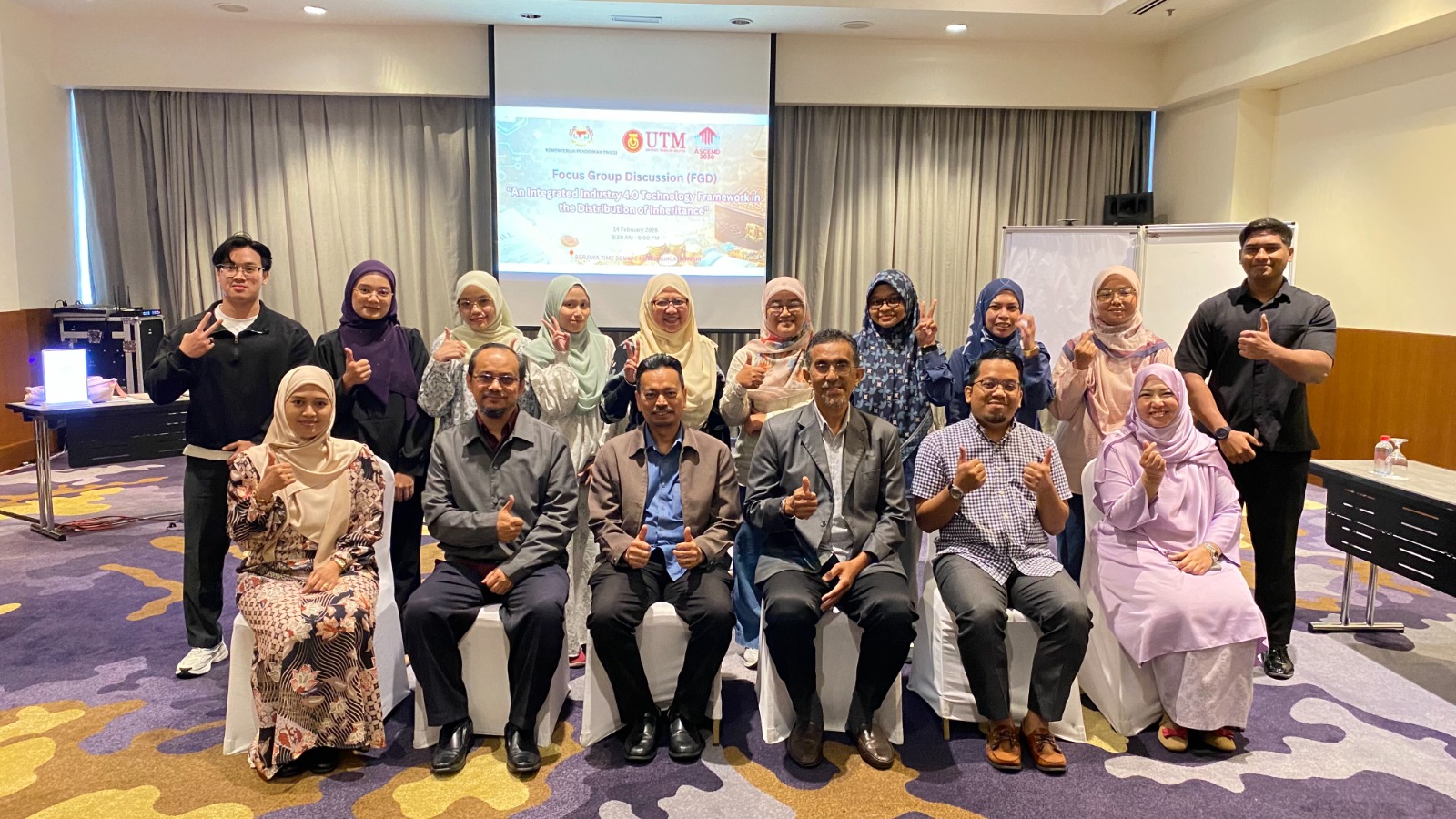
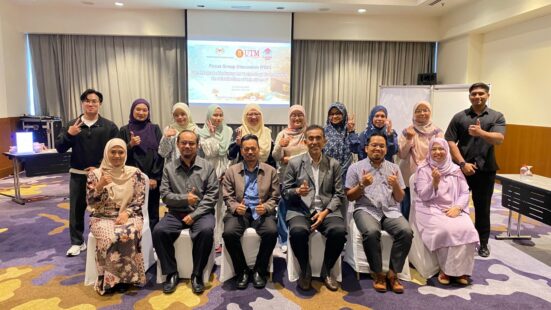
KUALA LUMPUR, 14 Feb – A Focus Group Discussion (FGD) under the Fundamental Research Grant Scheme (FRGS), funded by the Ministry of Higher Education (MOHE), was successfully convened by project leader Dr. Fatin Afiqah Md Azmi, bringing together key experts in estate administration to deliberate on current challenges and emerging solutions in estate distribution in Malaysia.
The session gathered representatives from major agencies and professional bodies, including the Department of the Director General of Lands and Mines (JKPTG), Amanah Raya Berhad (ARB), the Federal Territory Islamic Religious Council (MAIWP), the Malaysian Bar, and private sector practitioners. Among those present were aharuddin Aziz, Nurul Afzan Idris, Nurul Aida Ramli, and Roharyati Zulkefli from the Department of the Director General of Lands and Mines (JKPTG); Mohamad Fadzil Mohamad from Amanah Raya Berhad (ARB); Ir. Abd. Karim Mohamed @ Ismail from the Federal Territory Islamic Religious Council (MAIWP); Zemilah Mohd Noor from the Malaysian Bar; Irda Rina Kamarulbahrain from TSI Wealth Planner; Ahmad Termizi Abdullah from Termizi & Co.; and Dr. Safina Mohd Ali, the co-researcher and previously from Quantum Virtuality Sdn. Bhd.
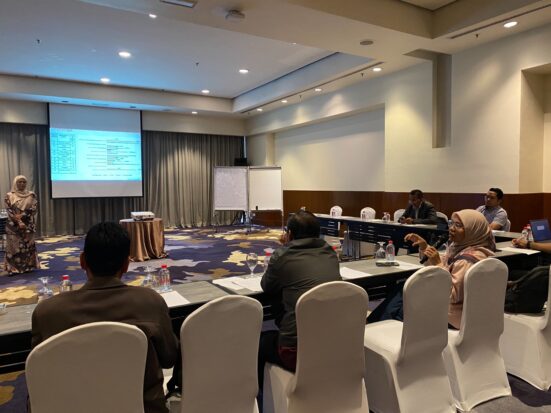
The first session focused on introductory remarks, the key problem statements surrounding estate distribution, and findings from interviews previously conducted with JKPTG offices across the states, with the exception of Pulau Pinang, Perak, and Terengganu. These matters were presented by the project leader, Dr. Fatin Afiqah Md Azmi. During the discussion, Baharuddin Aziz explained that MyLand Series 1.0 was launched together with the relevant legislative amendments on 15 July 2024. He noted that estate applications are now fully submitted online from the initial stage, with all supporting documents uploaded directly into the MyLand system. However, during the heirs’ hearing, applicants are still required to produce the original hard copy of Form A, signed before a Commissioner for Oaths. If the form is not submitted at that stage, the application may be rejected. In practice, this means that heirs only need to be physically present once, namely during the hearing, while bringing all completed forms.
Baharuddin further explained that JKPTG is planning the development of MyLand 2.0, particularly to improve the type of information that needs to be filled in during the application process. One of the practical difficulties identified by JKPTG concerns cases where the deceased’s parents had passed away many years earlier, making documents such as death certificates difficult to obtain. In such situations, there may be room to relax certain documentary requirements so that the application process can continue. Even so, another issue arises when heirs are unable to determine which parent passed away first, as this sequence must still be established before the officer handling the matter.
Baharuddin also referred to the newly introduced Section 8C on the appointment of a temporary administrator, which is intended to facilitate access to information on the deceased’s movable property. Under Rule 6C(1), the petitioner, applicant, or any beneficiary may, at any time before the distribution order is issued, apply in writing or in any other manner determined by the Estate Distribution Officer for letters of administration pendente lite. Under Rule 6C(2), the order is granted in Form FA, while Rule 6C(3) provides that it is valid for three months only. This authority is particularly relevant in cases where information such as bank statements cannot otherwise be obtained.
For movable property valued below RM600,000, JKPTG applies a summary distribution approach in order to speed up the process. In this regard, the new Section 8B introduces a simplified mechanism specifically for movable assets. In general, it allows a petitioner or applicant to apply for a summary distribution order where the estate consists only of movable property and does not exceed RM600,000 in total value, including in cases involving subsequently discovered movable assets that were not declared earlier.
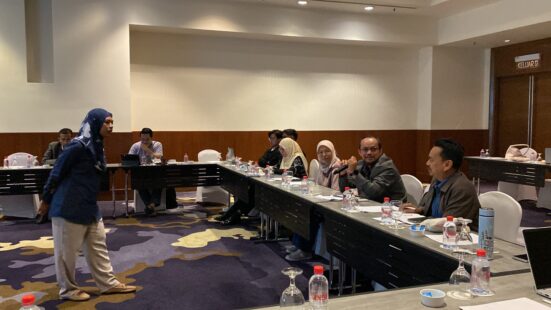
She further explained that MyLand comprises 18 modules and 532 functions. In July 2024, after the relevant estate regulations and statutory approvals had been obtained, the system officially went live. In 2025, JKPTG also received a new mandate from the Prime Minister to integrate MyLand with lands owned by statutory bodies and government-linked companies in Malaysia. As of January 2026, MyLand had more than 385,497 registered user accounts, of which 98 per cent were public users. A mobile application is also available as a lighter version of the system. In addition, all process-related payments are now made fully online through MyLand.
The third session was held to obtain expert validation of the framework presented. In relation to integration with E-Tanah for land information, the participants observed that such integration would involve a high cost. Since E-Tanah falls within the jurisdiction of the individual states, the states would also expect corresponding benefits from any arrangement. In addition, implementation would require the agreement of each state because land regulations differ from one state to another. Payment structures are likewise determined by the respective states. The data required by JKPTG are subject to different charges imposed by each state, and these charges form part of state revenue. This was identified as one of the main barriers to implementation.
Overall, all expert participants agreed that the proposed framework is conceptually sound and highly relevant. Nevertheless, they also emphasised that major constraints remain, particularly in terms of implementation cost and the difficulty of securing cooperation from all the agencies involved.
All respondents (100%) expressed support for further development and pilot implementation of the framework.
By Syahirah Balqis Anuar & Fatin Afiqah Md Azmi
