



📝 Summary
A UTM PhD student, Tai Ji Zhang, spent 61 days at Japan’s National Institute for Materials Science (NIMS) as a recipient of the NIMS Internship Program, where he learned to make and measure nanomaterials. During his stay, he gained hands-on experience with various instruments and techniques, including crystal growth, soft-chemical exfoliation, and nanoscale characterization. The internship has significantly enhanced his research skills and capabilities, which he will apply to his PhD research on photothermal carbon dioxide methanation.
For 61 days this autumn, a doctoral candidate from the Faculty of Chemical and Energy Engineering (FKT), Universiti Teknologi Malaysia (UTM), swapped his laboratory in Johor Bahru for a bench in Tsukuba Science City, Japan, as a recipient of the NIMS Internship Program. There, at one of the world’s leading centres for nanomaterials research, he learned to make and measure materials he had known only from journal papers.
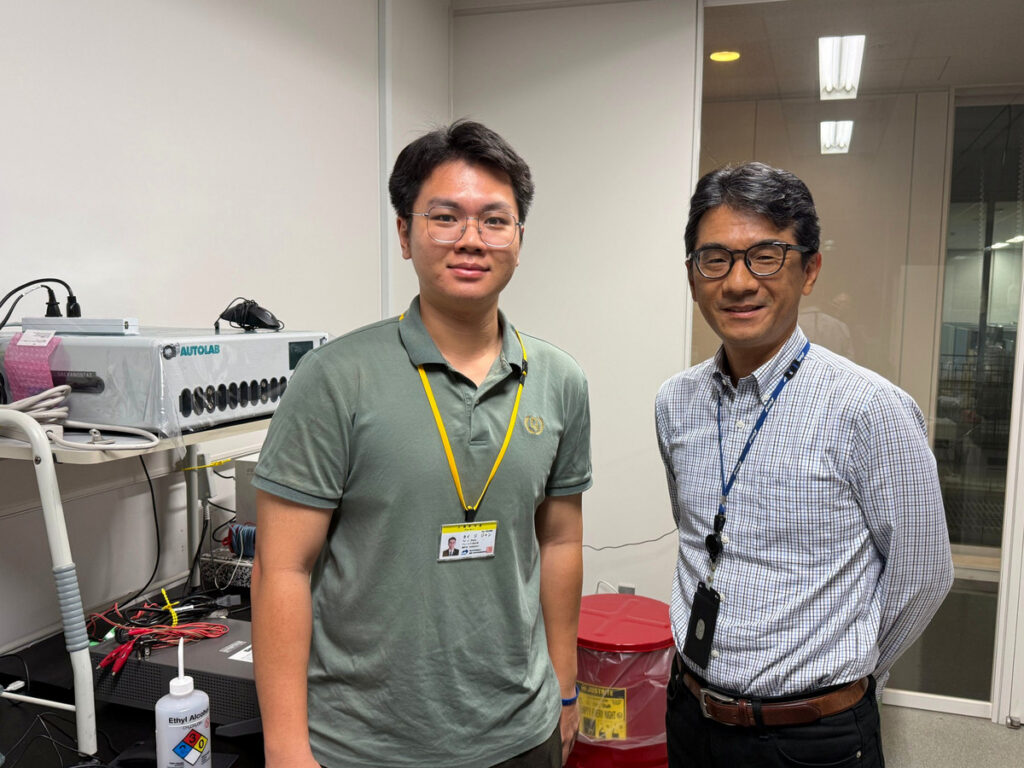
Tai Ji Zhang, a PhD candidate in the Chemical Reaction Engineering Group (CREG), received his Notice of Award from the President of the National Institute for Materials Science (NIMS), Prof. Dr. Kazuhiro Hono. From 31 August to 30 October 2026, he was hosted by the Principal Researcher in the Soft Chemistry Group at the Research Center for Materials Nanoarchitectonics (MANA), Prof. Dr. Nobuyuki Sakai.
Why NIMS matters
MANA was established in 2007 under Japan’s World Premier International Research Center Initiative (WPI) and is among the institutions that shaped the field Ji Zhang works in: two-dimensional (2D) nanosheets, sheets of material about one nanometre thick, roughly one hundred-thousandth the width of a human hair. The centre has published more than 10,000 papers since 2007, and its research is cited at close to twice the global average for its fields. English is the working language throughout, extending even to the administrative offices.
The Soft Chemistry Group is known internationally for ‘soft chemistry’: mild, solution-based reactions that separate layered crystals into individual sheets and assemble those sheets into ordered films.
From crystal to nanosheet
His own project traced the full soft-chemistry route. Layered manganese oxide crystals were grown in a high-temperature furnace, then treated in solution to exchange the ions between their layers until the stack could be separated, or exfoliated, into single sheets. These were finally spin-coated onto flat substrates as ultrathin films.
Under Prof. Dr. Sakai’s supervision, he carried out every stage himself, operating the X-ray diffractometer (XRD) to check crystal structure, the scanning electron microscope (SEM) to examine crystal shape and the atomic force microscope (AFM) to measure sheet thickness. Instead of submitting samples and waiting for a report, he could check a result within hours and plan the next experiment the same day.
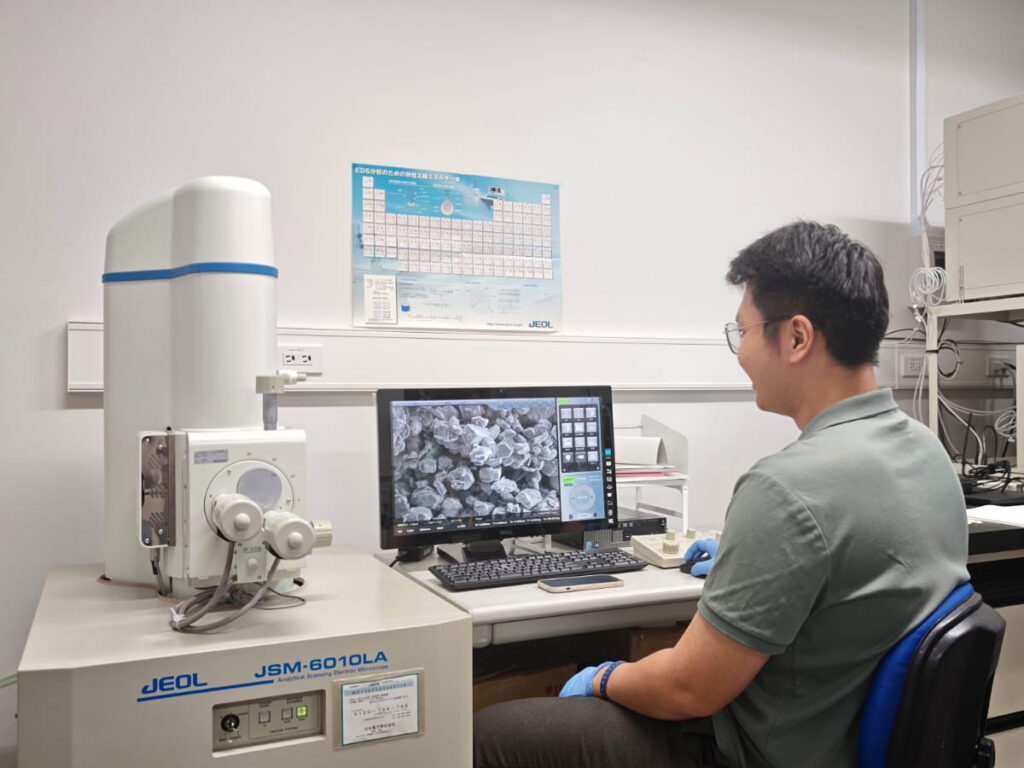
“At NIMS I did not just learn the result, I learned the instrument,” said Ji Zhang. “When you prepare the sample, run the measurement and process the data yourself, you start to understand why an experiment failed instead of only knowing that it did.”
Learning from setbacks
Not every experiment went to plan. A single crystal-growth run could take days, so one failed batch might cost most of a week. Some nanosheet suspensions clumped back together even after repeated solvent exchanges, and he set one preparation route aside to concentrate on those that worked. Experiments that consumed weeks had to be planned against the nine-week internship schedule.
Working days ran from 9.00 a.m. to 6.00 p.m., Monday to Friday, and progress was reported to the group at regular meetings conducted entirely in English. These meetings exposed him to his colleagues’ projects, showing how similar materials are used beyond his own field.
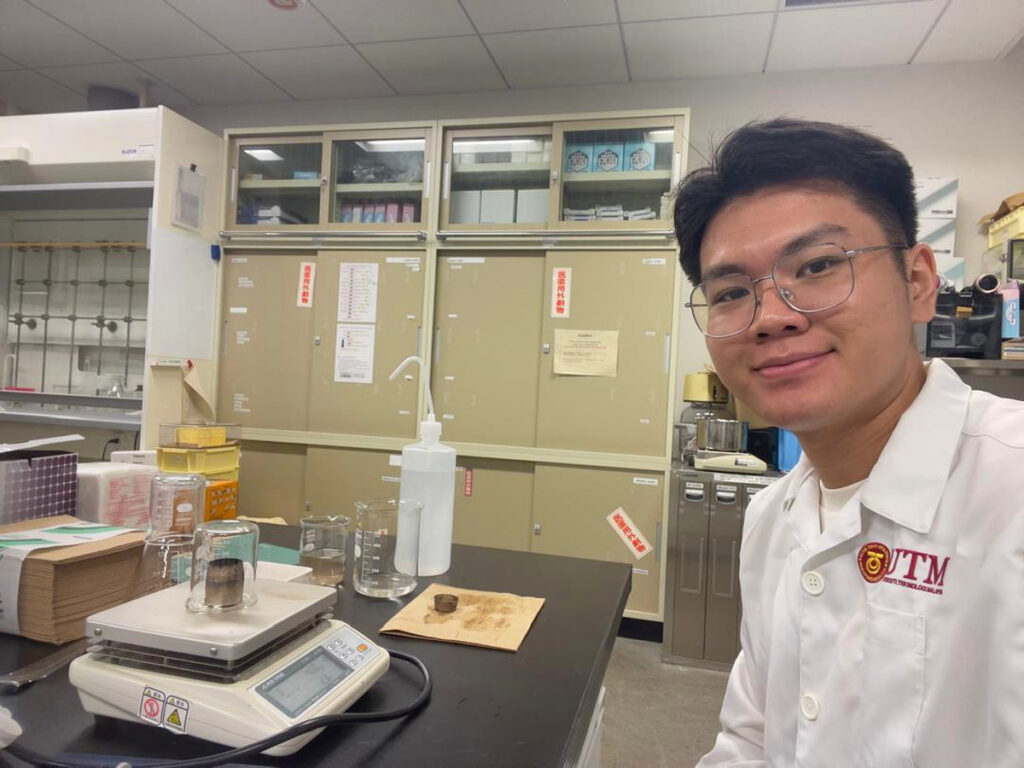
The Soft Chemistry Group itself proved to be part of the education. Its members came from Japan, France, the United States, Australia, China, Taiwan, India, Indonesia and Malaysia, and a question raised over a shared bench or a lunch table often turned into the answer to that morning’s failed synthesis.
Laboratory discipline was another lesson. Even chemical waste was filtered before disposal, reflecting the care Japanese laboratories take over safety and the environment.
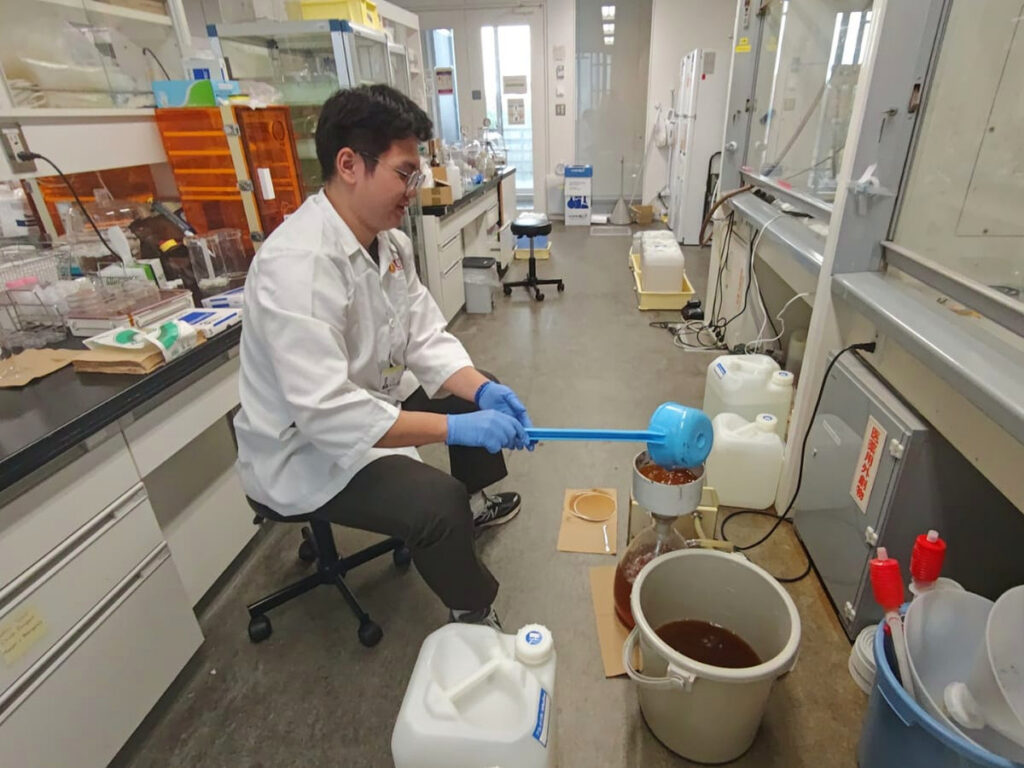
“The hardest part was learning to ask,” he said. “Everyone there is willing to teach you, but nobody can read your mind. Once I started asking properly, the two months opened up.”
What he brings home
Ji Zhang returns with practical command of crystal growth, soft-chemical exfoliation and nanoscale characterisation, together with less visible skills: planning experiments against a deadline, troubleshooting quickly and presenting unfinished work to an international audience.
These skills feed directly into his doctoral research on photothermal carbon dioxide (CO₂) methanation, which uses light and heat to convert CO₂ into methane fuel. His thesis combines 2D layered double hydroxides (LDHs) with metal-organic frameworks (MOFs), catalysts whose performance depends heavily on the interface where the two materials meet. Knowing how to separate layered materials into single sheets, and to confirm their thickness and structure, gives him finer control over those interfaces.
The benefit extends beyond one thesis. The techniques can be shared with fellow researchers in CREG, adding to FKT’s capability in 2D materials synthesis, while the relationships he built in Tsukuba give the faculty a personal connection to one of Japan’s leading research institutes.
Ji Zhang credited his UTM supervisor, Assoc. Prof. Dr. Hajar Alias, whose recommendation supported the application and whose emphasis on experimental independence, long before he left for Japan, allowed him to work unassisted at NIMS from the first week.
He also thanked FKT and UTM International (UTMi) for facilitating the attachment so that it strengthened, rather than interrupted, his doctoral programme.
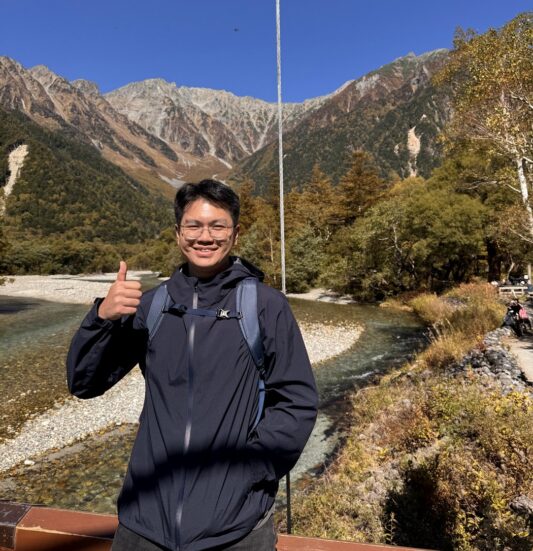
Sixty-one days is a short time in a doctoral programme, but long enough to change how a researcher works. Ji Zhang, who expects to complete his PhD in 2027, returns with techniques, instincts and contacts that no literature review could have supplied, convinced that a research career is best built alongside those who built the field.
