





📝 Summary
Malaysia’s efforts to protect its water resources through policies and regulations have been hindered by recurring river contamination, highlighting the need for a shift from reactive control to preventive and technology-driven management. The country’s conventional pollution management approaches are limited in detecting and responding to sudden pollution threats, and wastewater treatment must evolve to address complex contaminants. A more integrated and technologically capable approach is necessary to prevent pollution at source and ensure the sustainability of Malaysia’s water resources.
Malaysia has invested considerably in protecting water resources through policies, regulations, enforcement and public awareness. Yet recurring river contamination raises concerns about the effectiveness of these interventions and prompts the inevitable question: “Are we failing to turn policies into action?”
The 2019 Sungai Kim Kim tragedy demonstrated the severe consequences of irresponsible chemical waste disposal. Thousands were affected, hundreds of schools closed, and substantial resources were required for emergency response and long-term river rehabilitation, which continues today. In October 2026, the river was again reported to have turned milky white, prompting a Department of Environment (DOE) investigation. Preliminary findings suggested a possible one-off waste discharge, but its source and those responsible remained to be identified. These incidents highlight river systems’ vulnerability to sudden pollution threats.
The issue is not simply whether Malaysia has sufficient environmental laws and treatment facilities, but whether environmental management is preventive, technologically capable and integrated enough to detect and respond to recurring pollution.
Some limitations of conventional pollution management
Malaysia’s frameworks, including the National Water Resources Policy, Integrated Water Resources Management (IWRM), Integrated River Basin Management (IRBM) and Water Sector Transformation 2040, provide a foundation for sustainable water management.
Conventional management relies on periodic water sampling and end-of-pipe treatment, and is often reactive. Illegal discharges may enter rivers and disappear or become diluted before sampling can be carried out, making sources and evidence difficult to establish. Although essential, these approaches may not adequately address sudden industrial discharges, complex chemicals and multiple pollution sources across a river basin.
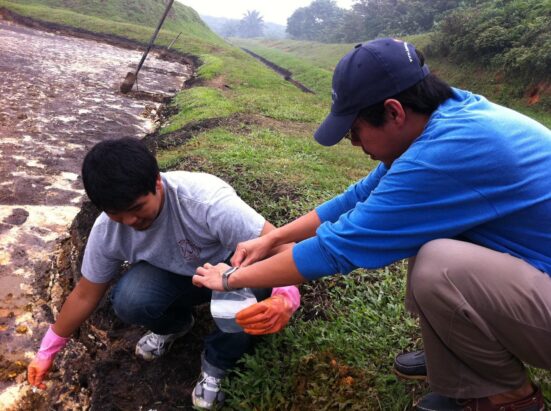
Sampling of oil-based slurry by researchers for further studies in the laboratory
Environmental sensing, artificial intelligence, remote monitoring and data analytics could improve pollution detection. Strategically located stations along vulnerable rivers could continuously measure pH, dissolved oxygen, electrical conductivity, turbidity, temperature and oxidation–reduction potential, triggering alerts when readings deviate from established baselines. Microbial biosensors and other biological monitoring approaches could complement physicochemical measurements by indicating pollutants’ biological effects, even at very low concentrations. This would enable earlier warnings and help authorities prioritise inspections and sampling.
Wastewater treatment must evolve beyond conventional technologies
Industrial wastewater varies, containing organic pollutants, heavy metals, toxic chemicals and persistent contaminants. Industries should adopt treatment technologies suited to wastewater characteristics, pollutant concentrations and environmental risks, rather than employing off-the-shelf single-treatment technologies that, more often than not, are less effective at removing pollutants to permissible discharge levels. Biological treatment is important for biodegradable organics, while advanced oxidation, membranes, adsorption, ion exchange and other physicochemical methods are essential tools to address complex contaminants. Bacteria and fungi can degrade, transform or immobilise selected pollutants. Cleaner production, wastewater minimisation and resource recovery should also be intensified, reducing pollutant generation before wastewater reaches treatment systems.
Stronger enforcement requires stronger scientific and technological support
Malaysia has legal provisions to punish environmental offenders. The Environmental Quality Act 1974, including its 2024 amendments, provides substantial penalties. However, legislation alone cannot guarantee protection. Enforcement requires pollution detection, source identification, assessment of the offence and scientifically justifiable evidence. Real-time monitoring, chemical fingerprinting, pollutant tracing, environmental forensics and reliable laboratory analysis can strengthen investigations and prosecutions. Technical assistance and incentives should also help industries upgrade treatment, adopt cleaner production and improve environmental performance.
Universities and research institutions must become part of the solution
Local technological capability is vital. Malaysia should not rely entirely on imported technologies when its research institutions and industries can develop solutions suited to national environmental and industrial conditions. Malaysia has expertise in environmental engineering and biotechnology, chemical engineering, materials science and related disciplines. The challenge was never to develop technologies for wastewater treatment, heavy metal removal, bioremediation, biosensing and membrane separation. Rather, it lies in finding the best way to translate research into practical solutions that industries and regulators can immediately adopt. Research funding must remain a priority in annual budgets, with more support directed towards advancing promising technologies from laboratory experiments to pilot testing, demonstration and industrial implementation. Technology readiness, feasibility, scalability, operational reliability and commercial viability must guide this progression.
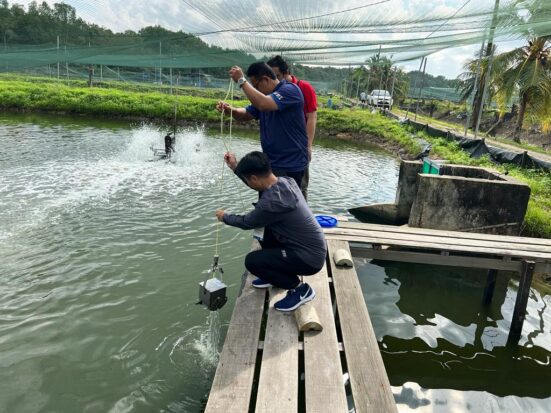
Sampling of sludge from inland aquaculture ponds to isolate useful microorganisms for water treatment processes (continuous funding for local R&D activities is essential to reduce dependence on foreign technologies)
Environmental responsibility is everyone’s business
Public awareness and education matter, as awareness alone does not always translate into behavioural change; littering, indiscriminate disposal and untreated wastewater discharges continue. Some sections of the public may not realise that waste entering roadside drains ultimately reaches rivers and other water bodies, directly affecting the water treatment–supply–usage cycle.
Education should provide the platform to foster a culture of shared responsibility for protecting water resources. Communities can contribute through citizen science programmes, river monitoring and reporting suspicious discharges. However, this must not shift responsibility from industries and authorities: citizens can identify problems, but waste generators and enforcement agencies remain responsible for preventing industrial pollution incidents.
A shift towards preventive and intelligent environmental management
Malaysia’s water pollution challenge requires more than policies, campaigns or treatment facilities. It demands a shift from reactive control to preventive, integrated and technology-driven management, combining governance and enforcement with smart monitoring, advanced treatment, environmental biotechnology, pollution prevention and resource recovery.
The sustainability of our water resources should not be measured only by the number of treatment plants installed or policies introduced, but also by our ability to prevent pollution at source, apply the most appropriate and feasible treatment and recover valuable resources. Malaysia should seriously consider moving from conventional management of polluted rivers to pollution prevention through technology-driven measures, coupled with a more structured accountability approach in which every citizen recognises that they are part of the whole ecosystem protecting our national water security.
Prepared by:
ZAINUL AKMAR ZAKARIA
Professor in Environmental Technology, Faculty of Chemical and Energy Engineering, UTM
Member, WEHAB++ Environment Committee, Academy of Sciences Malaysia
