

📝 Summary
The “Tippy Wira Hijau” project, led by Universiti Teknologi Malaysia, introduced sustainability education to over 750 children through a friendly tiger named Tippy and a web app. The project aims to teach young children about environmental care and the consequences of littering, with interactive activities and games. The project’s success has led to the establishment of a recycling centre at one participating preschool, demonstrating the impact of early environmental education.
JOHOR BAHRU, Nov 20 – What makes a recycling bin different from an ordinary rubbish bin? Most of the children asked during Universiti Teknologi Malaysia’s (UTM) sustainability education school visits thought the two were the same. When the team invited them to think again, one preschooler surprised project leader D.r Tee Ying Qin by explaining the difference correctly. Some of the things we throw away, including paper and certain plastic bottles, can be collected separately and made into something new.
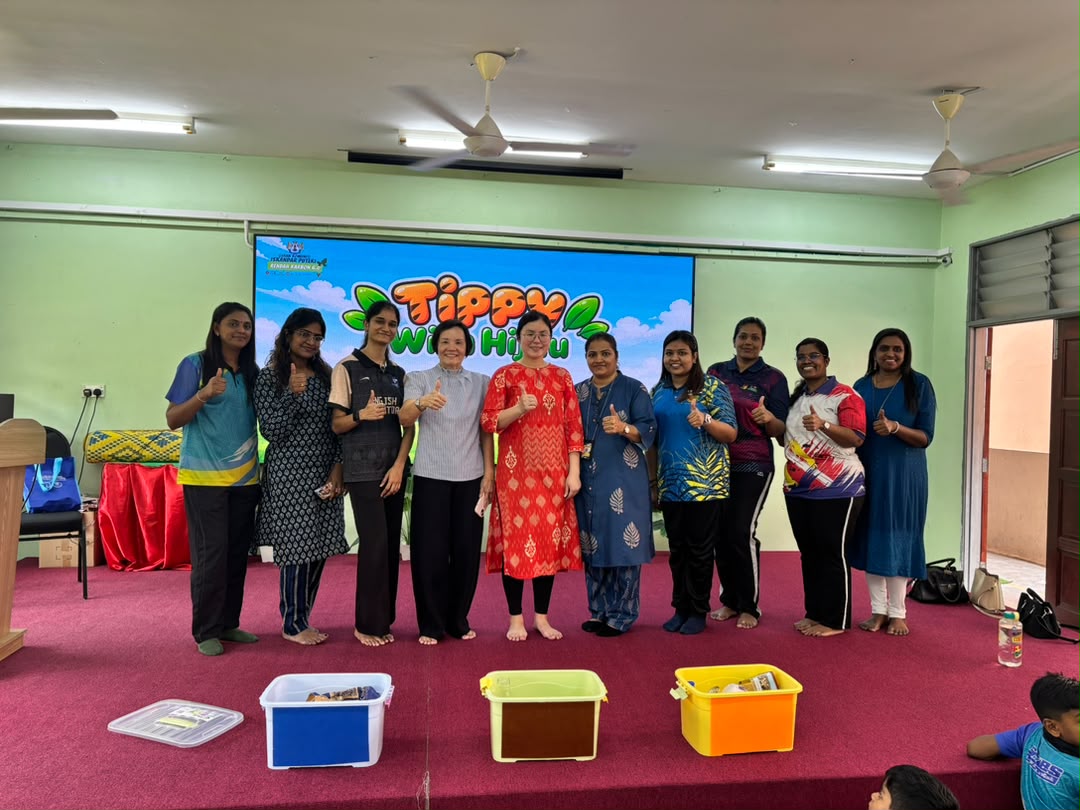
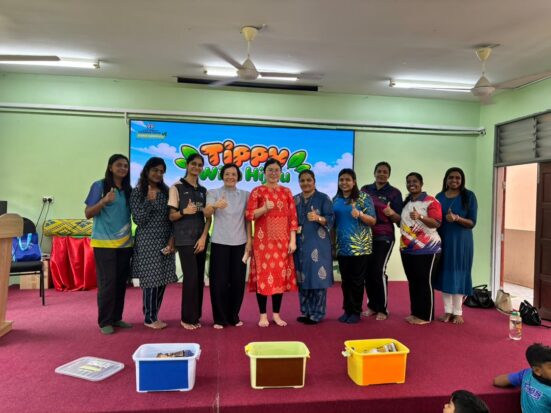
The conversation was part of Tippy Wira Hijau, a UTM project that introduces young children to sustainability education through the adventures of a friendly tiger named Tippy. In October and November 2026, the team introduced Tippy to approximately 762 children across six preschool and primary school sites under Iskandar Puteri City Council (MBIP). Through Tippy, young children from Malay, Chinese and Indian communities across different school settings explored why caring for the environment matters and how they can play a part.
Where does rubbish go once the truck takes it away? For a child, that may be the last time a discarded item is visible. At a landfill, each load leaves less room for the next. A polystyrene food container left beside a drain may take another route. Rain can carry it into a river and eventually the sea, where it can break into pieces that fish and turtles may mistake for food.
In the project’s web app, children aged four to eight follow Tippy, Mia and Adam through their neighbourhood after rain begins to fall. They meet Little Drain and discover why the water starts to rise when rubbish blocks its path. Children can also drag droplets into Cloudy the cloud, plant trees and grass in a virtual neighbourhood, and join in the song Rain, Rain, Flow Away.
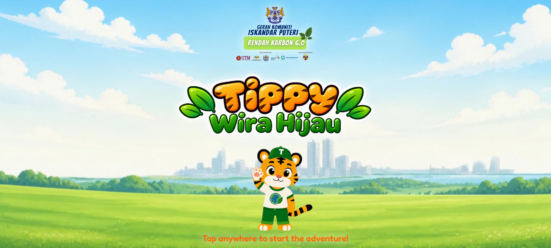
Available in Bahasa Melayu, English and Mandarin, the app includes six animated scenes, two interactive activities, three games, a quiz and a song. A teacher can pause a scene to hear where children think the water will go next. At one participating preschool, educators reported setting up a recycling centre about a month after the programme. There, a child holding a bottle can return to the question that started the school visit and decide which bin to use, with a teacher or friend alongside them.
For the team, environmental awareness begins with young children and the places they already know. Taking care of those places today matters as communities in Malaysia and around the world prepare for future floods and other climate-related disasters. A conversation about a blocked drain gives children a way into that larger story through something they might notice on their way to school.
Dr. Tee of UTM’s Faculty of Educational Sciences and Technology (FEST) leads the 10-member team. MBIP awarded the project RM15,000 under the Iskandar Puteri Low-Carbon Community Grant 6.0 (IPRK 6.0). Tippy’s team brings together expertise in early childhood education, educational psychology and teaching methods, alongside experience in educational technology, primary school teaching and software development. Together, the team created an interactive web app that helps young children explore rain, flooding and ways to care for nature.
After one session, a preschooler approached Dr Tee with a pencil and a small piece of paper. She wanted to know how to spell “Tippy” so she could write it down and remember the name of the app. For Dr Tee, this is among the reasons the team keeps going for a better and more sustainable future for all.
