





📝 Summary
Postgraduate students from the Malaysia-Japan International Institute of Technology (MJIIT) conducted an interactive STEM learning programme for over 40 pupils from Sekolah Kebangsaan Subang Bestari 2, Shah Alam. The programme featured four interactive activities, including Virtual Reality, Digital Microscope, Robot Soccer, and AI Motion Playground, which provided hands-on exposure to emerging technologies. The initiative aimed to promote STEM education and provide postgraduate students with practical teaching experience.
SHAH ALAM, Nov 12 –
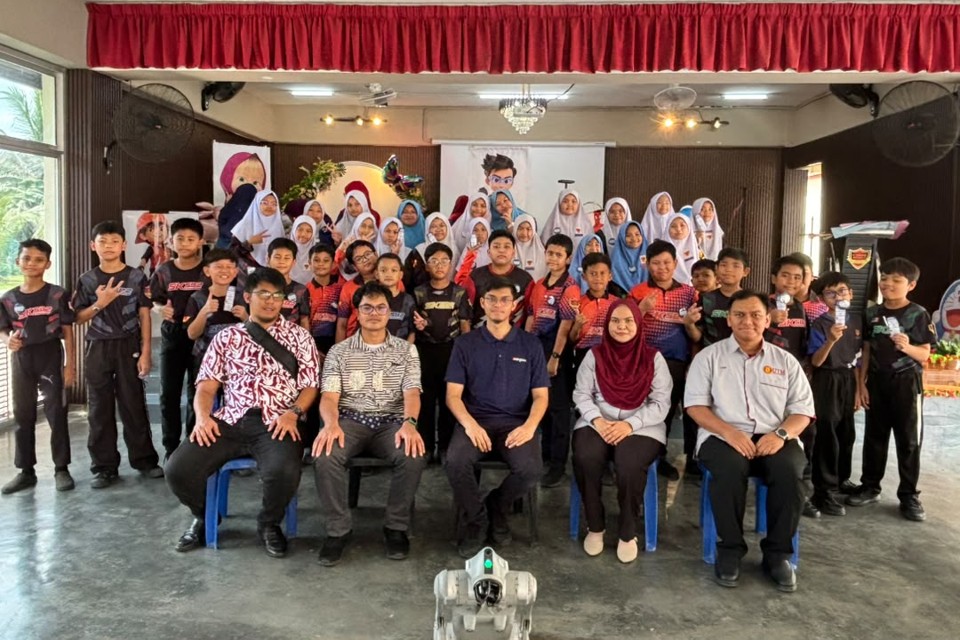
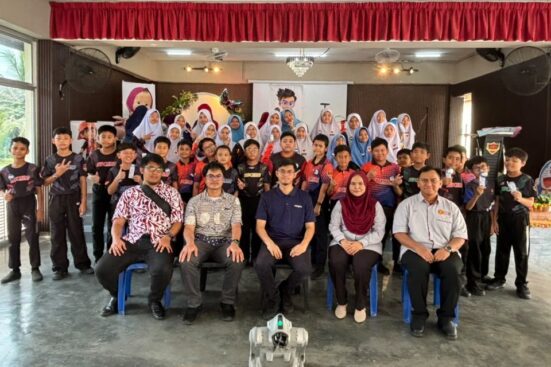
More than 40 pupils from Sekolah Kebangsaan (SK) Subang Bestari 2, Shah Alam, took part in an interactive Science, Technology, Engineering and Mathematics (STEM) learning programme conducted by postgraduate students from the Malaysia-Japan International Institute of Technology (MJIIT), Universiti Teknologi Malaysia (UTM).
Held on 12 November 2026, the programme was organised as part of the MRST2953 – Practical Teaching Experience course and involved two Master of Science (Engineering Education) students, Muhammad Farhan Ahmad Fauzi and Hamirul Othman. It provided an opportunity for the pupils to learn about emerging technologies while enabling the students to apply their teaching and communication skills.
The programme was conducted in collaboration with Exploria Malaysia, a Kuantan-based educational technology company specialising in interactive STEM learning experiences, including robotics, science and digital technologies. It was coordinated by MJIIT lecturers Dr Nurul Zainab Along and Dr Muhammad Athif Mat Zin, with support from Azam and his team from Exploria Malaysia.
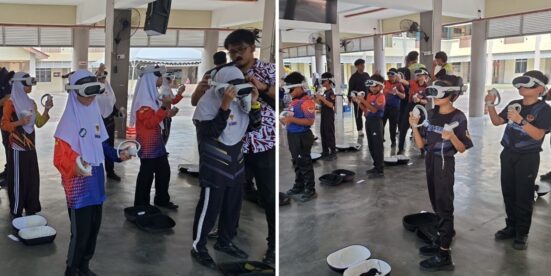
Four interactive activities were featured: Virtual Reality (VR), Digital Microscope, Robot Soccer and AI Motion Playground. Through these activities, pupils gained hands-on exposure to technologies and their potential applications in learning.
The VR activity introduced pupils to immersive three-dimensional and 360-degree digital environments, demonstrating how virtual simulations can support learning about distant locations, space exploration and historical events. The Digital Microscope activity allowed pupils to develop their skills in scientific observation and understand how magnification reveals small objects and structures that cannot be easily seen with the naked eye.
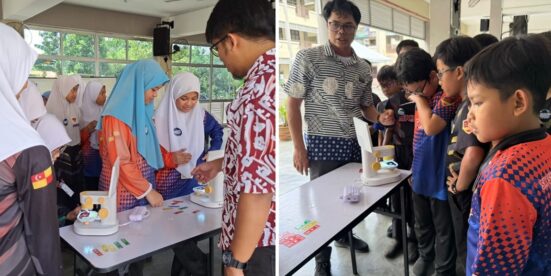
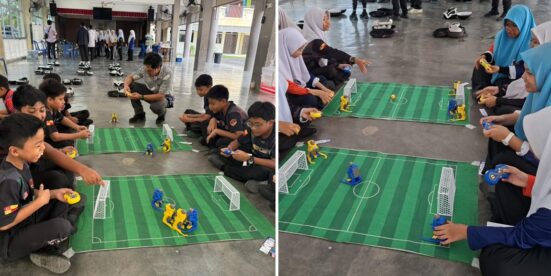
Robot Soccer introduced basic robotics and programming concepts by demonstrating how coding instructions control robot movements. The activity also linked practical robotics applications with concepts in the Design and Technology (Reka Bentuk dan Teknologi, RBT) curriculum.
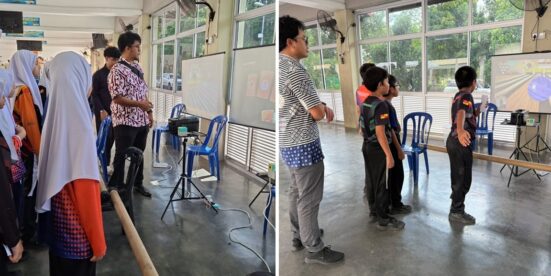
Meanwhile, the AI Motion Playground activity introduced artificial intelligence (AI) and motion-tracking technology through the Nex Playground console. Pupils took part in a virtual bowling game, controlling their movements through camera-based body detection without using handheld controllers.
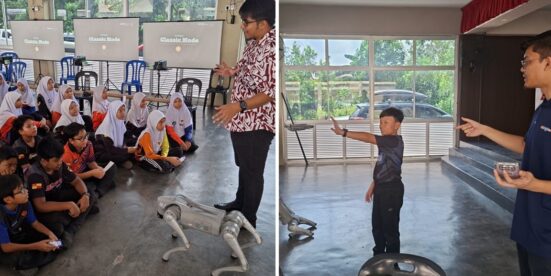
In addition to the four activities, pupils observed demonstrations involving a quadruped robot and a drone. The quadruped robot showcased four-legged robotic movement, while the drone demonstrated hand-motion-based flight control, exposing pupils to further applications of robotics and unmanned aerial technology.
Beyond the technology demonstrations, the programme gave postgraduate students practical opportunities to explain STEM concepts, facilitate hands-on activities and guide school pupils. They practised simplifying technical information, adapting their communication for younger learners and applying student-centred teaching strategies in a real educational setting.
The collaboration among MJIIT, Exploria Malaysia and SK Subang Bestari 2 highlighted the role of university–community partnerships in promoting STEM education while providing postgraduate students with practical teaching experience.
The initiative also reflects MJIIT’s commitment to experiential learning, innovative teaching practices and community engagement, while encouraging young learners to develop an interest in science and technology.
Co-author: Dr. Nurul Zainab Along
