


📝 Summary
Ng Chi Hern, a UTMKL student, gained international research experience at NUS and NTU through a 12-week internship, where he worked on developing hardware for quantum sensing. The experience provided him with hands-on exposure to precision scientific applications and helped him adapt to a demanding research environment. The internship also led to a continued collaboration between UTMKL and NTU, with Ng bringing the project back to UTMKL as his Final Year Project.
For undergraduate engineering students, stepping out of the traditional classroom and into a world-class research laboratory can be a transformative experience. For Ng Chi Hern, a third-year Electronic Systems Engineering student at Universiti Teknologi Malaysia (UTM) Kuala Lumpur, this opportunity came through a competitive 12-week international research internship in Singapore.
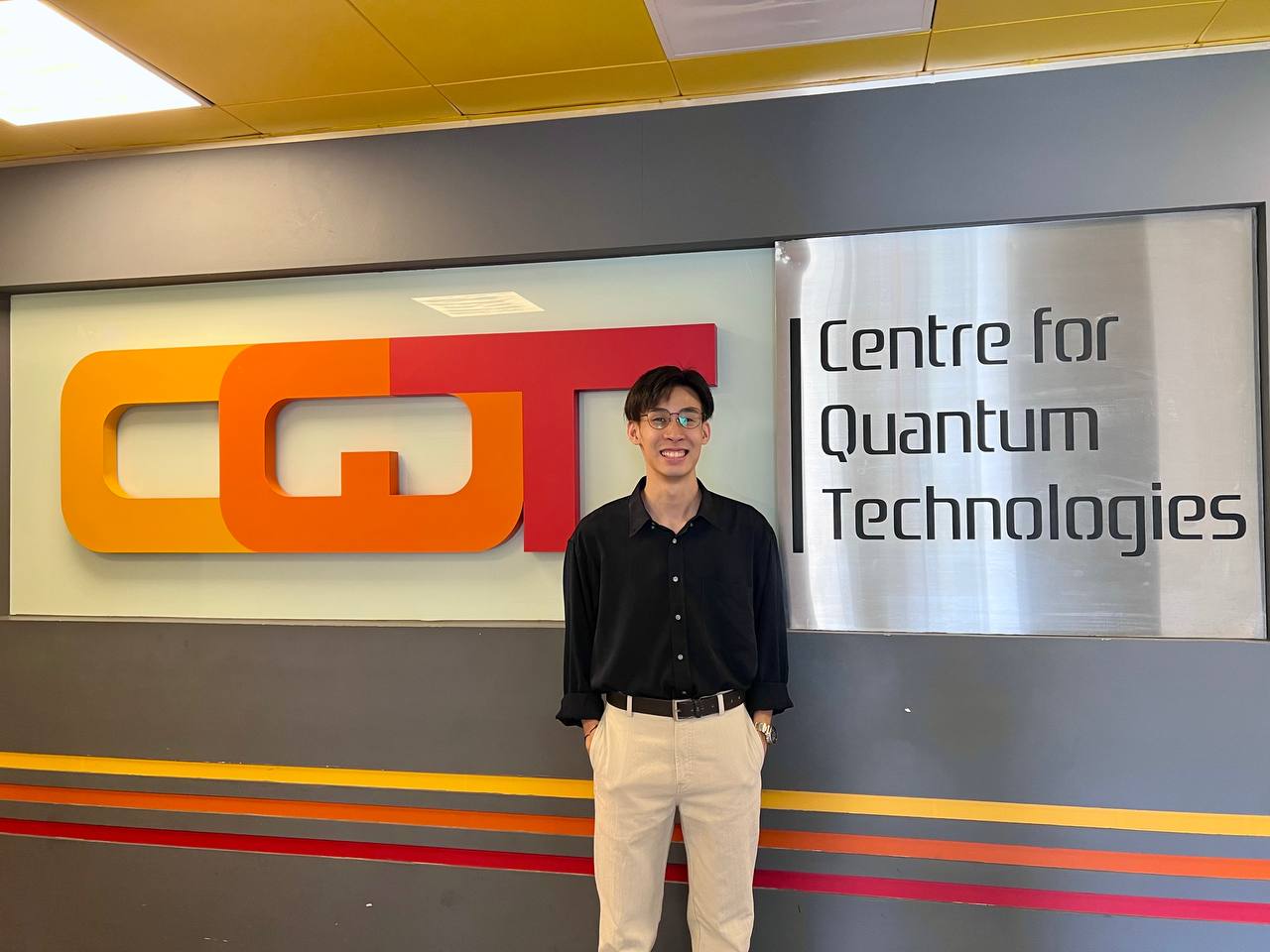
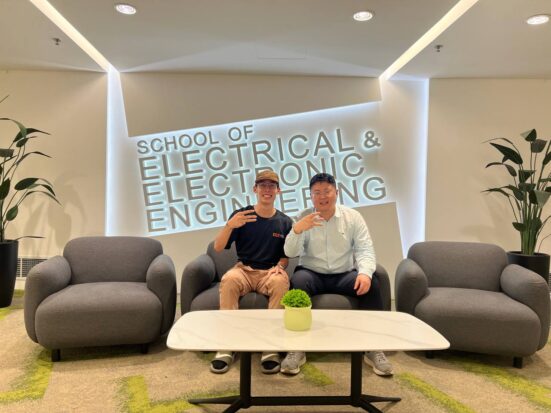
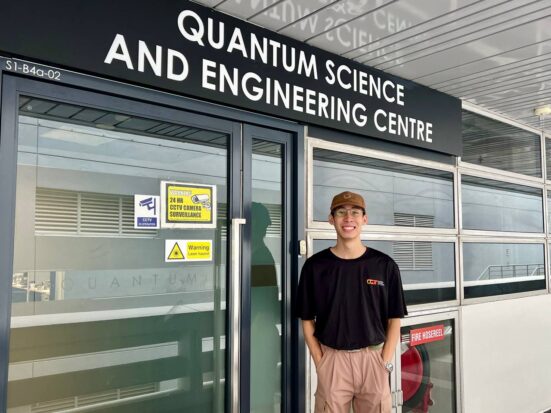
Administered and funded by the Centre for Quantum Technologies (CQT), a National Research Centre of Excellence headquartered at the National University of Singapore (NUS), the internship was hosted at the Quantum Science and Engineering Centre (QSec) within Nanyang Technological University (NTU). Under the mentorship of Prof. Gao Weibo, Principal Investigator at CQT, Chair of the School of Electrical and Electronic Engineering, and Director of QSec, Ng gained first-hand exposure to an international research environment.
Developing Hardware for Quantum Sensing
Ng’s research project focused on the hardware design of the detection and signal processing chain for an optically pumped quantum magnetometer (OPM). Unlike conventional superconducting quantum interference devices (SQUIDs), which require cryogenic cooling, OPM systems can operate at room temperature using alkali-metal vapour cells, such as rubidium, and laser-based interrogation.
These sensitive instruments have potential applications in non-invasive medical imaging, including the measurement of magnetic signals associated with brain activity. The project therefore introduced Ng to the challenges of developing electronic hardware for precision scientific applications.
His primary responsibility involved developing the schematic design and four-layer printed circuit board (PCB) layout for a precision analogue front-end (AFE) subsystem. This hardware serves as an interface between the quantum optics setup and laboratory signal processing equipment. The objective was to convert laser light detected by a photodiode into a measurable voltage while minimising electrical interference and other sources of noise that could affect sensitive quantum measurements.
Overcoming Technical Challenges
Moving from undergraduate coursework into a demanding research environment required Ng to adapt quickly. The complexities of atomic physics, optical signal conditioning and precision circuit design presented a steep learning curve. However, working alongside experienced researchers helped him recognise the importance of rigorous technical standards, independent learning and continuous improvement.
To address these challenges, Ng undertook self-directed study using technical literature and reference materials recommended by his mentors. He also participated in weekly laboratory group meetings, where discussions helped him understand the research requirements and address technical issues. Hands-on circuit calibration and bench testing allowed him to evaluate the design and refine its performance.
The experience provided practical exposure to the process of developing and testing specialised research hardware, extending his learning beyond conventional classroom exercises.
Cultural Exposure and International Networking
Beyond the laboratory, Ng embraced Singapore’s multicultural environment and public transport network. Walking and travelling around the island allowed him to explore its landmarks and experience a different urban lifestyle.
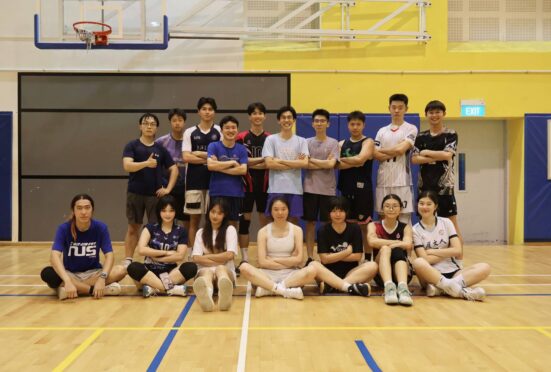
He also participated in campus sports activities, playing basketball at the NTU Sports and Recreation Centre and volleyball at the NUS Stephen Riady Centre. These activities enabled him to build friendships with people from Singapore, China, Italy, Spain, Ireland and other backgrounds.
Such interactions complemented his technical training by providing opportunities to develop interpersonal communication skills, appreciate different perspectives and broaden his international outlook.
Extending the Collaboration Beyond the Internship
The 12-week attachment culminated in the testing and evaluation of an initial hardware prototype. Following performance verification, Ng implemented design modifications to improve signal integrity. The final PCB design was subsequently submitted for fabrication, marking an important step in the project’s development.
More significantly, the project continued beyond the internship. Ng brought the hardware development work back to UTM Kuala Lumpur as his Final Year Project (FYP), establishing a collaborative FYP involving UTM Kuala Lumpur and QSec at NTU, with Prof. Gao Weibo serving as his co-supervisor.
This continuation provides an opportunity to sustain the research collaboration beyond the initial attachment and further develop the hardware towards its intended application. It also demonstrates how international research exposure can be integrated into undergraduate academic work, allowing students to build on laboratory experience through a longer-term project.
Ng’s experience highlights the value of international research placements in developing technical competence, independent learning and cross-cultural understanding among engineering students. Through the continued FYP collaboration, the internship also offers a pathway for further academic engagement between UTM Kuala Lumpur and NTU in the field of quantum engineering.
