



📝 Summary
MJIIT marks its 15th anniversary, evolving from a bridge between Malaysia and Japan into a regional nexus for talent, innovation, and collaboration. The institution aims to transform established partnerships into purposeful collaboration, industry-linked research, and solutions to regional challenges through its MJIIT 2.0 framework. This next chapter calls for learning, unlearning, and relearning, and seeks to create an active ecosystem where partners learn from each other and combine strengths to turn shared ambitions into measurable outcomes.
As the Malaysia-Japan International Institute of Technology (MJIIT) marks its 15th anniversary in 2026, it is evolving from a bridge between two nations into a regional nexus for talent, innovation and collaboration across ASEAN and beyond.
Established in 2010 under a Malaysia-Japan Government-to-Government initiative shaped by the Look East Policy, MJIIT has built a strong foundation in Japanese-oriented engineering education and bilateral cooperation. Today, MJIIT 2.0 marks its next chapter: transforming established partnerships into purposeful collaboration, industry-linked research and solutions to regional challenges.
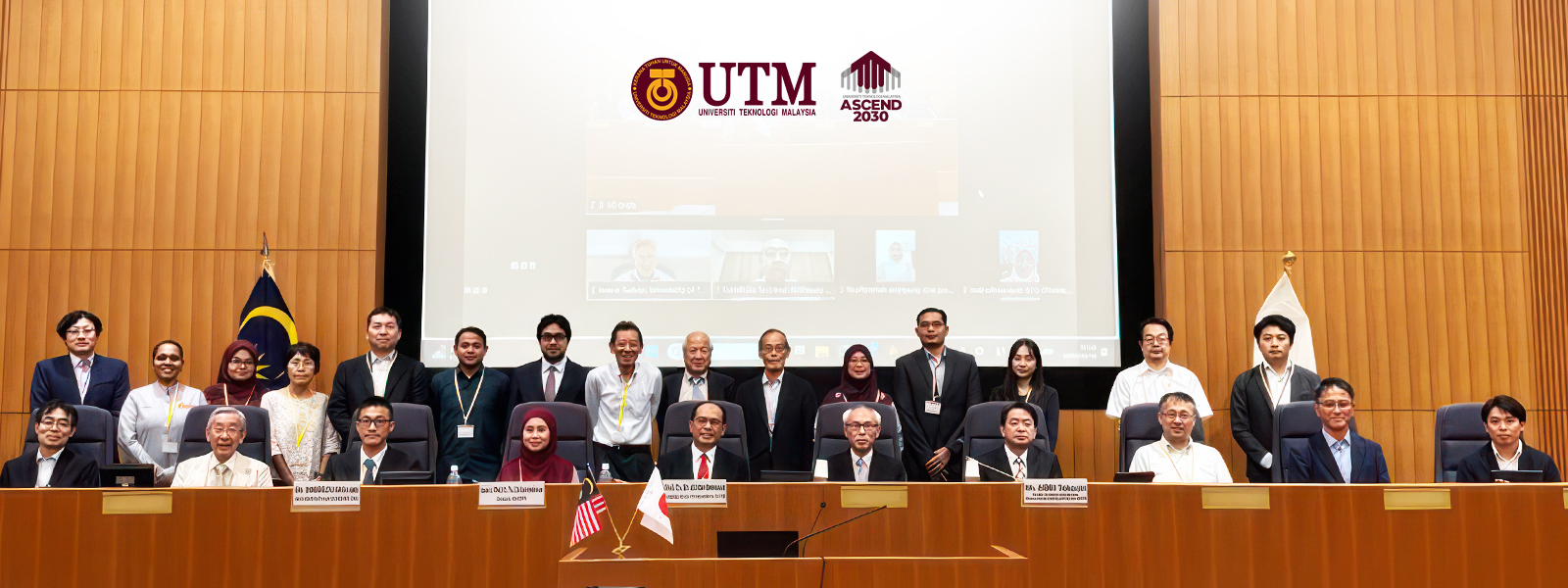
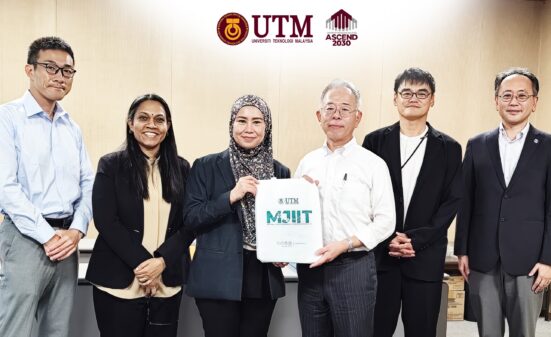
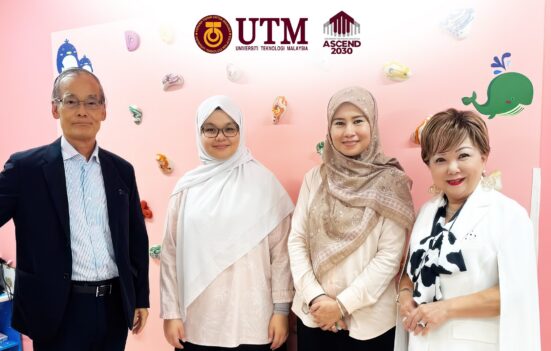
This ambition shaped a strategic mission to Japan led by UTM Deputy Vice-Chancellor (Research and Innovation), Prof. Dr. Ali Selamat, and MJIIT Dean, Assoc. Prof. Ir. Dr. Nurulakmar Abu Husain. The delegation engaged seven Japanese universities: Kyoto University, the University of Osaka, the University of Tokyo, the University of Tsukuba, the University of Electro-Communications, the Institute of Science Tokyo and Ryukoku University. It also engaged the Japan International Cooperation Agency (JICA), the Japan International Research Center for Agricultural Sciences (JIRCAS) and industry partner Fukushima Dolphin Group.
Discussions on artificial intelligence, energy transition, advanced materials and disaster resilience identified opportunities to turn shared expertise into real-world solutions under the MJIIT 2.0 framework. Through the Malaysia-Japan Linkage Office (MJL), MJIIT aims to connect Japanese academic and industrial strengths with Malaysian and ASEAN talent, accelerating collaboration and delivering impact beyond borders.
The Japanese University Consortium: from network to community
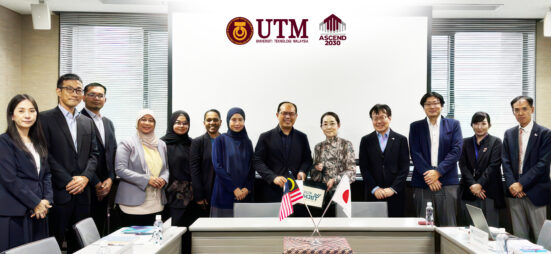
The growing network of partnerships is creating a platform for MJIIT to translate its regional ambitions into action. This was evident at the 28th Japanese University Consortium (JUC) Meeting at Japan’s Ministry of Foreign Affairs (MOFA), which brought together representatives from 33 Japanese university partners, diplomatic missions from both countries, JICA and Japan Chambers of Commerce and Industry. The gathering highlighted an ecosystem that extends beyond individual institutional agreements.
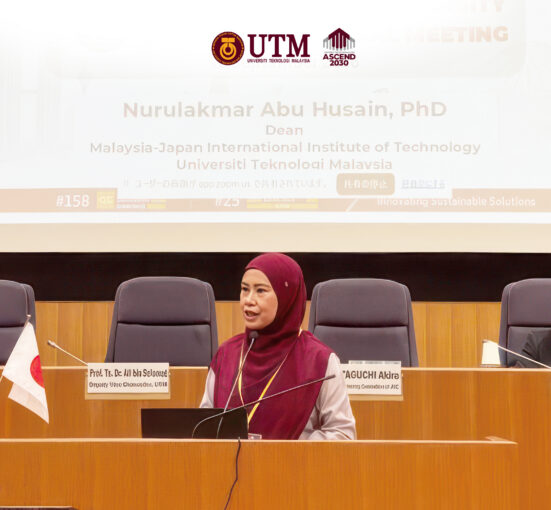
The network expanded with the inclusion of Chitose Institute of Science and Technology and Ryukoku University, creating new opportunities for collaboration. At the meeting, the MJIIT Dean presented the MJIIT 2.0 vision, underscoring a shift from maintaining partnerships to activating them through shared priorities, coordinated expertise and measurable outcomes.
MJIIT 2.0 represents the future of this network. Rather than viewing the JUC as a collection of institutional links, MJIIT aims to shape it into an active community for co-developing talent, advancing research and strengthening industry engagement.
Learning, unlearning and relearning
MJIIT@15 builds on the knowledge, trust and research excellence cultivated with longstanding Japanese partners, while embracing fresh perspectives from new partners to address regional needs and advance talent development, innovation and problem-solving.
This next chapter calls for learning, unlearning and relearning. To learn is to build on the knowledge, experience and trust established over the past 15 years while remaining open to new ideas and expertise. To unlearn is to challenge conventional approaches to internationalisation, moving beyond counting agreements, exchanges and activities towards evaluating their quality, relevance and lasting impact. To relearn is to redesign how MJIIT works with partners: co-developing education and training, connecting research with industry and societal needs, enabling two-way talent mobility, and creating opportunities to contribute to global challenges.
Through MJIIT 2.0, these principles can transform the international network into an active ecosystem where partners learn from one another, combine complementary strengths and turn shared ambitions into measurable outcomes. This direction also supports UTM’s aspirations under the Office of Strategy & Global Eminence to strengthen international standing, academic excellence, research capabilities and societal contributions.
Reflections and the next chapter
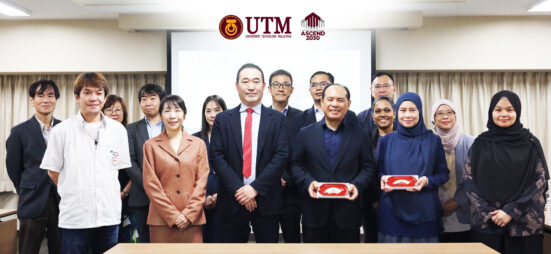
MJIIT@15 celebrates more than institutional achievements; it recognises the relationships, shared aspirations and collective efforts that have sustained this journey. We sincerely thank Japanese university partners, industry stakeholders, government agencies, development partners and individuals whose contributions have helped MJIIT grow from a bilateral educational initiative into an institution with an expanding regional outlook.
Looking ahead, success will be measured by the opportunities created: greater cross-border learning and talent mobility, research translated into practical applications, and graduates equipped to address shared regional challenges. As Malaysia and Japan approach the 70th anniversary of diplomatic relations in 2027, MJIIT looks forward to advancing initiatives that extend the impact of this longstanding relationship across ASEAN and beyond.
MJIIT’s ambition is clear: to transform its Malaysia-Japan legacy into a catalyst for regional progress by advancing innovation, developing future-ready talent and delivering solutions that improve lives. The next chapter is not simply about building bridges between nations, but creating possibilities that transcend borders, where knowledge serves humanity, progress benefits all and partners build a better world together.
Thank you for being an integral part of MJIIT’s journey. The progress we celebrate today is a shared achievement, and the future we envision is one we will continue to build together.
一木は大廈の材とならず
(Ichiboku wa taika no zai to narazu)
“A single tree cannot become the timber for a great building.”
This Japanese saying reminds us that great achievements are never built by one person or institution alone. Like a building that depends on many pieces of timber, lasting progress requires collective effort, shared responsibility and the contributions of many.
