


📝 Summary
A Malaysian student, Oo Cai Jun, gained international engineering experience through an industrial training program at the University of Tsukuba in Japan. During the four-month placement, Cai Jun worked in a laboratory focused on wastewater treatment and gained hands-on experience with advanced analytical equipment and techniques. The experience broadened her understanding of learning and deepened her character, teaching her the importance of remaining humble and open-minded in a global context.
To broaden international perspectives and strengthen professional skills in environmental engineering, Oo Cai Jun, a student from the Malaysia-Japan International Institute of Technology at Universiti Teknologi Malaysia (UTM MJIIT), undertook industrial training at the University of Tsukuba, Japan, from July to October 2026. Through Program NEXUS Y-Tec, the placement gave Cai Jun an opportunity to learn in an international research environment and gain exposure to approaches for addressing environmental challenges.
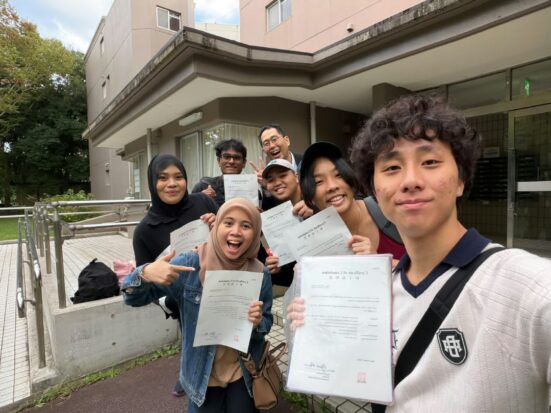
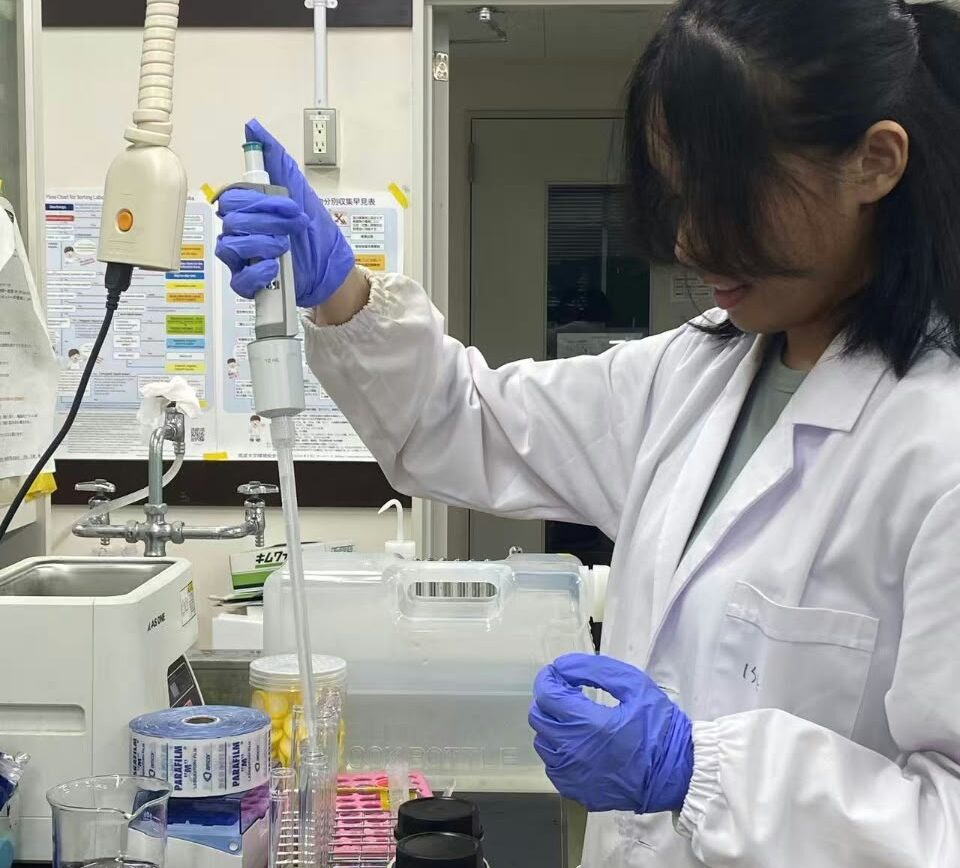
During the placement, Cai Jun was attached to the Laboratory of Bioresource Process Engineering (Water Group) under the supervision of Prof. Zhongfang Lei. The laboratory focuses on Algal-Bacterial Granular Sludge (ABGS), a bioresource technology aimed at wastewater treatment and reducing environmental burdens. Working in a laboratory with students from Vietnam, China, Thailand, and Indonesia also provided opportunities to communicate in English, exchange perspectives and experience different cultural backgrounds.
Cai Jun gained hands-on experience with advanced analytical equipment and techniques that may not be encountered regularly in classroom learning. She carried out water quality and biomass analyses, including Mixed Liquor Suspended Solids (MLSS) and Volatile Suspended Solids (MLVSS) measurements, chlorophyll pigment extraction and analysis of phosphorus distribution within granules. The training also allowed Cai Jun to design and conduct an experimental project titled “Impact of Wastewater Turbidity on Algal-bacterial Granular Sludge System.” Using kaolin clay to simulate wastewater turbidity, the project investigated how reduced light penetration and the clay’s adsorption properties could affect the ABGS system’s efficiency.
The project focused on two important wastewater quality indicators, TN and TP, and considered how turbidity could influence treatment performance. By using kaolin clay to create turbidity in the experimental setup, Cai Jun examined a factor that can affect light availability in an algal-bacterial system. The project brought together experimental planning, observation, and analysis while giving the student experience in investigating a specific question rather than relying only on theoretical learning.
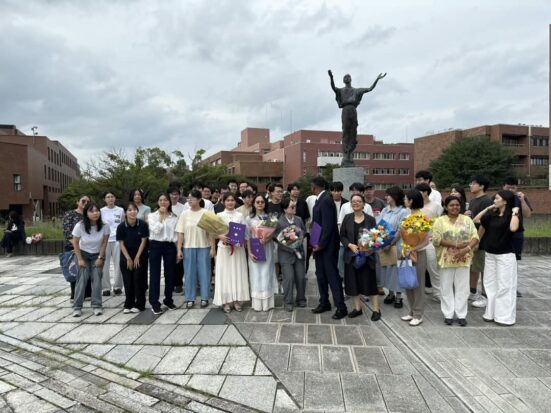
Beyond laboratory work, Cai Jun took part in the laboratory’s daily activities, including cleaning sessions and weekly academic seminars. Working with a laboratory tutor and international master’s and PhD students provided opportunities for cross-cultural discussions and knowledge sharing. Cai Jun also encountered practical research challenges, including data fluctuations and calibration issues caused by over-dilution, and worked to address them with guidance from senior laboratory members. These experiences highlighted the importance of careful procedures, problem-solving and a systematic approach to research.
Participation in seminars also allowed Cai Jun to observe how research ideas and findings are shared in an academic setting. Alongside laboratory tasks, these interactions offered an opportunity to learn from students with different backgrounds and levels of research experience. The placement therefore combined technical practice with communication, collaboration and adaptation to a new working environment.
The placement also offered opportunities to learn about Japanese culture during the summer season. One highlight was attending the Aomori Nebuta Matsuri, a traditional festival known for its large, brightly illuminated paper floats and energetic dancers. Cai Jun also experienced a local Hanabi Taikai, or fireworks festival, a familiar feature of the Japanese summer. These activities offered a view of local traditions and community life beyond the laboratory, complementing the academic experience.
The cultural activities added another dimension to the stay in Japan. Experiencing festivals in person gave Cai Jun an opportunity to see how traditions bring people together and form part of local community life. Moving between the laboratory and activities outside it also meant adapting to different settings, routines, and social expectations. Together, these experiences helped broaden the student’s understanding of learning as something that takes place both through formal research and through engagement with people and communities.
Reflecting on the experience, Cai Jun said that navigating cultural differences had deepened her character and broadened her global perspective. She viewed the opportunity to understand different ways of thinking, living, and working together as an important part of the learning experience, alongside the technical knowledge gained through research.
“Experiencing cultural differences has taught me the importance of remaining humble and open-minded. Whether it was delving deeper into advanced research or gaining a profound understanding of different ways of life, these are experiences I could never have acquired by staying in my comfort zone. This internship in Japan has not only shown me that the pursuit of knowledge is truly endless, but it has also given me a profound appreciation for the boundless diversity of our world. Whether in academia or in life, we are forever on a journey of learning, keeping pace with the times to witness a star-studded future, until humanity reaches the very limits of the universe.”
