


📝 Summary
Nur Afiqah Mohamed Alfu, a UTM alumna, has successfully transitioned from education to entrepreneurship, co-founding Ikhwan Coffee and applying her academic skills in digital applications, data analysis, and research methodology to drive business growth. The company now employs 25 local staff members and has secured halal certification and a tender to operate at Muzium Tokoh Johor. Afiqah’s experience highlights the practical value of UTM’s learning environment in preparing graduates for the wider economy.
From postgraduate studies to entrepreneurship, Universiti Teknologi Malaysia (UTM) alumna Nur Afiqah Mohamed Alfu has demonstrated how academic knowledge can be translated into business success. As the co-founder of Ikhwan Coffee, she applies the analytical, research and digital skills gained through her education to build a growing business while pursuing her PhD in Mathematics Education.
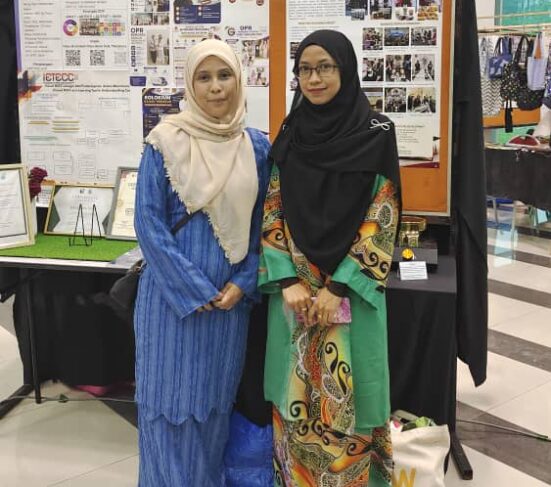
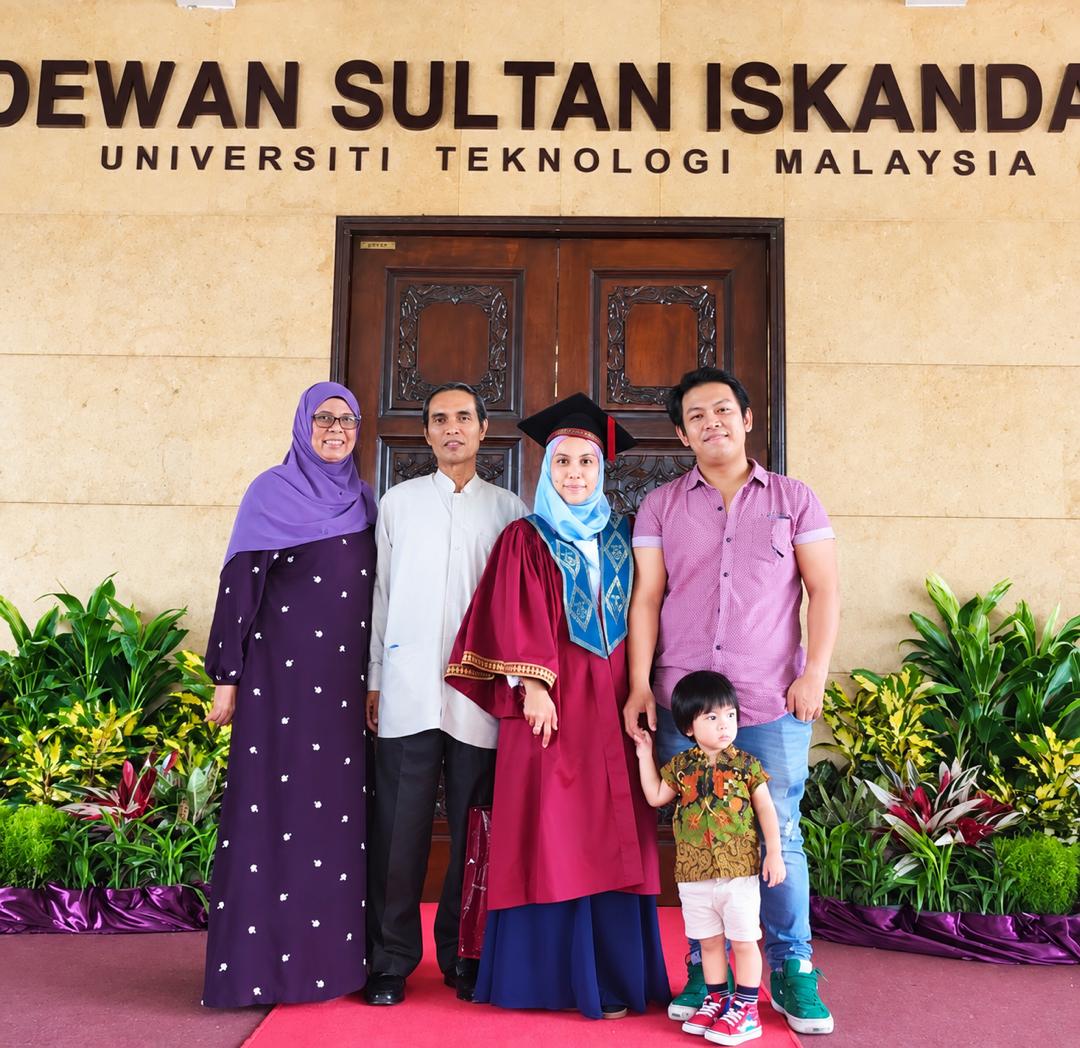
Afiqah graduated with a Master of Education (Mathematics) in 2019 and is currently pursuing her PhD in the same field. Her entrepreneurial journey began in 2020 when her husband, Ikhwan, established Ikhwan Coffee during the COVID-19 pandemic. Following his decision to leave his job in Singapore, the couple started selling bottled coffee from home while managing the challenges of family life and limited savings. What began with WhatsApp broadcasts and roadside stalls gradually developed into three physical outlets. Today, the business employs 25 local staff members, reflecting the couple’s commitment to creating employment opportunities and providing fair wages. In 2026, the company secured halal certification and a tender to operate at Muzium Tokoh Johor. It also acquired its own coffee roaster, with plans to introduce products developed through ongoing research and development (R&D) in 2027.
As co-founder, Afiqah oversees training, standard operating procedures (SOPs), accounting, finance and system development, while Ikhwan focuses on operations. Their approach demonstrates how complementary expertise can support business growth.
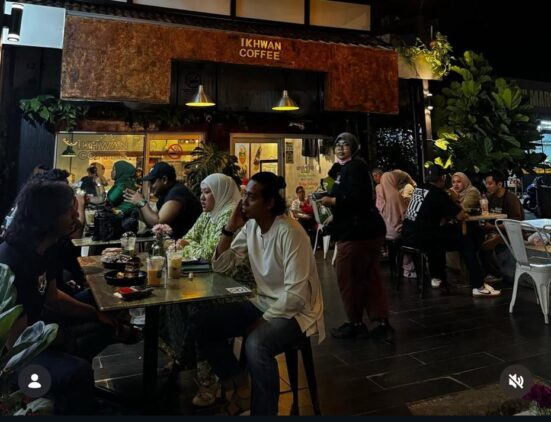
Operating in a competitive coffee market, Ikhwan Coffee established its identity through product development and systematic operations. Drawing on Ikhwan’s previous experience with Starbucks and coffee roasting companies, the couple developed signature drinks, including bottled cold brew and a chocolate blend combining milk and dark chocolate.
They also developed homemade syrups and structured staff training materials to maintain consistency across outlets. For espresso-based drinks, the business uses a custom blend of Brazilian and Ethiopian coffee beans, while selected local and Indonesian beans are offered for manual brewing.
Beyond product quality, Afiqah emphasises the importance of building systems that allow a business to operate effectively even when its founders are not physically present. This approach supports consistency, staff development and the ability to accommodate larger orders, including catering requests for 100 cups.
For Afiqah, her academic background has played a practical role in managing the business. Skills gained at UTM, particularly in digital applications, data analysis and research methodology, have helped her develop marketing materials, staff SOPs, business documents and sales tracking systems using Microsoft Excel and Canva.
She also applies analytical thinking to financial decisions, recognising that strong sales do not necessarily translate into profit. By accounting for labour costs, including her own work at the outlet, she can evaluate menu pricing, operating expenses and business returns more accurately.
Her exposure to artificial intelligence tools has also supported the preparation of professional business proposals. She first learned to use ChatGPT under the guidance of Assoc. Prof. Dr. Norulhuda Ismail, applying such tools to refine language, phrasing and structure rather than simply copying generated content.
Research methodology, meanwhile, informs how the business tests operational approaches and adapts when a strategy proves unprofitable. The couple progressively upgraded their coffee-making equipment as demand increased, enabling them to expand production while maintaining operational readiness.
Another challenge was understanding Malaysia’s business regulations, including company registration and local authority licensing. Afiqah responded by seeking information from relevant agencies, participating in MARA programmes and engaging with business associations. She highlighted the importance of staying informed about regulatory changes, licensing requirements and employee wages as a business grows.
She also sees alumni networks as an important source of shared knowledge and professional collaboration. By exchanging practical information and connecting people across industries, alumni can help one another navigate challenges and identify new opportunities.
Her advice to aspiring entrepreneurs is straightforward: “Just do it.” She believes that knowledge from different fields can provide a competitive advantage when applied creatively to business.
Afiqah’s experience illustrates how postgraduate education can extend beyond academic research into entrepreneurship, employment creation and community engagement. Through the application of digital tools, analytical thinking and systematic management, her journey highlights the practical value of UTM’s learning environment in preparing graduates to contribute to the wider economy.
By: Siti Hajar Suliman, Master of Education (Mathematics), Universiti Teknologi Malaysia
