


📝 Summary
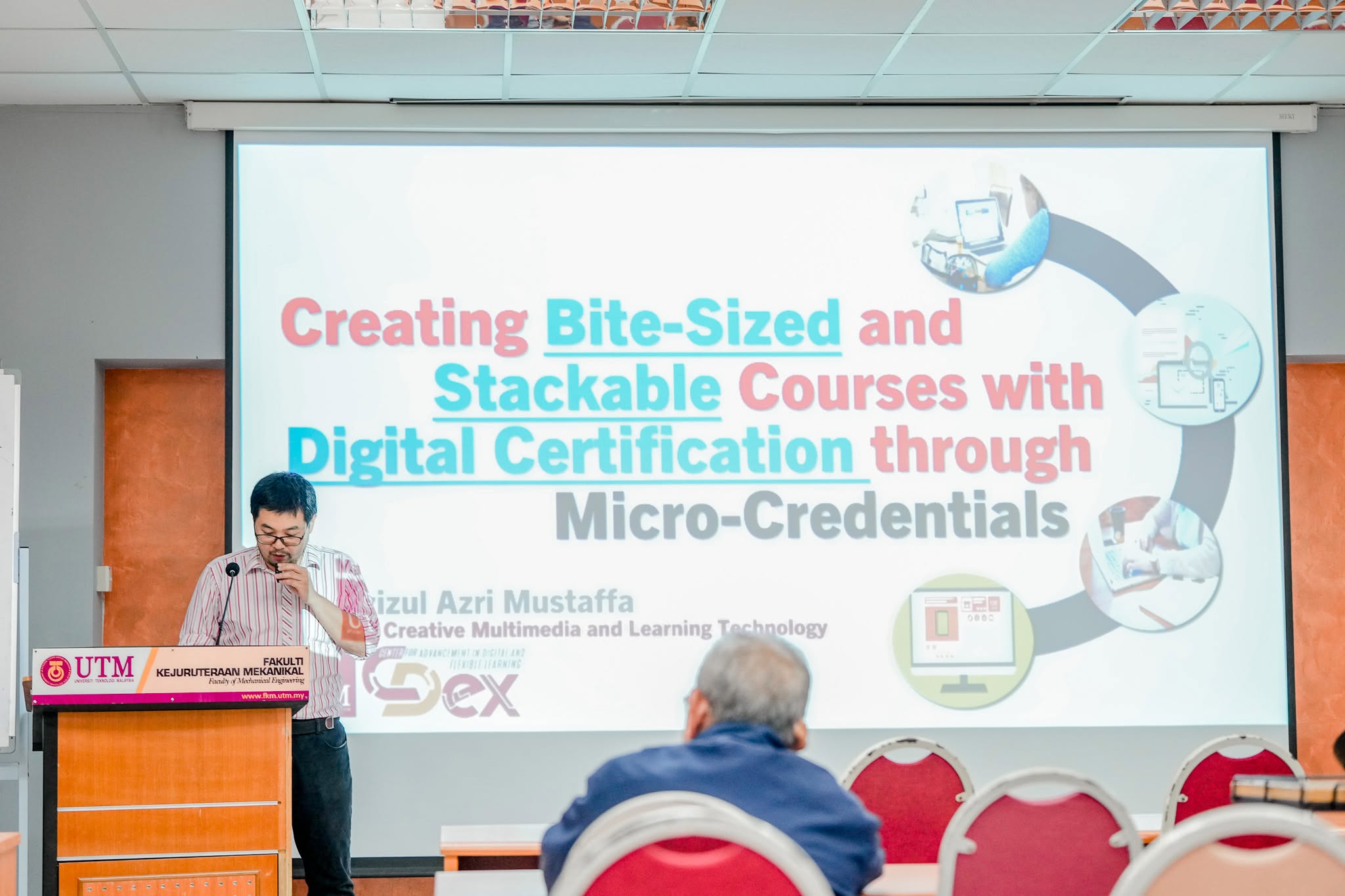
UTM has approved a stackable degree pathway for its Master of Science (Mechanical Engineering) program, allowing learners to earn a postgraduate qualification incrementally through micro-credentials. The pathway unbundles the program into seven micro-credentials, each carrying a combined 21 credits, which can be taken individually and stacked towards the full master’s award. This model reflects a broader transformation in higher education, prioritizing flexibility and lifelong learning.
Universiti Teknologi Malaysia (UTM) Senate has approved its first stackable degree pathway, allowing learners to earn a postgraduate qualification incrementally through micro-credentials rather than through a single, continuous programme of study. The decision places UTM among a growing number of universities worldwide that are rethinking how postgraduate education is packaged, accessed and recognised in an era of lifelong learning.
The pathway unbundles the Master of Science (Mechanical Engineering), offered by the Faculty of Mechanical Engineering (FKM), into seven micro-credentials carrying a combined 21 credits of the programme’s 40 total credits. Learners may take these micro-credentials individually, at their own pace, and stack the credits earned towards the full master’s award once admission requirements are met. They can keep their credits in the UTM Academic Credit Bank (UTM TRACE), ready to be stacked later.
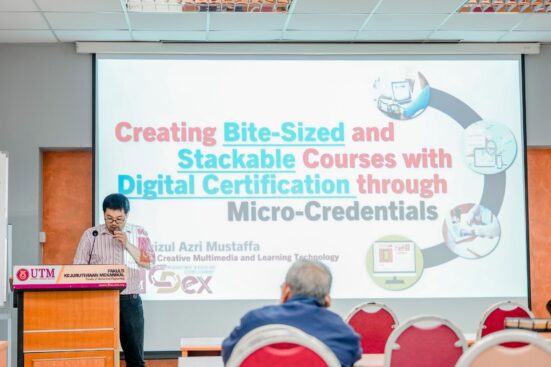
A shift in how postgraduate education is accessed
The approval marks a significant change in how UTM structures access to postgraduate education. Traditionally, a learner seeking a master’s degree has had to commit to an entire programme upfront, including its time, cost and disruption to working and family life. The stackable pathway removes that barrier to entry. Working professionals can begin with a single micro-credential, earn a verifiable credential for it, and continue accumulating credits as their circumstances allow.
This model reflects a broader transformation in higher education. Brown et al. (2021) describe the rise of micro-credentials as part of a new “credential ecology” for lifelong learning, where smaller, focused units of learning sit alongside and increasingly connect to traditional qualifications. Similarly, the OECD has observed that alternative credentials are growing in response to labour market demand for continuous upskilling, particularly among adults already in employment (Kato et al., 2020). Micro-credentials call for a “strategic reset” among higher education leaders, in which institutions must decide whether short-form learning will remain peripheral or become an integral part of their academic architecture (McGreal and Olcott, 2022).
Designed for working adults and returning learners
Stackable degree pathways respond to the needs of working adults, industry practitioners and returning learners who need flexibility without compromising academic rigour. Learners value micro-credentials for their flexibility, relevance to career progression and ability to fit learning around professional commitments (Varadarajan et al., 2023). Employers, meanwhile, value them for targeted workforce development. Micro-credentials are most effective when aligned with both industry needs and pathways into formal qualifications (Selvaratnam and Sankey, 2021).
For engineers, the model is especially relevant. Rapid advances in automation, advanced manufacturing, sustainable energy systems and digital engineering mean that professionals must update their knowledge continuously. A stackable master’s allows a practising engineer to take a focused micro-credential that addresses an immediate workplace need and continue towards a full postgraduate qualification, with none of the earlier effort lost.
Rigour and quality assurance at the core
A common concern when unbundling academic programmes into micro-credentials is that it may fragment learning or reduce the credibility of full qualifications. Without careful design, micro-credentials risk becoming “gig qualifications” with limited educational or labour market value (Wheelahan and Moodie, 2022). Quality assurance, recognition and credit transfer are critical success factors of micro-credential implementation (Ahsan et al., 2023).
UTM’s pathway addresses these concerns directly. Each micro-credential is assessed, credit-bearing and quality-assured against the same standards as the corresponding component of the full programme. The design is guided by the Malaysian Qualifications Agency’s Guidelines to Good Practices: Micro-credentials (MQA, 2020), which set out expectations for learning outcomes, credit value, assessment and recognition within the Malaysian Qualifications Framework. A learner completing a micro-credential therefore achieves the same learning outcomes and is held to the same academic standard as a student taking that component within the conventional master’s programme.
The role of the UTM Academic Credit Bank: UTM TRACE
The UTM Academic Credit Bank (UTM TRACE) is central to making the pathway work. It allows learners to “bank” credits earned from individual micro-credentials over time, keeping them in a secure institutional record until they are ready to stack them towards the full award. Tamoliūnė et al. (2023) highlight that the portability and recognition of micro-credentials depend heavily on institutional mechanisms that record, validate and accumulate learning.
Aligned with national higher education priorities
The pathway demonstrates UTM’s commitment to the Malaysia Higher Education Plan (RPTM) 2026–2035, particularly Shift 8 on Flexible and Lifelong Learning. The plan envisions a higher education system in which Malaysians can move in and out of learning throughout their lives, with learning recognised and accumulated across different modes and stages. By linking micro-credentials directly to a recognised master’s qualification, UTM is turning that national aspiration into a working institutional model.
An on-ramp, not a parallel track
For UTM, the pathway strengthens the link between micro-credential offerings and formal qualifications. Short-form learning is not a parallel track but an on-ramp into the university’s degree structures. Much of the international discussion has warned against micro-credentials becoming a disconnected market of standalone certificates (Brown et al., 2021; Wheelahan & Moodie, 2022). By embedding micro-credentials within the architecture of an established master’s programme, UTM ensures that each credential carries standalone value and contributes towards a higher award.
First intake in October 2026
The first intake will take place in October 2026 through UTM Online, the university’s one-stop centre for digital and lifelong learning. Prospective learners can find further information and register at https://online.utm.my.
