



📝 Summary
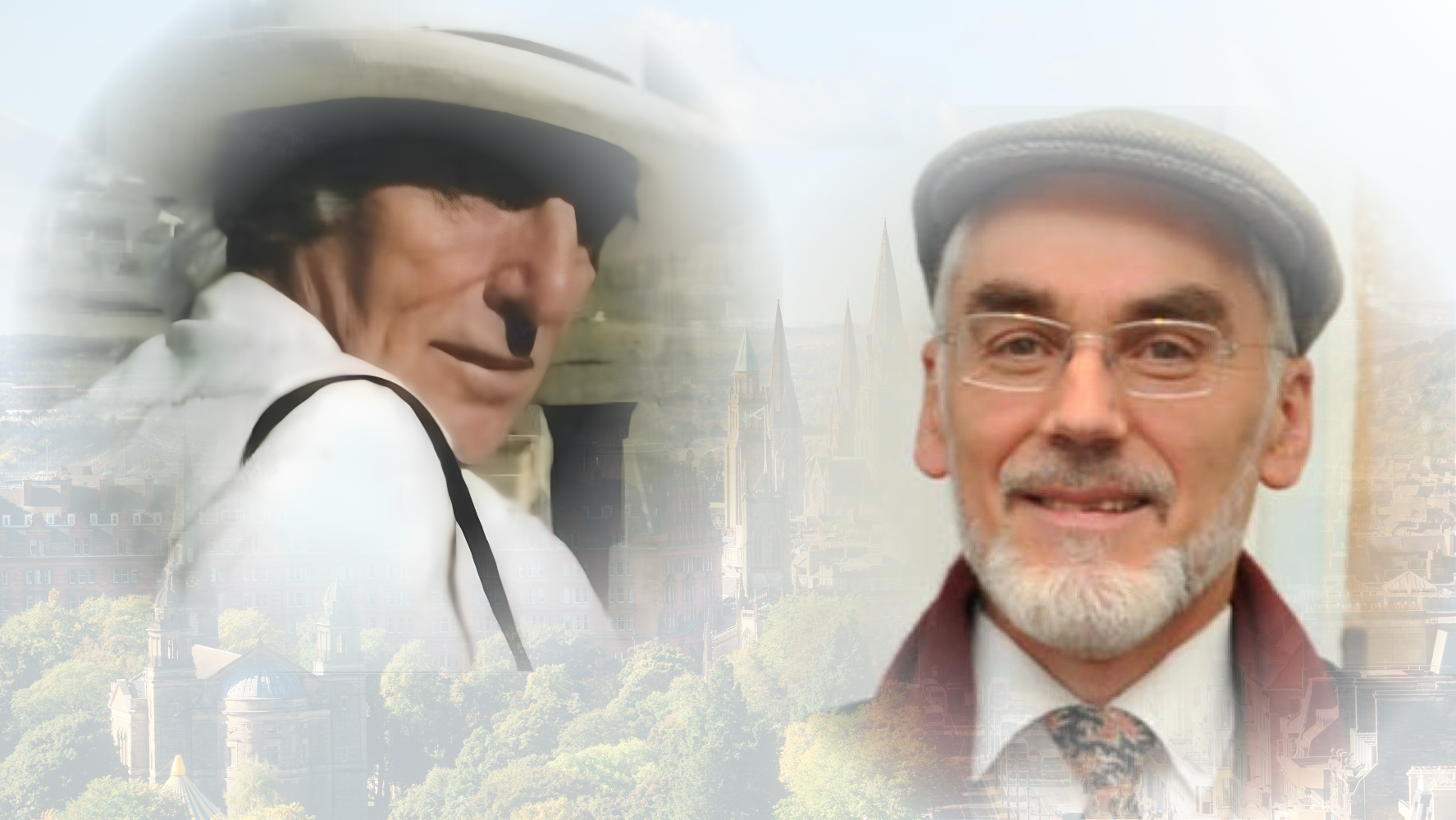
The author reflects on their time at the University of Edinburgh, where they were supervised by two remarkable professors, Dr. Ian Keith Anderson Howard and Dr. Yasin Dutton. Dr. Howard taught the author the discipline of scholarship, while Dr. Dutton embodied intellectual humility, showing that knowledge without humility loses its meaning. The author credits these professors with shaping their academic and teaching career, and values the lifelong lessons they learned from them.
Every academic can point to a defining moment that shaped a lifetime of scholarship. Mine began on the fourth floor of an old Georgian building at 11 Buccleuch Place, Edinburgh, where a single question from my supervisor quietly transformed the way I thought about learning, discipline and ultimately, teaching.
It was April 1992. Having travelled more than 10,000 kilometres from Malaysia, I arrived at the Department of Middle Eastern and Islamic Studies to begin what I believed would be a master’s degree. By the time I reached the top of the narrow staircase, I was exhausted. Before I had even caught my breath, Dr. Ian Keith Anderson Howard looked up and asked, almost matter-of-factly, “What is your research topic?”
There was no conversation about Scotland, no enquiry about the long journey from Southeast Asia, not even a comment about Edinburgh’s famously unpredictable weather. Research came first.
Smiling through my fatigue, I replied, “Sir, could you please give me a minute? Those stairs are killing my feet.”
For a moment, I wondered whether I had just met one of Britain’s strictest mahagurus.
In many ways, I had.
Yet first impressions can be misleading. Beneath Dr. Howard’s uncompromising standards was a teacher who believed that excellence was never a matter of talent alone. It was built through discipline, persistence and an unwavering commitment to intellectual honesty. Students came from Malaysia, Sudan, Lebanon, Singapore and many other countries, but he expected the same thing from each of us: nothing less than our best.
That philosophy would shape my years in Edinburgh.
Six months after my arrival, I was unexpectedly offered the opportunity to convert into the Doctor of Philosophy programme. For someone who did not yet hold a master’s degree, it was an extraordinary vote of confidence. Under the supervision of Dr. Howard and Dr. Yasin Dutton, I embarked on research that eventually became my thesis on the development of the institution of hisbah in medieval Islam.
The journey, however, was far more demanding than the outcome suggests. The real education had begun much earlier than the thesis itself.
Every Wednesday, I would climb those stairs again and enter Dr Howard’s office carrying another week’s worth of reading and freshly written pages. For an hour, I would read my work aloud while he interrupted frequently. Questioning arguments, challenging assumptions and insisting that every sentence earn its place. Even punctuation was not spared; he would stop me to question a comma or a full stop.
At the end of many sessions, he would lean back and say a single word:
“Kaslaan.”
Lazy.
At the time, it stung. No matter how many hours I had spent in the library, I always left his office feeling I could have done more. Only much later did I understand that he was not questioning effort. He was teaching discipline, the kind that refuses mediocrity and demands intellectual honesty.
That lesson became sharper during my third year.
Confident that I had finally produced a manuscript worthy of submission, I placed it on his desk. He read silently for a few moments before looking up and saying, “This is rubbish. I want to throw it into the dustbin.”
Years earlier, that sentence might have shattered my confidence. By then, however, I had begun to understand his method.
“I have something else to show you, Sir,” I replied.
From my bag, I produced an Arabic manuscript nearly a thousand years old, one of the earliest surviving texts on hisbah.
After a long silence, he said something I will never forget:
“You have six days. Translate it into English.”
What followed took far longer than six days. It took six months.
My life began to revolve around that manuscript. I went to the university library before it opened and returned only late at night for dinner, before going back again until 11 p.m. Every waking hour was spent translating, checking references and ensuring fidelity to the original text. It was exhausting, but it reshaped everything I understood about scholarship.
Those months did more than refine my research. They transformed my relationship with my supervisor.
What began as weekly supervision became daily engagement. We met even on Sundays, sometimes at his house, discussing manuscripts, history, ideas, and occasionally family matters. He even advised me about my daughter’s asthma and shared stories about his own family. The intimidating figure I had first met on the fourth floor slowly became something more important.
He became a mentor.
There was another professor who shaped my years in Edinburgh, although in a very different way.
If Dr Howard taught me the discipline of scholarship, Dr Yasin Dutton taught me its character.
Whenever I struggled to locate a rare Arabic manuscript or understand a difficult passage, I would find my way to his office. The shelves were lined with books collected over decades of scholarship, each carefully preserved. There was one rule every student quickly learned: his books never left the room. If I needed a chapter, he would photocopy it himself.
At first, I thought this was simply a matter of caution. Later, I realised it was another quiet lesson—knowledge deserves respect, and so do the sources from which it comes.
That humility extended beyond the university. He was a familiar presence at Edinburgh Central Mosque, where he shared his scholarship as generously as he did with his students. Watching him move effortlessly between academia and the wider community taught me that knowledge achieves its greatest value only when it serves others.
As my doctoral work neared completion, I focused on Al-Nazar fi Ahkam al-Suq, one of the earliest surviving works on hisbah. After tracing its intellectual lineage through the Maliki jurist Sahnun ibn Sa‘id, I shared my findings with Dr Dutton, hoping quietly for his approval.
He listened patiently, then shared a saying attributed to Sahnun:
“When a wise person intends to speak, he first remains silent. But when silence is no longer appropriate, he knows that he must speak.”
He offered no further explanation.
None was needed.
Only later did I understand its meaning. Academic life often rewards those who speak confidently, but wisdom belongs to those who listen first, reflect deeply, and remain humble enough to accept that there is always more to learn.
Looking back, I realise how fortunate I was to have studied under two professors whose strengths complemented each other so perfectly.
Dr Howard demanded intellectual discipline.
Dr Dutton embodied intellectual humility.
One pushed every argument until it became stronger.
The other reminded me that knowledge without humility loses its meaning.
Together, they taught lessons no examination could measure.
More than three decades have passed since I climbed those stairs at 11 Buccleuch Place. Much has changed, but whenever I supervise my own postgraduate students, I recognise traces of both men in my own teaching. When I ask a student to revise a chapter again, I hear Dr Howard. When I choose to listen before responding, I remember Dr Dutton.
That, perhaps, is the true legacy of a teacher. Knowledge is transmitted, but values endure.
People often assume the greatest reward of studying at a world-renowned university is the degree itself. My experience taught me otherwise.
A doctorate is a qualification. Good teachers are a lifelong inheritance.
The University of Edinburgh gave me far more than an education. It gave me two extraordinary mentors whose lessons continue to shape not only the academic I became, but also the teacher I strive to be.
For that, I remain deeply grateful.
