


📝 Summary
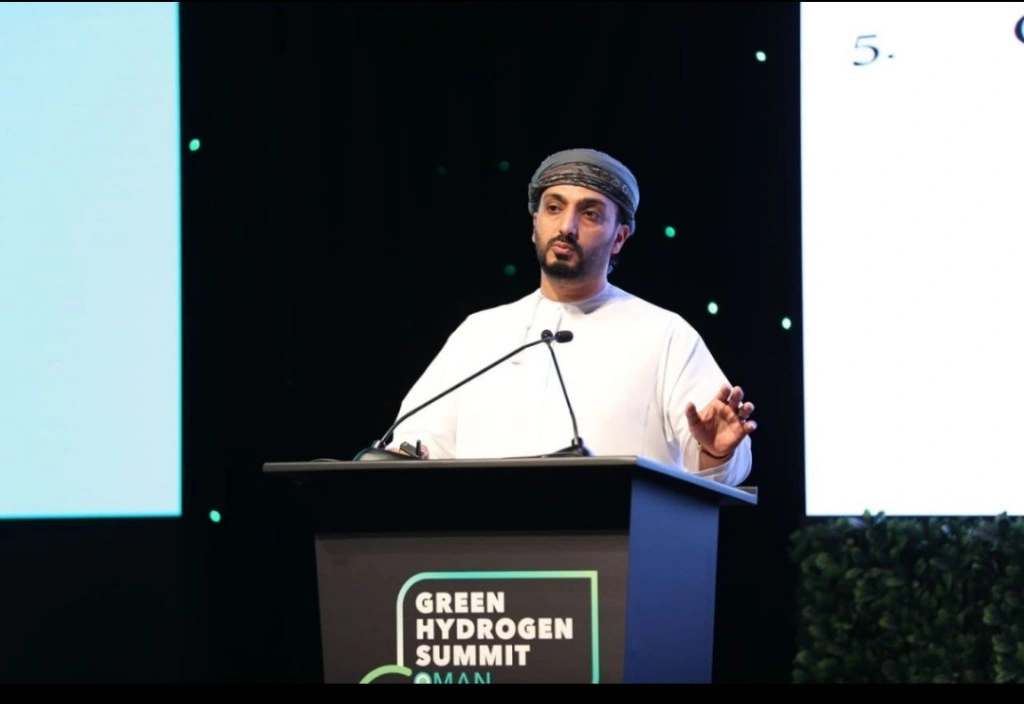
Dr. Nasser Mohammed Saleh Al Rizeiqi, a PhD graduate from MJIIT UTM, is supporting Oman’s transition to a green hydrogen economy as a Sustainability Expert at the Ministry of Energy and Minerals. His doctoral research developed a framework to evaluate hydrogen supply chains, balancing economic and environmental factors, which has been applied to Oman’s national context. The framework has helped identify an optimised supply pathway that reduces global warming impacts by approximately 53% compared to standard configurations.
As nations worldwide accelerate their transition toward net-zero emissions, the bridge between rigorous academic research and high-level national policy has never been more critical. At the Malaysia-Japan International Institute of Technology (MJIIT), Universiti Teknologi Malaysia (UTM), doctoral research is designed not only to achieve scholarly excellence but also to solve pressing socio-economic and environmental challenges globally. A testament to this mission is Dr. Nasser Mohammed Saleh Al Rizeiqi, a Class of 2026 PhD graduate whose academic journey at MJIIT directly underpins his current role in driving the Sultanate of Oman’s green transition.
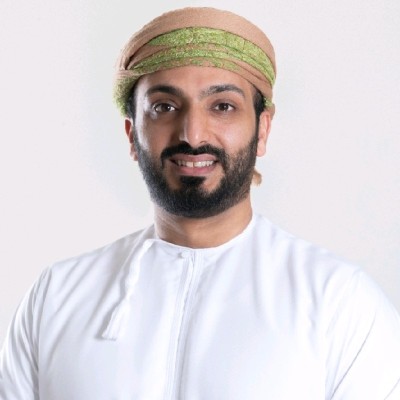
As a Sustainability Expert at the Ministry of Energy and Minerals in the Sultanate of Oman, Dr. Nasser supports the formulation and implementation of national sustainability initiatives across both the energy and minerals sectors. His work focuses on ensuring the responsible management of natural resources while advancing energy security, economic growth, and statutory frameworks for new energy resources, particularly renewable energy and low-carbon hydrogen.
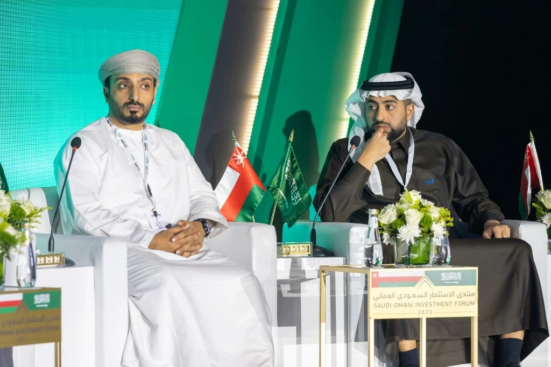
Among his key professional milestones is his direct involvement in developing Oman’s national hydrogen strategy, a strategic cornerstone aimed at transforming the Sultanate into a global hub for low-carbon energy. Furthermore, as an active member of the Oman Net Zero Centre, Dr. Nasser collaborates with interdisciplinary teams to ensure national programmes align with Oman’s overarching commitment to achieving net-zero carbon emissions by 2050.

The foundation of Dr. Nasser’s policy contributions lies in his doctoral research completed at MJIIT UTM under the supervision of Assoc. Prof. Ir. Ts. Dr. Liew Peng Yen. His PhD research addressed a central global dilemma: how to build a hydrogen economy that is both environmentally sustainable and economically viable. While hydrogen is widely recognised as a clean alternative to fossil fuels, its production, storage, and distribution involve significant energy inputs, resource consumption, and technical complexities.
To address these challenges, Dr. Nasser developed a multi-objective decision-making framework designed to evaluate hydrogen supply chains by balancing economic cost, environmental footprint, water resource utilisation, storage mechanisms, and transportation routes. When applied to Oman’s national context, his framework evaluated five distinct supply-chain operational scenarios capable of satisfying a projected demand of 2,740 tonnes of low-carbon hydrogen per day, equivalent to approximately one million tonnes annually.
The study is relevant because hydrogen supply chains involve interconnected decisions rather than production alone. Choices about where hydrogen is produced, how water and energy are sourced, and how the fuel is stored and transported can affect both cost and environmental performance. Assessing these factors together can help decision-makers compare options more consistently and identify trade-offs before making major infrastructure investments.
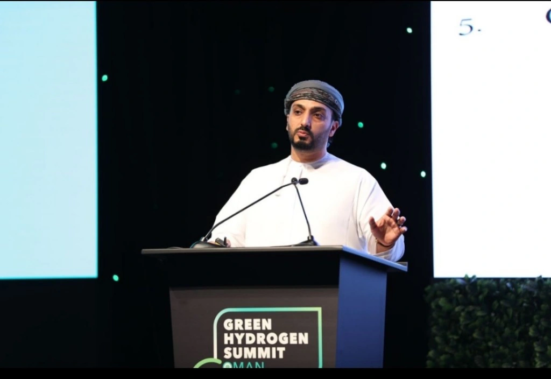
Crucially, the research identified an optimised supply pathway that reduced modelled global warming impacts by approximately 53% compared with standard baseline configurations. Beyond its immediate application in Oman, the framework was designed to be globally adaptable, offering policymakers and international investors a standardised analytical tool to evaluate clean energy investments responsibly.
For Oman, these considerations are particularly important as the country develops its renewable energy and hydrogen sectors while pursuing its net-zero target for 2050. The research therefore connects technical assessment with practical planning needs, including the importance of accounting for local conditions rather than assuming that one supply-chain model will work equally well in every region.
The real-world application of Dr. Nasser’s academic work extends far beyond theoretical modelling. By incorporating local water stress and infrastructure readiness into supply-chain assessments, his research provides actionable guidance for infrastructure development in arid regions, helping ensure that clean energy expansion does not compromise local community resources.
Reflecting on his broader professional mission, Dr. Nasser stresses his vision of building a low-carbon economy where progress and environmental responsibility go hand in hand, while opening new doors for young people to innovate, lead, and build a cleaner, more prosperous future for generations to come.
Highlighting the value of transdisciplinary engineering education, Dr. Nasser encourages current UTM students not to limit their learning to the classroom, but to use their knowledge to solve real challenges that matter to people and the planet. He reminds them to stay curious, embrace collaboration, and have the courage to turn ideas into action, because meaningful change often begins with one committed person.
Through graduates like Dr. Nasser Mohammed Saleh Al Rizeiqi, MJIIT UTM continues to demonstrate its role in developing international leadership capable of translating academic research into impactful national policy and sustainable global solutions.
