


📝 Summary
The Malaysia-Japan International Institute of Technology’s research and innovation competition has grown from a faculty-level competition with 13 projects to an international competition featuring 63 projects from 20 Malaysian and 4 Indonesian institutions. The competition has strengthened its industry orientation and expanded its scope, with a focus on innovation, practical impact, and commercialization. The inaugural international edition, MJIIX IRIC 2026, marked a significant milestone in the competition’s development.
In just three editions, a faculty-level research and innovation competition involving 13 projects grew into an international competition featuring 63 projects. What began within the research community of the Malaysia-Japan International Institute of Technology (MJIIT) reached a significant milestone under the Malaysia-Japan Industrial and Innovation Expo (MJIIX) with the establishment of the MJIIX International Research and Innovation Competition 2026 (MJIIX IRIC 2026), marking the competition’s first international edition.
The transformation, however, was not simply about numbers. Across three editions, the competition developed its structure, strengthened industry connections and eventually expanded beyond MJIIT to a wider community of researchers and innovators.
2024: Starting from Within
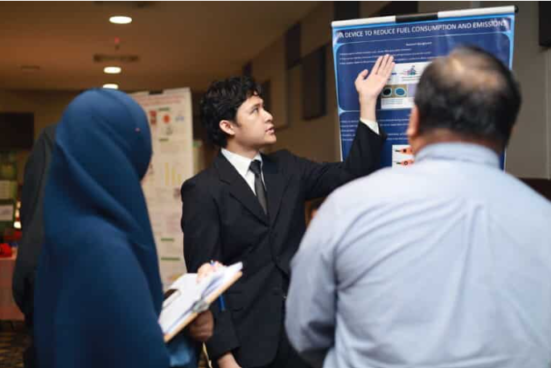
The development began with the MJIIT i-Kohza Innovation Competition 2024, a faculty-level competition centred on MJIIT’s i-Kohza research community. The inaugural competition featured 13 projects representing 12 i-Kohzas, establishing the initial scale of the competition within MJIIT.
An i-Kohza is a specialised MJIIT research group that brings together academics, researchers and students while incorporating the Japanese Senpai–Kohai approach to knowledge sharing and mentorship between senior and junior members. These groups form an important part of MJIIT’s research ecosystem.
From the outset, the competition incorporated industry perspectives, with participants delivering a 10-minute pitch and 10-minute question-and-answer session before the top four advanced to a final pitching round. Industry collaboration was included among the evaluation criteria.
All 13 projects received recognition, comprising seven Gold, three Silver and three Bronze Awards. The competition also recognised a Champion, First Runner-Up and Second Runner-Up, with cash prizes of RM1,500, RM1,000 and RM500 respectively.
2025: Strengthening Industry Relevance
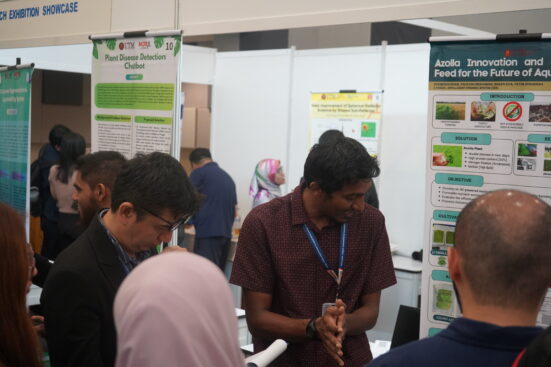
While the number of competing projects remained at 13, the i-Kohza Showcase Competition 2025 strengthened several elements of the competition model. Participation remained at the MJIIT level, with registered i-Kohzas permitted to submit a maximum of two entries.
Industry relevance was strengthened in 2025, with every submission required to address an industry problem or involve industry collaboration. The 10-minute presentation and question-and-answer format continued, with the Top Five finalists advancing to a five-minute pitching stage.
The award structure was also revised. The 13 projects received four Gold, four Silver and five Bronze Awards. Among the Gold recipients, one received the Grand Award, carrying a RM2,500 cash prize, while two received Semi-Grand Awards worth RM1,000 each. This Grand and Semi-Grand structure would subsequently be retained when the competition expanded internationally.
Although participation remained unchanged, the 2025 edition strengthened the competition’s industry orientation and refined elements subsequently retained in 2026.
2026: Opening the Doors Internationally
After two editions centred on MJIIT’s i-Kohza community, 2026 marked a major turning point. The competition moved beyond the faculty level through the establishment of the inaugural MJIIX IRIC 2026.
Participation was opened to the wider higher education community, including undergraduate and postgraduate students, researchers and academics, with industry representatives participating as collaborators.
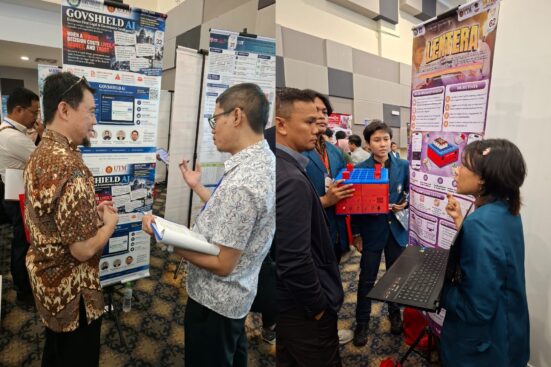
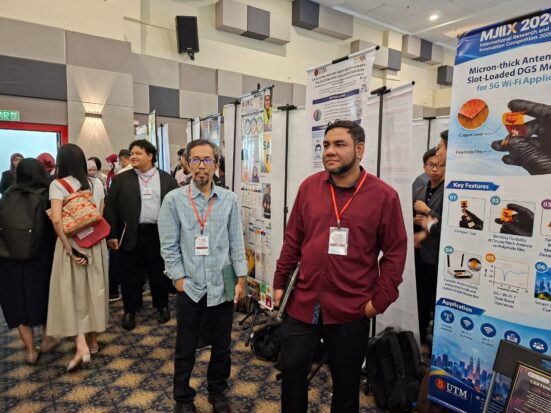
The inaugural MJIIX IRIC received 87 extended abstract submissions. Following the selection process, 63 research and innovation projects were presented at the physical poster showcase on 28 September 2026, representing 254 participant entries.
The expansion was also geographical and institutional. Of the 63 projects, 56 involved Malaysian affiliations and eight Indonesian affiliations, including one Malaysia–Indonesia collaboration. The participating institutions included 20 Malaysian higher education institutions and four Indonesian universities, alongside government, public research and industry organisations.
Industry relevance became even more prominent. Industry Relevance and Collaboration accounted for 25 per cent of the 2026 evaluation, compared with industry collaboration carrying a smaller weighting in the original 2024 framework. The emphasis established during the faculty-level editions was therefore retained and strengthened as the competition expanded.
To accommodate the larger field, the 63 projects were evaluated through a physical poster showcase involving 30 academic and industry judges, with the Top Five advancing to the Grand Award evaluation.
The 2026 award structure retained the Grand and Semi-Grand model introduced in 2025, with one Grand Award worth RM2,500 and two Semi-Grand Awards worth RM1,000 each. A total of 10 Gold, 15 Silver and 20 Bronze Awards were presented.
Beyond Growth in Numbers
The three-year progression was not simply a story of increasing participation. While the first two editions remained similar in scale, the competition model and industry orientation continued to develop before the major international expansion in 2026. Throughout this progression, innovation, practical impact, commercialisation, industry engagement and research communication remained central to the competition.
MJIIX IRIC 2026 was therefore not simply a new competition replacing the earlier i-Kohza platform. It represented an expansion of an established competition model, retaining several of its core principles while adapting its scope and format for international participation.
The next challenge for MJIIX IRIC is not simply to become larger. Its longer-term value will depend on whether international participation translates into stronger research exchange, meaningful academia-industry engagement and collaborations that continue beyond the competition itself. The first three editions established the platform; what follows will determine how far that platform can reach.
