


📝 Summary
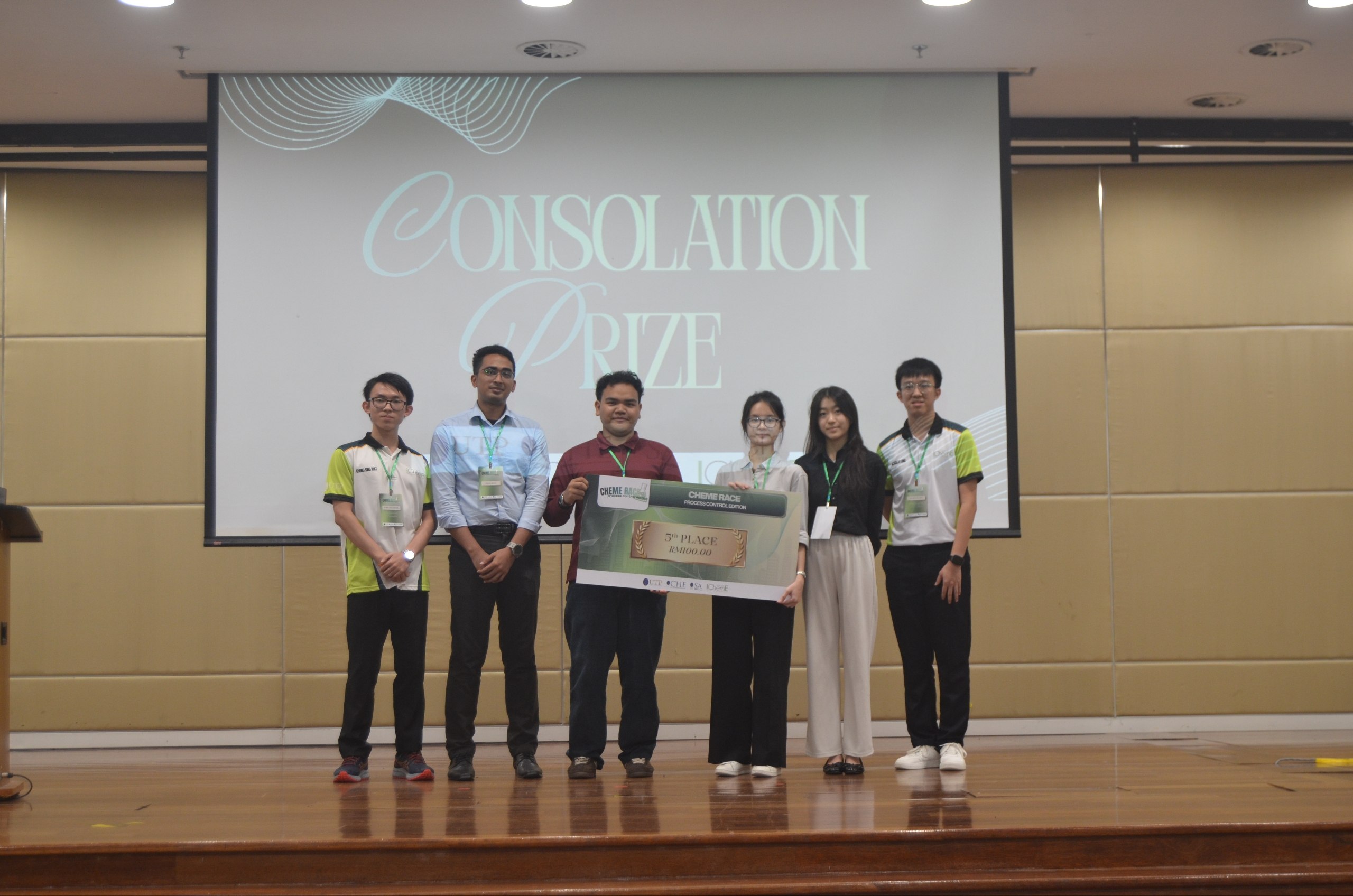
A team of four third-year Chemical Engineering students from Universiti Teknologi Malaysia (UTM) secured fifth place at the ChemE Race 2026 competition, hosted by Universiti Teknologi PETRONAS (UTP). The team, UTM1, was tasked with designing a control strategy to improve operational stability and energy efficiency in a natural gas sweetening unit. The competition provided the students with exposure to real-world industrial challenges and an opportunity to present their ideas to industry professionals.
SERI ISKANDAR, Sep 26 – A team of four third-year Chemical Engineering students from the Faculty of Chemical and Energy Engineering (FKT), Universiti Teknologi Malaysia (UTM), secured fifth place at ChemE Race: Process Control Edition 2026, hosted by Universiti Teknologi PETRONAS (UTP). Organised by the Institution of Chemical Engineers UTP Student Chapter (IChemE UTP-SC) in collaboration with the UTP Chemical Engineering Department, the competition tested students’ technical knowledge, creativity and teamwork in solving industrial problems under the theme “Advanced Process Control & Smart Manufacturing.”
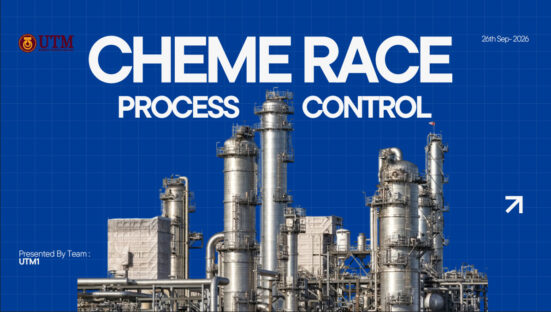
The UTM1 team comprised Megat Amirul Sufi, Mohamad Fareez Kamarudin, Lai Wei Qian and Emily Fan Chong Xian, under the supervision of Dr. Dinie Muhammad. The four students took part while undertaking their industrial training, balancing internship responsibilities with preparation for the competition.
The team was assigned a case study involving a natural gas sweetening unit experiencing operational instability, including feed flow rate fluctuations, unstable carbon dioxide (CO₂) composition and slow recovery time. They were tasked with designing an improved control strategy using Model Predictive Control (MPC) and Advanced Regulatory Control (ARC) to improve operational stability, energy efficiency and compliance with LNG export specifications. During a four-hour analysis period, the team developed a control solution addressing the identified issues.
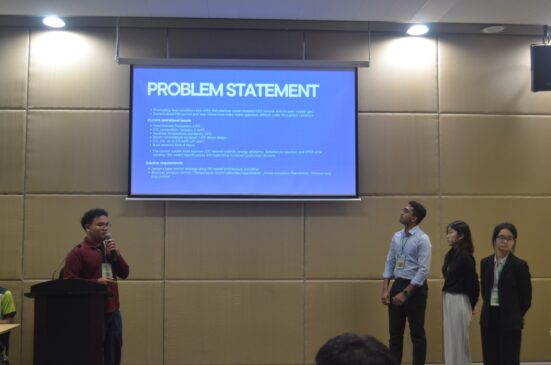
Their approach included Multiple-Input Multiple-Output (MIMO) system modelling to analyse interactions between the absorber and regenerator, a Piping and Instrumentation Diagram (P&ID), and an MPC-based control strategy to regulate key process variables. They also proposed a soft sensor and grey-box hybrid model for real-time CO₂ estimation, alongside disturbance rejection measures to manage sudden throughput surges and steam pressure drops.
The team adapted its solution when presented with an unexpected challenge: a 10% increase in export demand and a steam pressure drop lasting five hours. The design targeted shorter stabilisation time, steam savings and CO₂ levels maintained below the required specification to meet LNG export requirements.
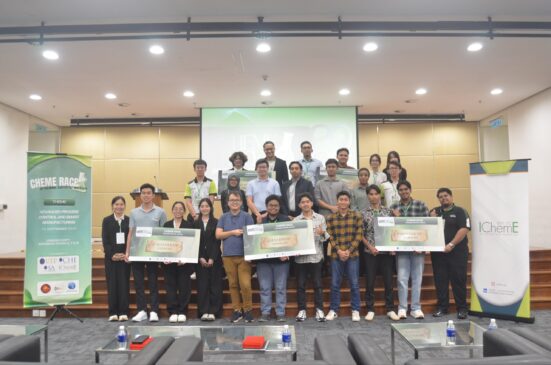
The fifth-place finish came in a field that included teams from UTP, Universiti Putra Malaysia (UPM) and Monash University Malaysia. The competition gave the students exposure to real-world industrial challenges and an opportunity to present their ideas to industry professionals from PRefChem and ExxonMobil, as well as academic experts from UTP.
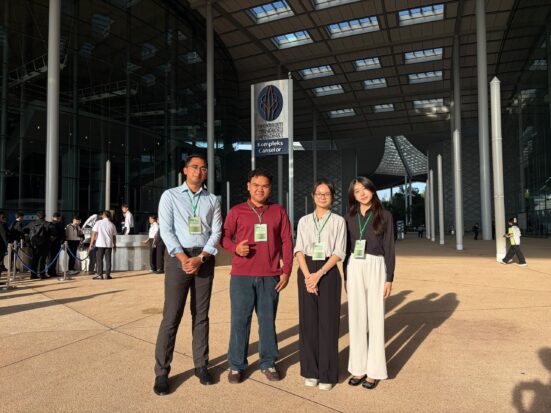
The experience also strengthened their technical competencies, critical thinking and communication skills, while helping bridge classroom learning and industrial practice. The achievement reflects UTM’s commitment to developing future-ready engineers with the technical knowledge and problem-solving skills needed to address evolving industrial challenges, in line with the aspirations of UTM ASCEND 2030.
Co-authored by Mohamad Fareez Kamarudin
