


📝 Summary
Puthiya Manitha Phase 2, a STEM education program, was held at SJK(T) PJS1 in Petaling Jaya, introducing 48 students to practical activities in engineering, robotics, and programming. The program aimed to spark curiosity and interest in STEM fields among students, providing hands-on experiences and exposure to modern technology. The event was organized by PMH UTM Kuala Lumpur in collaboration with IEEE Subsection Kuala Lumpur and supported by local organizations.
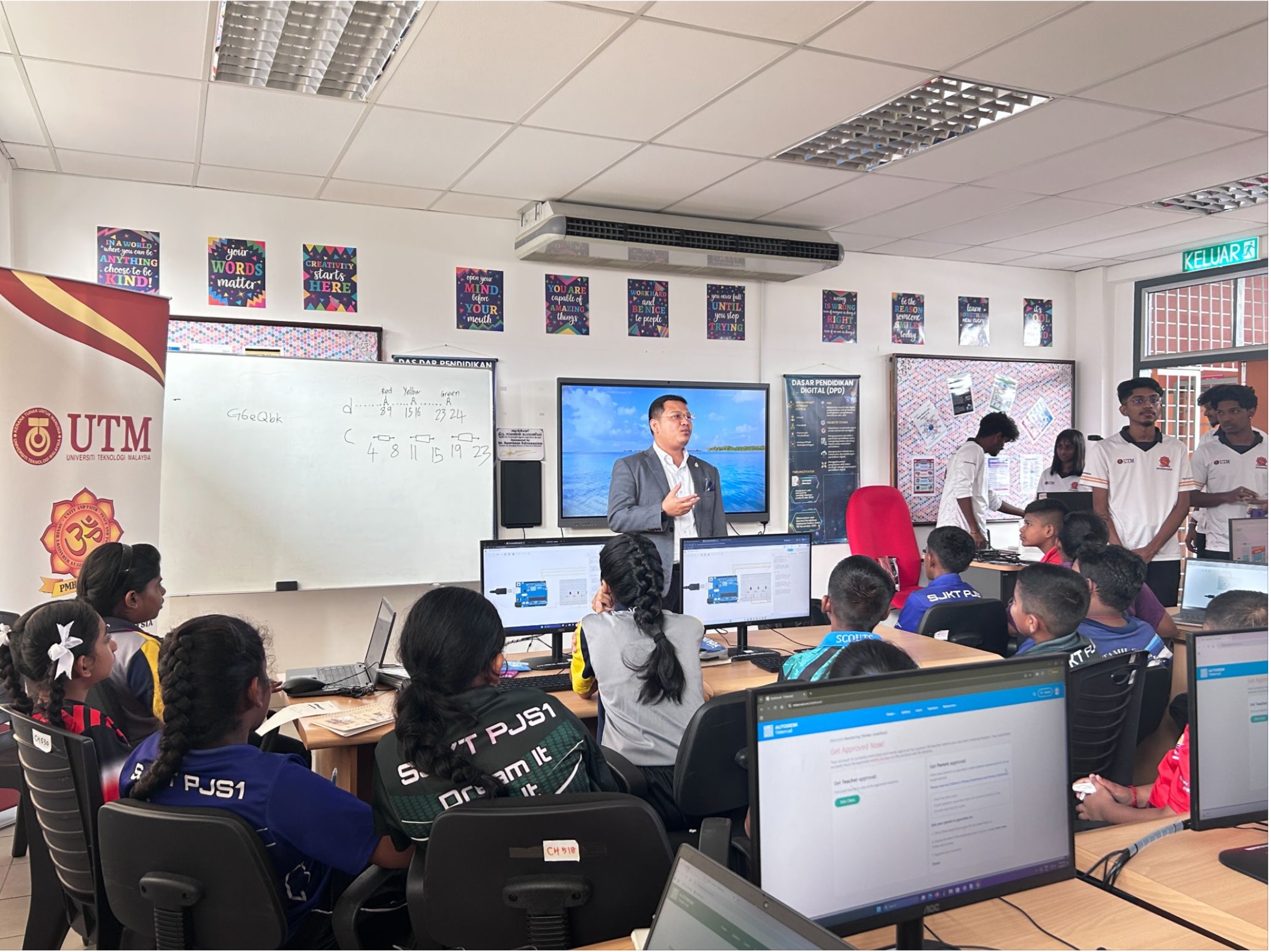
KUALA LUMPUR, Sep 9 – Puthiya Manitha Phase 2 by Persatuan Mahasiswa Hindu (PMH), Universiti Teknologi Malaysia (UTM) Kuala Lumpur, was organized at Sekolah Jenis Kebangsaan Tamil (SJK(T)) PJS1, Petaling Jaya, providing an interactive introduction to Science, Technology, Engineering and Mathematics (STEM) for 48 students. The programme aimed to introduce students to STEM beyond classroom theoretical learning through practical activities in engineering, robotics and programming.
The programme was organised by PMH UTM Kuala Lumpur in collaboration with the Institute of Electrical and Electronics Engineers (IEEE) Subsection Kuala Lumpur and IEEE UTM Kuala Lumpur Student Branch, supported by Vision Waste Disposal Sdn. Bhd. and Malaysian Telugu Foundation.
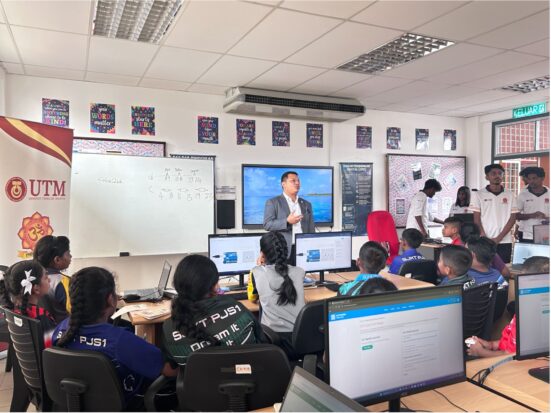
IEEE Subsection Kuala Lumpur Representative, Dr. Khairul Zahreen Mohd Arof, gave a motivational talk to the students, sharing insights on the importance of STEM education and opportunities in science and technology-related fields.
The Engineering session provided students with exposure to basic engineering principles through practical and hands-on activities. The facilitators took the students through activities to observe how engineering principles could be applied to solve problems. The students watched demonstrations and performed the activities in groups, encouraging them to actively participate, inquire, think logically and creatively, and understand the linkage between engineering ideas and their implementation in practice.
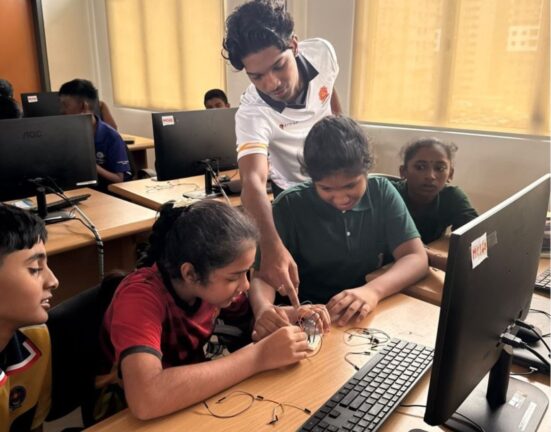
In the Robotics session, students learned the fundamentals of robotics and how robots are designed to accomplish specific tasks. Through demonstrations and hands-on activities, students explored how programmed instructions can control the movement and behavior of a robot. The session allowed students to see how robotics combines engineering, programming, and problem-solving to develop solutions for real-world applications.
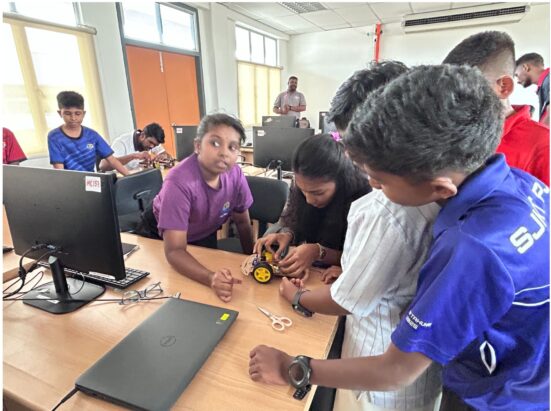
The Programming session provided students with the core idea of programming as giving clear directions to a computer or robot. Students explored the link between programming, robotics and everyday technology through simple examples and hands-on activities. Students were introduced to beginner-friendly platforms and technologies such as Arduino Uno, BBC micro and ESP32, along with Arduino IDE. The session included the basics of LED programming, sensors, servo motors and IF-ELSE decision-making. Students also explored Tinkercad Circuits as a virtual environment for electronic circuits and programming concepts.
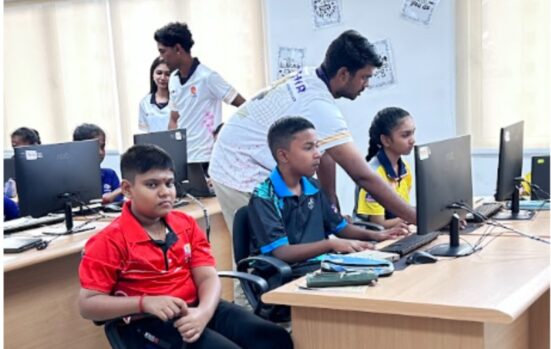
At SJK(T) PJS1, Puthiya Manitha Phase 2 motivated students to be actively involved, ask questions and experience STEM through hands-on activities. The program demonstrated the connections between engineering, robotics and programming, helping students to see how these areas come together to produce modern technology. The day wrapped up with a certificate presentation, closing ceremony and group photo.
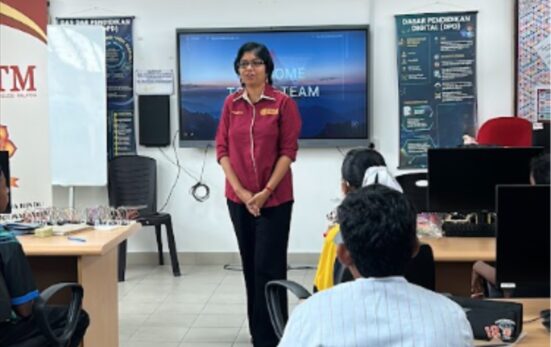
Puthiya Manitha Phase 2 gave PMH UTM Kuala Lumpur, together with IEEE Subsection Kuala Lumpur and IEEE UTM Kuala Lumpur Student Branch, an opportunity to bring STEM education closer to young students. Supported by Vision Waste Disposal Sdn. Bhd. and Malaysian Telugu Foundation, the program provided meaningful exposure to engineering, robotics, programming and technology, creating opportunities for students to explore, experiment and learn through practical experiences. Special thanks to the school administrators, teachers, community members and PMH UTM Advisor, Prof. Ir. Ts. Dr. Shreeshivadasan Chelliapan, who supported the workshop.
Prepared by Dr Pritheega Magalingam, Programme Advisor and Niveeshana Balachandran, President of PMH
