


📝 Summary
Dr. Nies Hui Wen, a Senior Lecturer at Universiti Teknologi Malaysia, completed a one-year postdoctoral fellowship at the Temasek Life Sciences Laboratory in Singapore, where she developed her research expertise in an international environment and contributed to cutting-edge advancements in life sciences research. Her work focused on plant diagnostics using DiSTAP phytohormone sensors, and she applied her computational expertise to analyze agricultural datasets and improve agricultural precision and sustainability. The experience has enabled her to expand her research expertise and strengthen global academic networks.
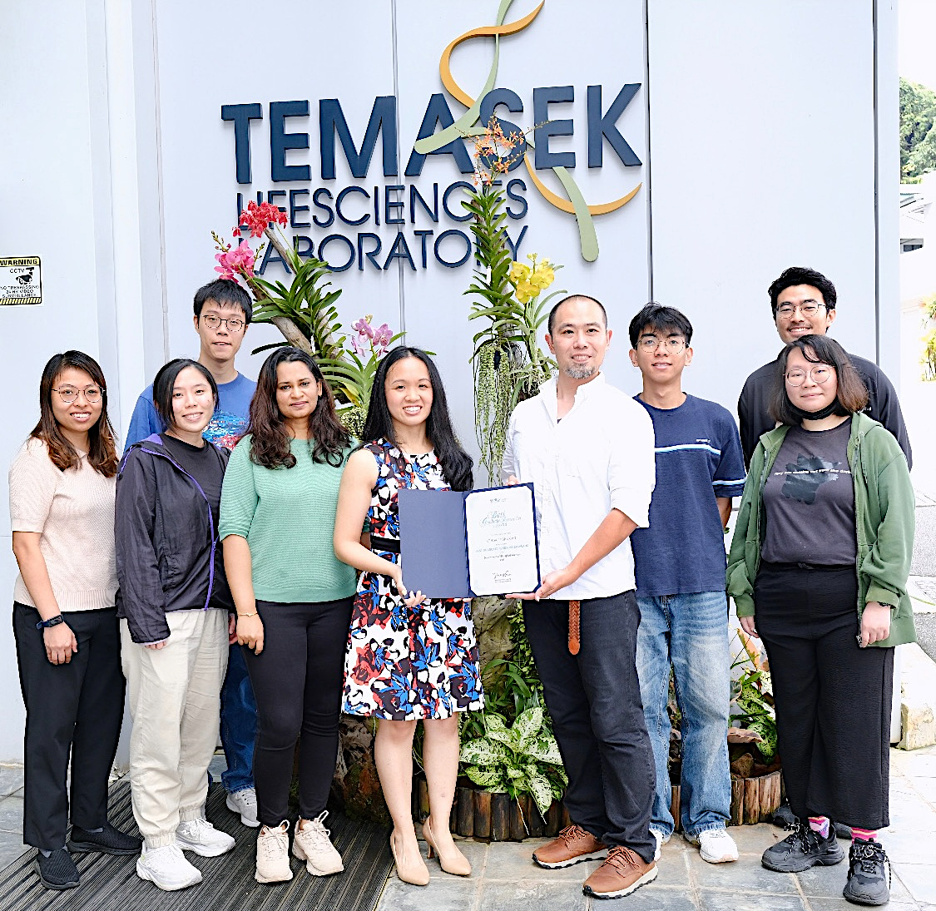
Senior Lecturer at the Faculty of Computing, Dr. Nies Hui Wen, courageously stepped out of her comfort zone to undertake a postdoctoral fellowship at the Temasek Life Sciences Laboratory (TLL), Singapore, an institution supported by Temasek Trust and affiliated with both the National University of Singapore (NUS) and Nanyang Technological University (NTU). The experience provided her with an opportunity to further develop her research expertise in an international research environment and engage with researchers from different backgrounds.
From 2 June 2025 to 31 May 2026, she successfully completed a one-year postdoctoral training programme under the mentorship of the Senior Principal Investigator at TLL and Adjunct Assoc. Prof. at NUS, Dr. Daisuke Urano.
Established in 2002, TLL is an independent life sciences research institute comprising approximately 230 researchers from over 20 countries. Through its close collaborations with NUS and NTU, TLL has earned recognition as one of Asia’s leading centres for life sciences research. This invaluable international experience has enabled Dr Nies to expand her research expertise, strengthen global academic networks and contribute to cutting-edge advancements in life sciences research while gaining broader exposure to interdisciplinary work.
During her postdoctoral fellowship at TLL, Dr. Nies focused on plant diagnostics using DiSTAP phytohormone sensors. DiSTAP (Disruptive and Sustainable Technologies for Agricultural Precision) is an interdisciplinary research programme under the Singapore-MIT Alliance for Research and Technology (SMART) Centre, bringing together leading researchers from MIT, TLL, NUS and NTU. The programme provided a platform for her to apply her computational expertise within a multidisciplinary research setting focused on agricultural precision and sustainability.
Leveraging her expertise in machine learning and computational analysis, Dr. Nies contributed to the analysis of agricultural datasets, including data from Arabidopsis and other plant species, to better understand plant responses to environmental stress. Her work supported the development of advanced sensing technologies aimed at improving agricultural precision and sustainability, while strengthening the connection between computational analysis and plant science research.
Reflecting on her experience, Dr. Nies shared, “My year at TLL transformed the way I think about communicating research to a broader international audience through seminars, collaborations, and meaningful interactions with researchers from around the world. I am bringing these experiences back to UTM, together with a clearer vision of how I want to advance my future research.”
This postdoctoral experience built upon a strong foundation in bioinformatics, artificial intelligence, and machine learning that Dr. Nies had developed throughout her academic career at Universiti Teknologi Malaysia (UTM). Her research background includes cancer bioinformatics and gene analysis, and she earned her Bachelor of Bioinformatics (Hons), Master of Philosophy, and PhD from UTM’s Faculty of Computing. These experiences provided the foundation for her to apply computational approaches to research challenges beyond her earlier areas of study.
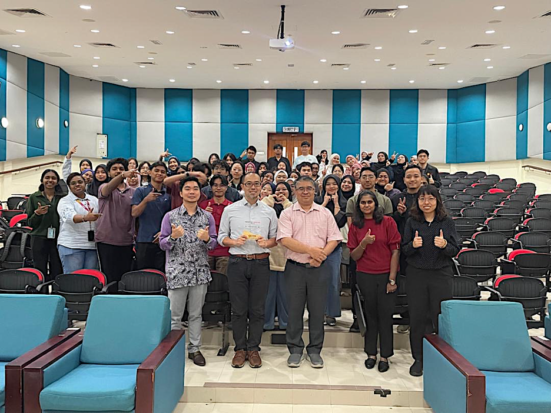
The collaboration also strengthened academic ties between TLL and UTM. As part of this engagement, Adjunct Assoc. Prof. Dr Daisuke Urano visited UTM’s Faculty of Computing to deliver a guest lecture to staff and students. During the session, he shared insights into his research on plant stress signalling and optical sensing technologies, fostering knowledge exchange and opening new opportunities for future research collaboration between the two institutions.
Following the successful completion of her postdoctoral fellowship, Dr. Nies returned to UTM, where she continues to contribute as a Senior Lecturer at the Faculty of Computing, teaching and supervising the next generation of researchers and innovators. Her return also allows her to bring back the knowledge, experience and perspectives gained through her international research exposure.
This was not her first international research experience. Prior to her appointment at TLL, she completed a research internship with the BISITE Research Group at the University of Salamanca, Spain, under the supervision of Prof. Dr. Juan Manuel Corchado. Her international experiences reflect both her commitment to academic excellence and UTM’s ongoing efforts to strengthen research collaborations with leading institutions around the world.
From applying machine learning and computational analysis to address real-world challenges in agriculture to building meaningful connections across cultures, Dr. Nies embraced every opportunity for growth during her time at TLL. Whether conducting interdisciplinary research, engaging with global experts, or exchanging ideas over a simple cup of coffee, she demonstrated the adaptability, resilience, and innovative spirit that define UTM researchers.
Her journey serves as an inspiring example of how UTM academics can thrive on the international stage, contribute to world-class research, and bring back valuable knowledge, networks, and perspectives that enrich the University’s research ecosystem and global reputation.
About Temasek Life Sciences Laboratory: https://www.tll.org.sg/
