
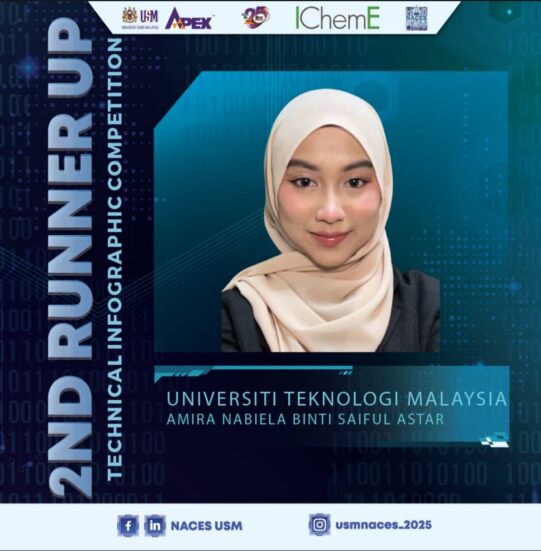
JOHOR BAHRU, Dec 14 – A representative from the Faculty of Chemical and Energy Engineering (FKT), Universiti Teknologi Malaysia (UTM), Amira Nabiela Saiful Astar, has achieved recognition as the 2nd runner-up in the Technical Infographic Competition at the National Chemical Engineering Symposium (NACES) 2025, hosted by Universiti Sains Malaysia (USM).
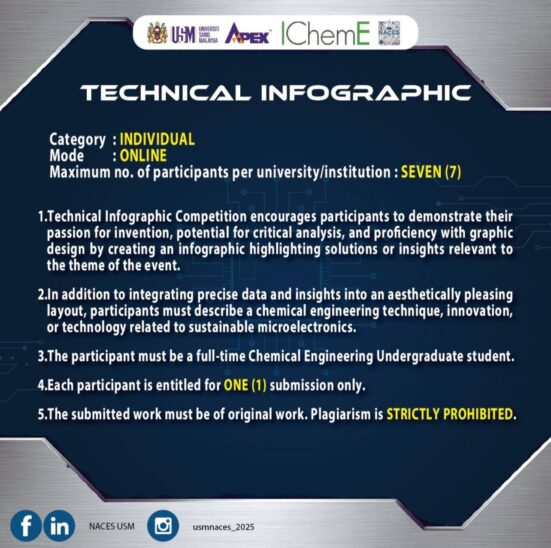
The competition carried the theme Synergising Chemical Engineering and Sustainable Microelectronics for a Greener Future and encouraged participants to demonstrate their creativity, analytical skills, and design proficiency in presenting solutions relevant to sustainable microelectronics.
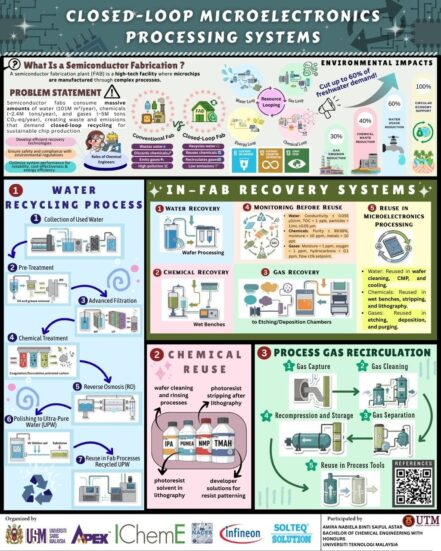
Under the guidance of Dr Amnani Shamjuddin, Amira Nabiela presented her infographic on Closed-Loop Microelectronics Processing Systems, which highlighted how semiconductor fabrication plants can reduce their heavy resource consumption through recycling and recovery systems. Conventional fabrications consume vast amounts of water, chemicals, and gases, but closed-loop approaches can cut water demand by up to 60 per cent, chemicals by 40 per cent, and gases by 30 per cent. Her work illustrated advanced water recycling, chemical purification, and process gas recirculation, all while meeting strict purity standards and supporting a circular economy in chip manufacturing.
Amira Nabiela expressed that participating in the competition provided valuable experience in communicating complex engineering concepts through visual design and strengthened her confidence in science outreach.
“This competition has taught me how impactful visual communication can be in sharing sustainable engineering solutions. It motivates me to keep exploring creative ways to connect science with society,” – Amira Nabiela said.
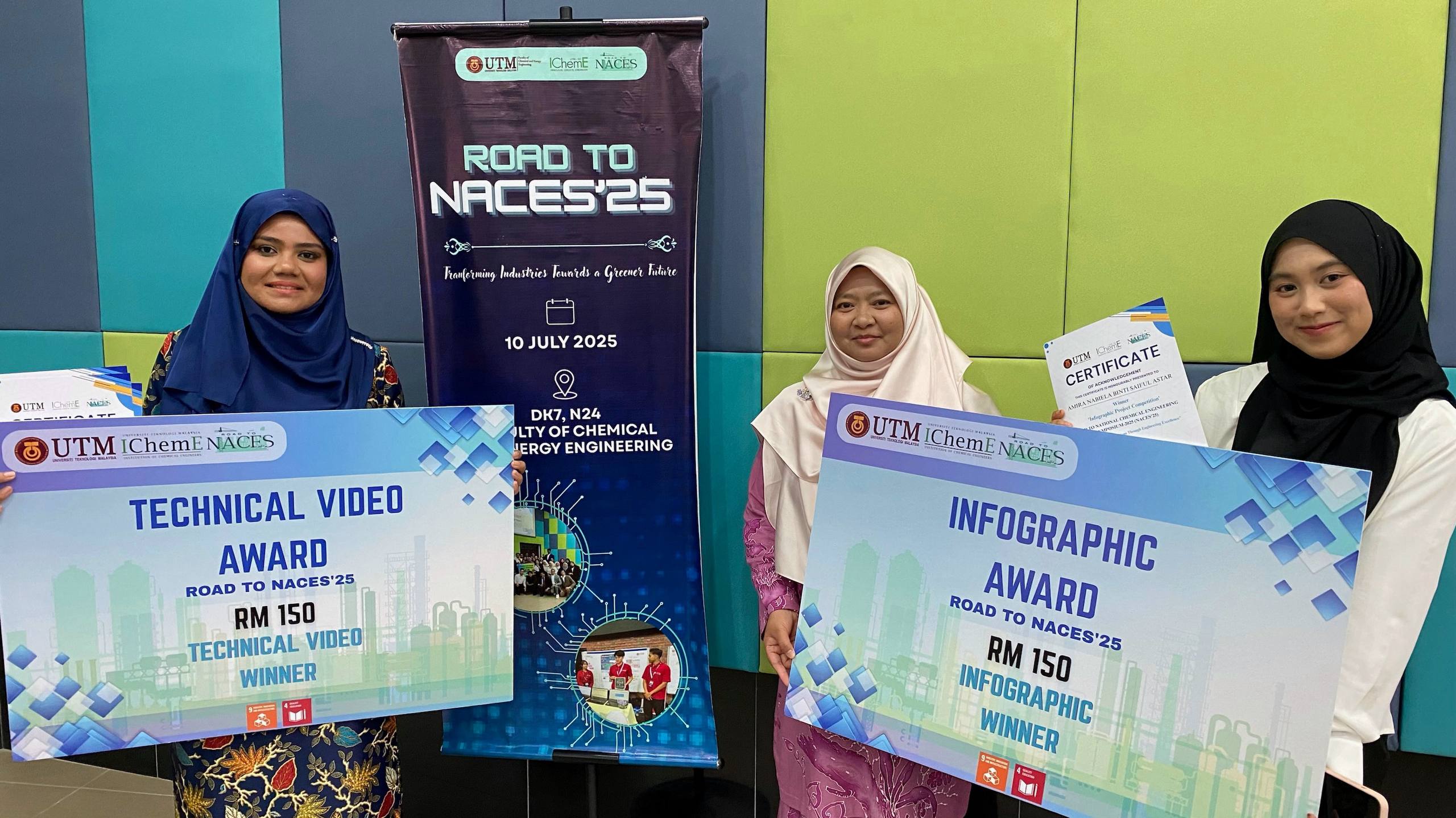
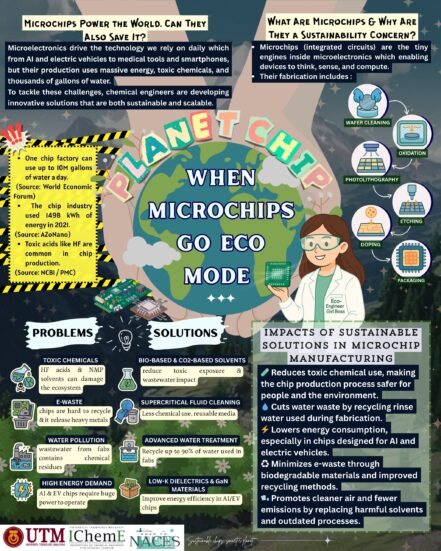
Before representing UTM at NACES 2025, she won 1st place in the Road to NACES’25 Technical Infographic Competition hosted by the Institute of Chemical Engineers (IChemE) Student Chapter, UTM on 10 July 2025. Her winning infographic, Planet Chip: When Microchips Go Eco Mode, explores the environmental impact of microchip manufacturing and highlights sustainable solutions. It presents how chemical engineers are reducing toxic chemical use, water waste, and energy demand through innovations like bio-based solvents, supercritical cleaning, and advanced water recycling.

UTM congratulates Amira Nabiela on her accomplishments and acknowledges her dedication to advancing sustainable engineering solutions, reflecting the university’s commitment to nurturing future-ready engineers who combine technical expertise with creativity and innovation.
By Amira Nabiela Saiful Astar and Amnani Shamjuddin
