
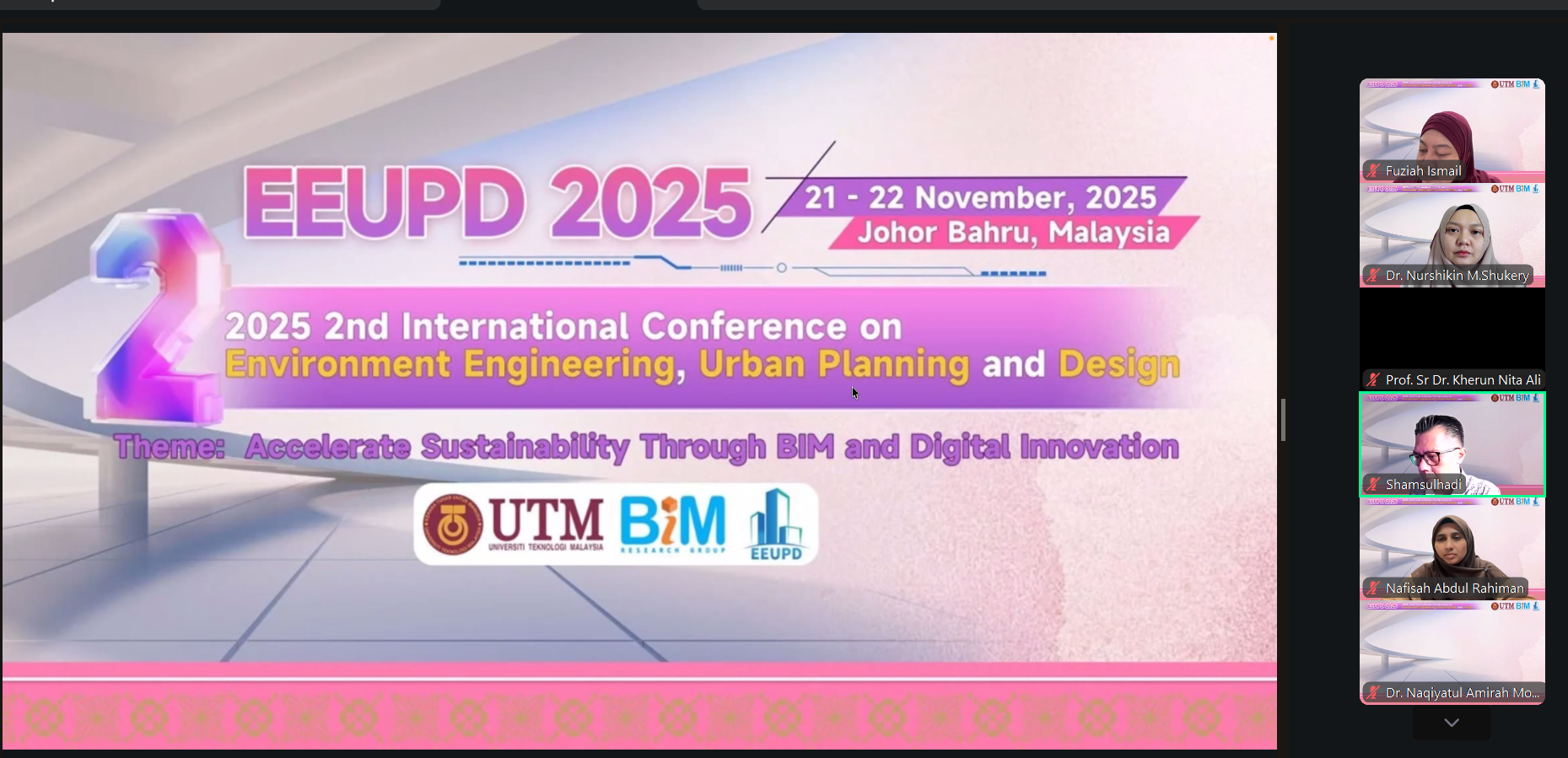
JOHOR BAHRU, Nov 21 – The 2025 2nd International Conference on Environment Engineering, Urban Planning and Design (EEUPD), hosted by Universiti Teknologi Malaysia (UTM), concluded successfully on 21 November 2025, reaffirming its role as a leading international platform for advancing research in environmental engineering, digital technologies, and sustainable urban development. Supported by an international committee comprising experts from across the globe, the fully online conference attracted a strong and diverse audience of scholars, researchers, and practitioners.
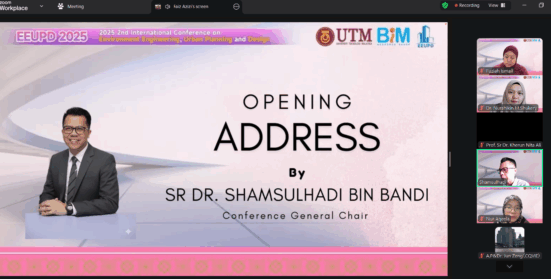
This year’s keynote session saw a total of 135 participants joining online, with attendees from Malaysia, China, and Indonesia. The Malaysian audience included representatives from Public Works Department (JKR), Universiti Teknologi MARA (UiTM), UTM, and Universiti Malaysia Pahang Al-Sultan Abdullah (UMPSA), reflecting the strong regional interest in digital sustainability and urban innovation. The event opened with a welcoming address by Sr Dr. Shamsulhadi Bandi, who emphasized the imperative of digital transformation in addressing global environmental challenges. He highlighted the importance of collaborative research networks and knowledge sharing, noting that EEUPD continues to provide a vital platform for such engagements.
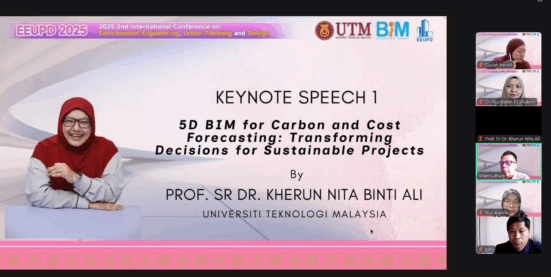
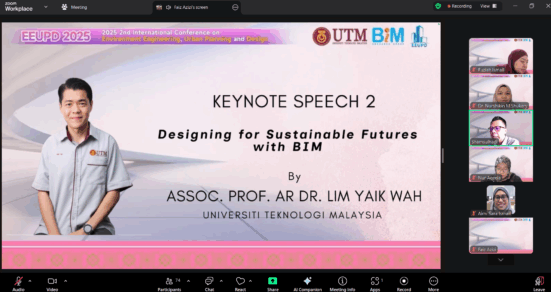
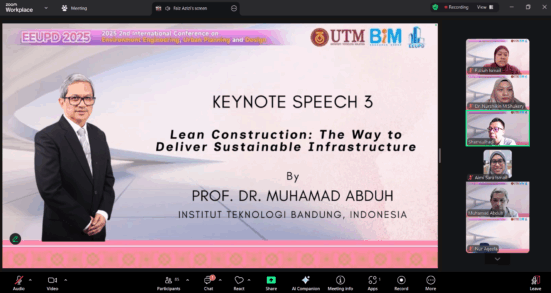
The conference featured three distinguished keynote speakers. Prof. Sr Dr. Kherun Nita Ali from UTM delivered a compelling presentation on the role of Building Information Modelling (BIM) and digital technologies in shaping sustainable futures in the built environment. Assoc. Prof. Ar Dr. Lim Yaik Wah, also representing UTM, explored how computational design is redefining building performance and influencing modern urban development. Meanwhile, Prof. Dr. Muhamad Abduh from Institut Teknologi Bandung (ITB), Indonesia, offered insights into lean construction strategies that promote efficiency and sustainability.
A total of 20 research papers were submitted across five thematic tracks, each focusing on different aspects of digital and environmental sustainability. The tracks ranged from digital technologies in environmental engineering, smart cities, BIM-enabled sustainable practices, human-centred urban design, to policy and educational frameworks supporting digital transformation. This rich diversity of topics underscored the global research community’s commitment to addressing complex urban and environmental issues through innovative digital solutions.
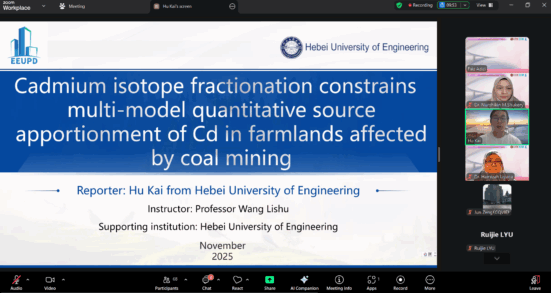
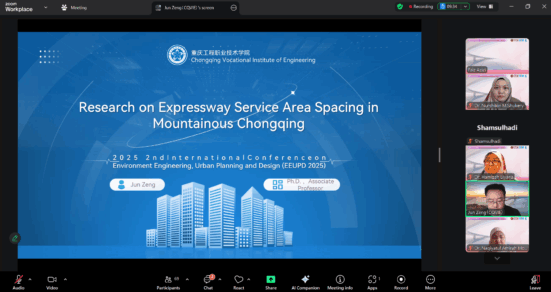
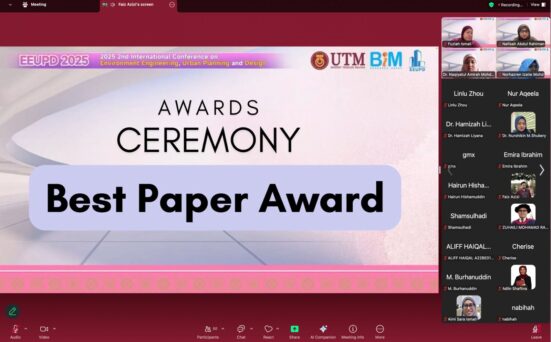
Outstanding contributions were recognised through the conference’s awards programme. For Track 1, the Best Paper Award went to Xinru Yan of Hefei General Machinery Research Institute Co., Ltd. for her study on the application of magnetic coagulation technologies in advanced sewage treatment processes.
In Track 2, Zhihao Shen from Shenzhen University received the Best Paper Award for his research on coupling daily vitality with disaster recovery in flood-prone urban areas, work that also earned him the prestigious Overall Best Paper Award. The Track 3 Best Paper Award was presented to Luo Wei of Chongqing Architectural Design Institute Co., Ltd for his comprehensive study on integrated development models for urban renewal projects.
For Track 4, Ji Wu from Soochow University was recognised for his research on multidimensional protection and renewal strategies in cultural and historical urban districts. In Track 5, Jundong Fu of Southeast University received the Best Paper Award for his exploration of carbon asset management models in the broader context of global sustainability.
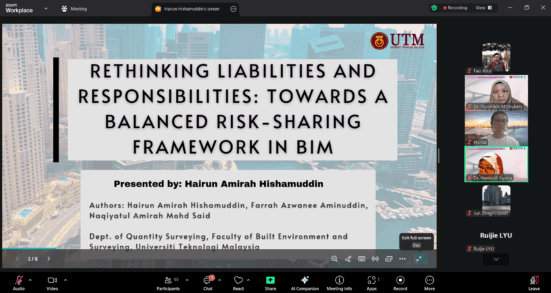
The Best Presenter Award was conferred upon Hairun Amirah Hishamuddin from UTM for her outstanding presentation titled “Rethinking Liabilities and Responsibilities: Towards a Balanced Risk-Sharing Framework in BIM.”
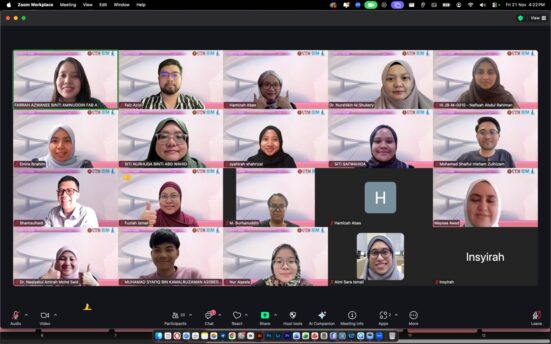
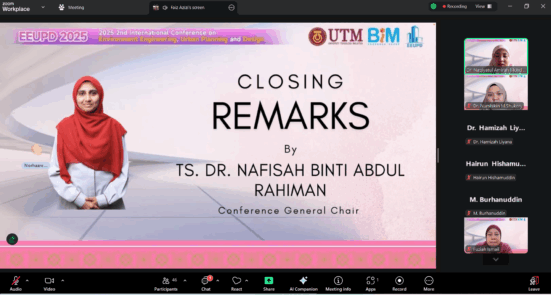
The conference concluded with closing remarks by Ts Dr. Nafisah Abdul Rahiman, who expressed sincere appreciation to all participants, keynote speakers, authors, reviewers, and international committee members for their contributions. She highlighted that EEUPD 2025 not only showcased high-quality research but also strengthened global collaboration and inspired new pathways for innovation in environmental and urban sustainability.
With robust international participation, impactful research presentations, and dynamic discussions, EEUPD 2025 reaffirmed UTM’s leadership in fostering global discourse on digital sustainability and the advancement of smart, resilient, and environmentally responsible cities.
