



📝 Summary
Universities should create spaces where students feel safe to fail and question, allowing them to think independently and take responsibility for their decisions. This means giving students room to explore and make choices, with clear expectations and feedback, rather than following a rigid platform. By embracing mistakes and open discussion, universities can help students develop the skills to navigate uncertain situations and make informed decisions after graduation.
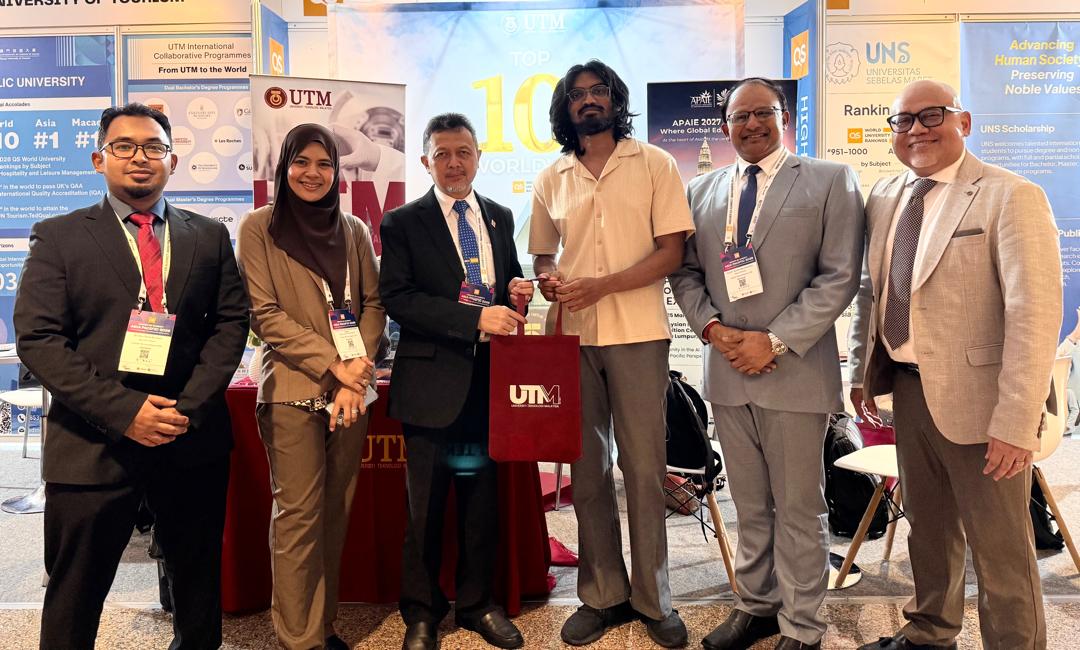
At the opening of the QS Higher Ed Summit: Asia Pacific 2026 in Bali, Nanyang Technological University (NTU) student entrepreneur and LintLabs founder Vasanth Sreeram spoke about his education journey and the need for universities to create spaces where it is safe to fail and safe to question. LintLabs is a Singapore-based artificial intelligence (AI) lab that builds AI tools and agents for businesses and teaches people to use AI. His experience points to a larger question: are universities preparing students to think for themselves, or to succeed within systems already designed for them?
Universities need structure around learning, with outcomes to meet, skills to practise and assessments to complete. A sandbox exercise gives students a place to try, make decisions and see what follows without the cost of a real-world mistake. But the sandbox has walls. Students know it is a constructed environment. They may complete the exercise and score well, yet the real test may begin when the instructions stop being useful.
This does not mean simulations have no place in higher education. They help students practise skills, test decisions and understand consequences before facing real situations. The difficulty comes when an exercise is so carefully constructed that students learn to follow its logic rather than examine it. If every problem has a known answer and every route leads to the instructor’s preferred outcome, the exercise may be safe but too limited.
The question is not whether universities should use simulations, but how much room students have to explore. A rigid platform can turn learning into a sequence of approved moves. Students follow the route and reach the expected outcome, with little space to question the exercise, improve it or take it somewhere its designers did not anticipate. Structure should help students begin, not decide in advance how far they may go.
A more open exercise still needs direction. Students need a purpose, clear expectations and useful feedback. Within those boundaries, they should have room to make choices and see where they lead. Some may find a solution the instructor did not expect; others may discover that a confident idea does not work. Both outcomes can be useful. The point is not to make everyone arrive at the same answer, but to help students understand how they arrived at one.
This is where mistakes matter. Students should be able to say what went wrong, what they missed and what they might try next. Instructors should be able to do the same. A mistake kept quiet teaches little. Discussed openly, it can reveal a weak assumption or a better way forward. The lesson may be uncomfortable, which may be why it is remembered.
Students will believe that mistakes are part of learning only when they see how a university treats them. If one error follows them through a course, or a difficult question is taken as disrespect, the message is clear: keep your head down, give the expected answer and hide uncertainty. That may prevent embarrassment in the moment, but it does little to prepare students for situations where no answer has been supplied.
Professors are human. They know a great deal, but not everything. Their ideas can be questioned and their interpretations tested. A student who asks why is not necessarily being difficult; sometimes, the student is doing the work. Respectful disagreement belongs in a university classroom because it asks teachers and students to explain what they think, and why.
This does not diminish the professor’s role. It asks more of it. Teaching is not only the delivery of knowledge; it is also the creation of conditions in which students can handle, challenge and use knowledge responsibly. That requires confidence and humility. An instructor who can say, “I may have missed something,” gives students permission to do the same. Authority can then guide inquiry instead of closing it down.
Students need to feel safe enough to take risks. This does not mean lowering standards or pretending every decision is equally good. It means they can try an unfamiliar approach, receive honest feedback and try again without being reduced to the first attempt. Failure should have consequences, perhaps, but it should also have a way forward.
A university cannot promise that every experiment will work. It can decide whether a failed attempt becomes a dead end or part of learning. That choice shapes whether students wait for permission or learn to make a judgement, and whether they hide mistakes or examine them. It also shapes how they act after graduation, when decisions must be made with incomplete information and no instructor nearby.
For UTM and other universities in Malaysia, this raises an important question about the graduates they hope to develop. Beyond subject knowledge, students need opportunities to think independently, question assumptions respectfully and take responsibility for decisions. Learning environments should let them test ideas, receive guidance and reflect on consequences while maintaining clear expectations and academic standards.
Rethinking higher education may begin with a modest change. Leave the door open. Let students question the platform, the answer and, respectfully, the professor. Let them make mistakes and learn from what follows. The world beyond university will not always provide a guide. Students should have some practice finding their way.
