


📝 Summary
ASEAN universities should collaborate as one regional education ecosystem rather than competing as individual institutions to become a destination of choice for international students. The region’s geographical proximity alone is not enough, and seamless academic recognition is necessary to facilitate intraregional student mobility. ASEAN must become a global education powerhouse by combining its strengths in education, technology, and industry to offer a distinctive international education experience.
BALI, 4 November 2026 – Geographical proximity alone will not make ASEAN a destination of choice for international students. Seamless academic recognition will, said Universiti Teknologi Malaysia (UTM) Associate Vice-Chancellor (Quality & Digital Transformation), Prof. Ts. Dr. Wan Mohd Nasir Wan Kadir.
Speaking as a plenary panellist at the QS Higher Ed Summit: Asia Pacific 2026, he urged ASEAN universities to stop competing as individual institutions. Instead, he said, they should collaborate as one regional education ecosystem.
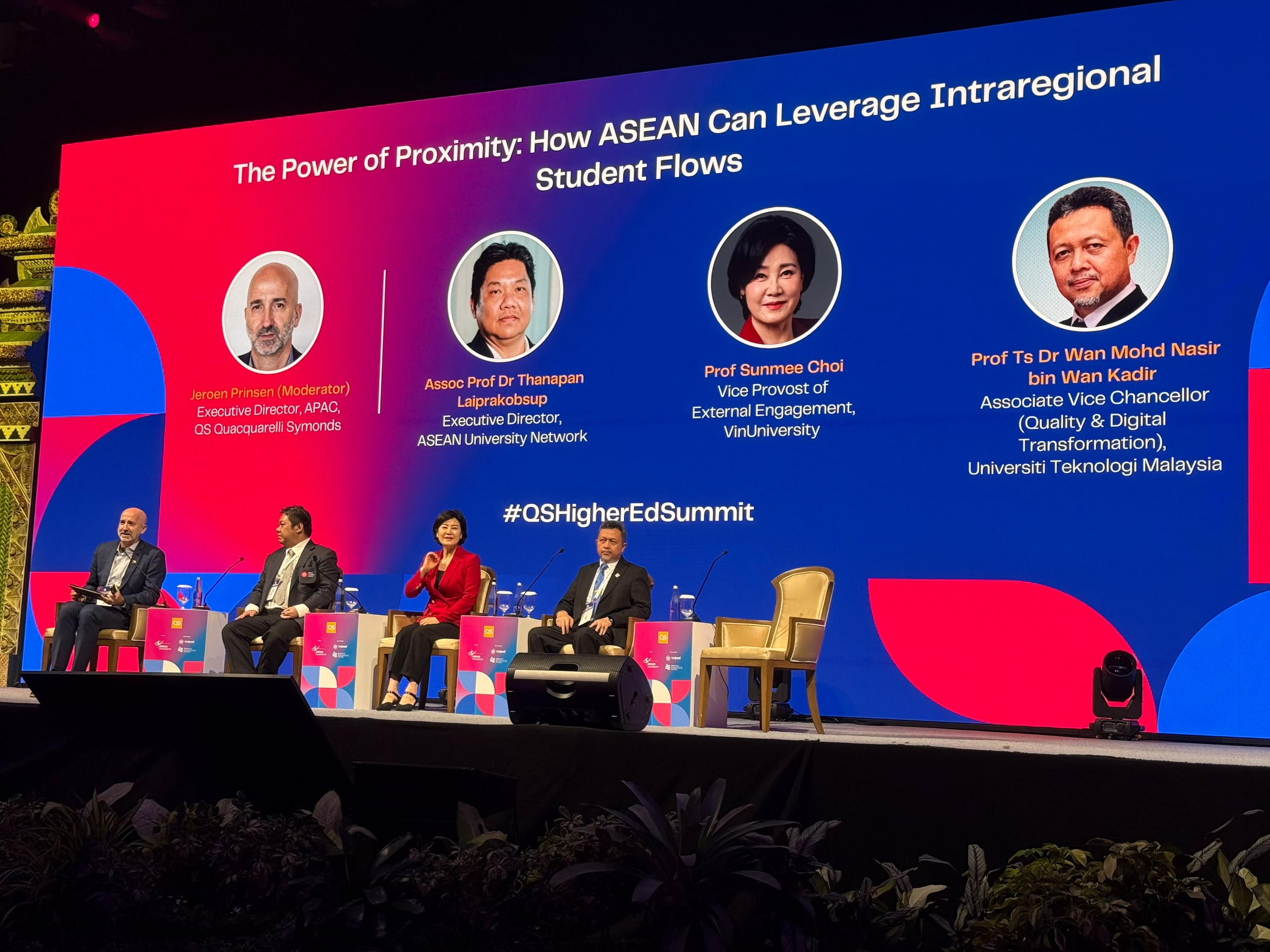
The panel, The Power of Proximity: How ASEAN Can Leverage Intraregional Student Flows, was held at the Bali International Convention Centre. It examined how intraregional flows are becoming a stronger engine of internationalisation for ASEAN institutions as growth to the traditional Big Four destinations slows.
Prof. Wan Mohd Nasir shared the stage with Prof. Sunmee Choi, Vice Provost of External Engagement at VinUniversity, and Assoc. Prof. Dr. Thanapan Laiprakobsup, Executive Director of the ASEAN University Network. The session was moderated by Jeroen Prinsen, Executive Director, APAC, at QS Quacquarelli Symonds.
The Power of Proximity plenary panel at the QS Higher Ed Summit: Asia Pacific 2026 in Bali.
From left: moderator Jeroen Prinsen (QS), Assoc. Prof. Dr. Thanapan Laiprakobsup (ASEAN University Network), Prof. Sunmee Choi (VinUniversity) and Prof. Ts. Dr. Wan Mohd Nasir Wan Kadir (UTM).
The summit runs from 3 to 5 November, hosted by BINUS University under the theme “Advancing Education for Purpose and Impact”.
Asked whether growing interest in studying within Asia is a lasting shift or a reaction to pressures elsewhere, Prof. Wan Mohd Nasir said it was both. He acknowledged that affordability, immigration policies, geopolitical uncertainty and rising living costs in the traditional Big Four destinations play a part.
The more fundamental development, he argued, is Asia’s rise as a centre of educational excellence, innovation and economic opportunity. ASEAN countries are investing in university quality, international partnerships and closer ties with industry.
That quality must be what draws students, not price. “ASEAN must become a destination of choice, not merely a convenient alternative,” he said.
On the single biggest obstacle to intra-ASEAN mobility, Prof. Wan Mohd Nasir pointed to the lack of seamless academic recognition and integration across the region’s higher education systems. A student may be keen to go abroad, he explained, but still worry about credit transfer, curriculum fit and whether the experience will delay graduation. Differences in academic regulations and institutional procedures add to the hesitation.
His answer is greater academic interoperability: universities recognising one another’s standards and offering flexible learning pathways. He linked this to Shift 8 of Malaysia’s Higher Education Blueprint, Flexible Education and Lifelong Learning, which promotes recognition of learning and alternative credentials such as micro-credentials.
Drawing on UTM’s experience with inbound and outbound mobility, he stressed clear learning agreements, transparent credit-transfer arrangements and close coordination between partner universities. Mobility should also build real competencies, including intercultural understanding, adaptability and collaboration.
“Geographical proximity creates opportunity, but academic recognition creates mobility,” he said.
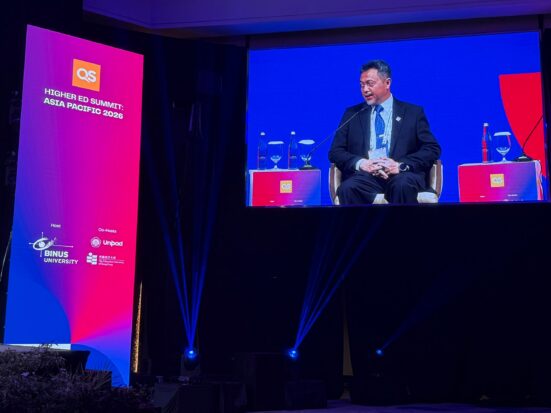
Prof. Ts. Dr. Wan Mohd Nasir Wan Kadir shares UTM’s perspective on intra-ASEAN student mobility.
For decades, ASEAN universities have competed with Australia, the UK, the US and Canada for students. Prof. Wan Mohd Nasir said the region must now think differently, moving from institutional competitiveness to regional collaboration.
ASEAN’s strengths in education, technology, industry, sustainability, cultural diversity and tourism, he said, can be combined into a distinctive international education experience. He cited two Malaysian examples.
MyEdutourism, part of Malaysia’s higher education internationalisation agenda, offers structured learning beyond the classroom. The national action plan targets 4,000 registered edutourism learners in 2026 and 6,000 a year in 2027 and 2028. UTM takes a similar approach through international summer schools that blend engineering, sustainability, Malaysian culture and community-based learning.
The Johor–Singapore Special Economic Zone (JS-SEZ) shows how two ASEAN economies can combine complementary strengths. Its agreement targets 50 projects in the first five years and 20,000 skilled jobs over ten years, opening doors for industry exposure, research collaboration and talent development.
He described an international student at UTM who experiences Malaysia’s heritage, takes part in industry learning within the Johor–Singapore ecosystem and builds networks across borders. That model, he said, can be replicated across ASEAN.
“Individually, our universities compete. Collectively, ASEAN can become a global education powerhouse.”
Prof. Wan Mohd Nasir said graduate employability will be among the strongest drivers of the next wave of intraregional mobility. Students and parents now look past location and rankings to what a degree makes possible: meaningful jobs, cross-cultural work and roles in emerging industries.
This matters in ASEAN, he noted, where semiconductors, artificial intelligence, digital technology, renewable energy and advanced manufacturing increasingly cross national borders. He pointed to cooperation among Singapore Polytechnic, Republic Polytechnic, ITE Education Services and Malaysian industry partners, and to the Skills4Johor initiative, as examples of education and industry meeting workforce needs together.
He called for more industry-linked mobility programmes, regional internships and joint innovation projects. Their success, he said, should be measured by competencies gained, employment readiness and long-term career progression, not by headcounts.
“Mobility should not be measured simply by how many students cross borders, but by how effectively those experiences prepare graduates to succeed across borders. Mobility is about developing capabilities, expanding opportunities, and preparing regional talent.”
Asked what will have made intraregional mobility take off five years from now, Prof. Wan Mohd Nasir said the region must move from scattered initiatives to a genuinely connected ASEAN higher education ecosystem. Today’s partnerships, exchanges and frameworks are strong, he said, but many still run separately, with different procedures, recognition mechanisms and funding.
He pictured a student who starts at UTM, completes a recognised module in Thailand, joins an industry project in Singapore and graduates with competencies valued across the region. Short-term programmes such as MyEdutourism could complement this by bringing more learners into ASEAN.
“By 2031, ASEAN mobility should become a natural part of higher education, not an exceptional opportunity,” he said. If that happens, ASEAN will be not only an integrated economic community, but an integrated learning and talent community.
Earlier the same day, Prof. Wan Mohd Nasir also took part in the invitation-only Presidential Roundtable, The AI Century: Will Asia Pacific Lead It?
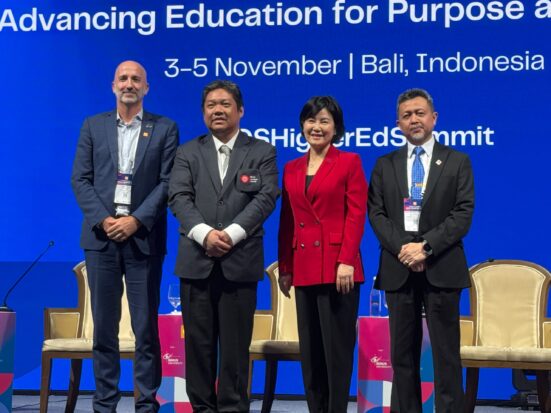
From left: Jeroen Prinsen, Assoc. Prof. Dr. Thanapan Laiprakobsup, Prof. Sunmee Choi and Prof. Ts. Dr. Wan Mohd Nasir Wan Kadir after the session.
