


📝 Summary
A researcher from Universiti Teknologi Malaysia (UTM) has developed a vessel forecasting framework to improve safety and efficiency in congested waters around offshore installations. The framework uses Automatic Identification System (AIS) data and a continuous spatial interaction module to predict the trajectories of surrounding vessels, reducing collision risks and improving autonomous craft navigation. The research aims to support the development of safer and more sustainable low-carbon port ecosystems.
The global transition toward sustainable maritime operations is transforming coastal engineering and port ecosystems. Modern seaports are becoming decarbonised maritime logistics hubs, alongside the development of offshore renewable infrastructure, including wind turbines, floating photovoltaic systems, marine energy storage and subsea power transmission corridors. While these installations support decarbonisation, they also occupy navigable waters, placing pressure on shipping lanes and coastal routes.
In these restricted spaces, conventional vessel traffic must coexist with autonomous craft, such as Unmanned Surface Vehicles (USVs), and moored offshore installations. Offshore platforms alter vessel routes, reduce sea room and increase collision risks, especially near congested ports. USVs are also increasingly used for hazardous inspection, autonomous maintenance, logistics and environmental surveillance near offshore energy platforms. To operate safely without human intervention, these craft need to predict the future trajectories of surrounding merchant vessels.

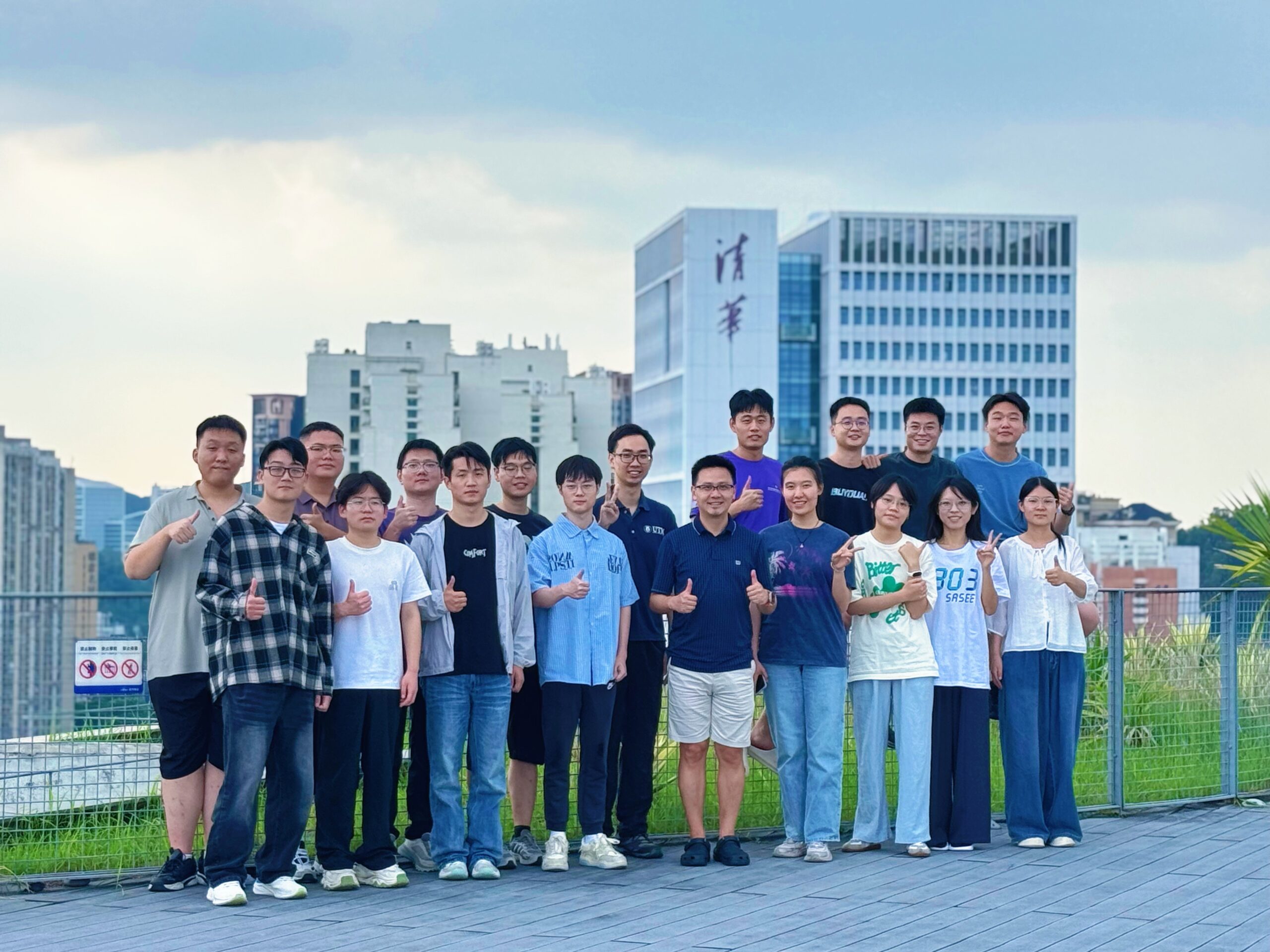
To address these challenges, PhD student Goh Jie Heng from the Marine Technology Center (MTC), Faculty of Mechanical Engineering (FKM), Universiti Teknologi Malaysia (UTM), under the supervision of Assoc. Prof. Dr. Kang Hooi-Siang, completed a six-week research attachment under the Tsinghua Global Research Program (GRP) 2026 at Tsinghua Shenzhen International Graduate School (Tsinghua SIGS). He was supervised by Assoc. Prof. Li Binbin at the host institution. Based at the Innovation Lab for Digital and Intelligent Offshore Floating Systems, the collaboration focused on an interaction-aware ship trajectory prediction framework for waters around offshore floating systems.
Conventional maritime forecasting methods often extrapolate the movement of an individual vessel from its past motion. As a result, they may fail to capture interactions between multiple vessels and collision-avoidance behaviour governed by the International Regulations for Preventing Collisions at Sea (COLREGs). To address this limitation, the project used Automatic Identification System (AIS) data mining to capture broader traffic patterns. The work began with preprocessing, anomaly removal and trajectory reconstruction using real-world AIS messages from the Straits of Malacca and Singapore.
A key milestone was the development of a continuous spatial interaction module using the Radial Distribution Function (RDF). Rather than treating nearby ships as separate, unrelated points, the module measures local vessel density across directional sectors associated with COLREGs principles, including port, starboard and astern encounter zones. It converts encounters involving different numbers of vessels into fixed-length spatial perception vectors, capturing traffic patterns while keeping computational demands manageable.
By representing surrounding traffic as a continuous spatial pattern, the module was designed to account for the changing number and positions of nearby vessels without treating each encounter as an isolated event. This is particularly relevant in constrained waters, where a vessel’s next manoeuvre may depend on the movements of several ships and the available room to navigate. The research therefore links traffic perception with trajectory forecasting, with the broader aim of helping autonomous craft anticipate surrounding vessel movements before selecting a safe path.
These vectors were integrated into a Sequence-to-Sequence Long Short-Term Memory (Seq2Seq-LSTM) deep learning architecture. The encoder processed historical vessel movements alongside RDF-based traffic information, while the decoder generated multiple future trajectory points. The team compared the approach with Gated Recurrent Units (GRU), Bidirectional GRU (Bi-GRU) and Transformer models under standardised hyperparameter settings. Evaluation using Root Mean Square Error (RMSE) indicated that traffic-aware input reduced trajectory prediction errors across multiple time horizons. The approach could support digital twin integration and real-time USV path planning.
Beyond modelling and laboratory work, the attachment supported international academic exchange. Weekly research seminars and discussions with Tsinghua faculty and researchers offered insights into hydrodynamic boundaries, marine mooring systems and offshore digital twin frameworks. These exchanges helped refine research methods and highlighted the value of cross-border scientific collaboration.

The attachment also offered opportunities for cultural exchange. Coinciding with the Mid-Autumn Festival, the programme introduced Goh to Chinese festive traditions. Sharing mooncakes, seasonal delicacies and holiday reflections with laboratory members and international scholars encouraged camaraderie and mutual appreciation, showing how personal connections can complement scientific cooperation.
Looking ahead, the experience provides a basis for continued collaboration between UTM and Tsinghua University. Planned work includes co-authoring journal articles and improving the predictive model with physics-informed hydrodynamic constraints to better represent vessel-specific manoeuvring limits. Longer-term plans include testing closed-loop USV collision avoidance in operational marine digital twin testbeds.
The programme reflects UTM’s commitment to developing researchers who contribute to international scientific progress. By combining data-driven maritime artificial intelligence with offshore green infrastructure research, this collaboration aims to support safer and more sustainable low-carbon port ecosystems.

