


📝 Summary
Universiti Teknologi Malaysia (UTM) championed forensic engineering for resilient infrastructure at the International Forensic Civil Engineering Seminar (iFORCES) 2026, emphasizing the need for predictive, preventive, and data-driven approaches to infrastructure development. The seminar highlighted key technologies for infrastructure management, including artificial intelligence and machine learning, and proposed the development of a National Forensic Engineering Knowledge Platform. UTM aims to strengthen its role in ensuring research and innovation deliver impact beyond academic publications.
BANGI, Oct 6 – Universiti Teknologi Malaysia (UTM) reinforced its commitment to safer, smarter and more resilient infrastructure through the International Forensic Civil Engineering Seminar (iFORCES) 2026, held at Bangi Resort Hotel, Selangor.
Organised by the Forensic Engineering Centre (FEC) UTM, the seminar brought together researchers, professional engineers, government agencies, professional institutions, industry representatives, academicians and students to exchange knowledge and explore new directions in forensic civil engineering.
The seminar was officially opened by Prof. Ts. Dr. Ali Selamat, Deputy Vice-Chancellor (Research and Innovation), UTM, who attended and delivered the opening address on behalf of UTM Vice-Chancellor, Prof. Ts. Dr. Mohd Shafry Mohd Rahim.
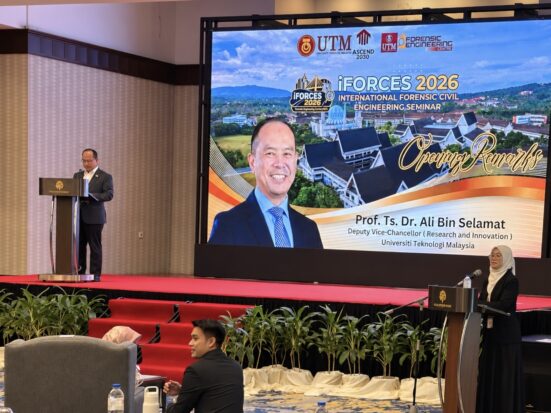
In conveying the Vice-Chancellor’s commitment to advancing impactful research and innovation, Prof. Ts. Dr. Ali Selamat highlighted the importance of transforming forensic engineering from a discipline that primarily investigates failures after they occur into one that is predictive, preventive and data-driven.
“Forensic engineering should not remain only a discipline that tells us what happened after a failure. It must increasingly help us predict emerging risks, prevent catastrophic failure and protect people, communities and national assets.”
He stressed that infrastructure development must increasingly be built around three principles: safety, intelligence and resilience, while forensic engineering should translate lessons from incidents into improved standards, maintenance strategies, asset management, professional competency and public policy.
Prof. Ts. Dr. Ali Selamat also linked the future of forensic civil engineering with Malaysia’s development agenda, including RMK13 2026-2030, Malaysia MADANI, the National Construction Policy 2030, digital transformation and the aspiration to become an AI Nation by 2030.
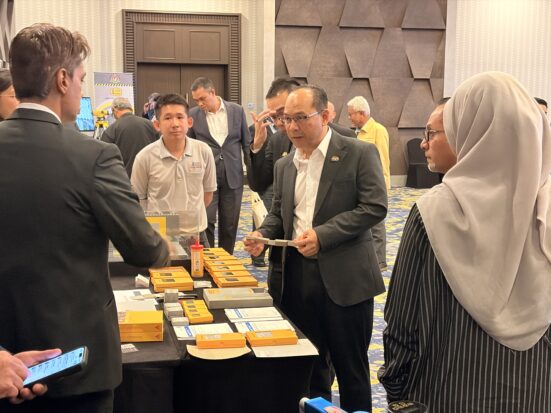
Key technologies identified for infrastructure management included artificial intelligence and machine learning, digital twins, Building Information Modelling, intelligent sensors and Internet of Things technologies, drones and robotics, remote sensing, data analytics and non-destructive testing.
“The question should no longer be only, ‘Why did this structure fail?’ We must increasingly ask, ‘Can we recognise the warning signs early enough to prevent failure?’”
He also introduced the concept of ‘Augmented Engineering Intelligence’, where artificial intelligence complements rather than replaces professional engineering judgement.
“AI should strengthen engineering judgement, not replace engineering responsibility. Ultimately, an algorithm does not carry professional responsibility. Engineers do.”
Another major proposal was the development of a stronger National Forensic Engineering Knowledge Platform, where lessons from structural failures, construction defects, material deterioration, bridge incidents, slope failures, foundation problems and other infrastructure-related events could be systematically documented, classified and analysed.
It could serve as a knowledge repository for government agencies, asset owners, professional institutions, consultants, contractors and universities, using data analytics and AI to identify recurring failure patterns and emerging risks.
Prof. Ts. Dr. Ali Selamat proposed five strategic directions: predictive infrastructure, national engineering data, infrastructure resilience, multidisciplinary innovation, and translation of research into policy and practice. He also said UTM should strengthen its role in ensuring research and innovation deliver impact beyond academic publications.
“Research excellence must increasingly be measured by knowledge, technology, talent, solutions and impact.”
He highlighted the role of the Forensic Engineering Centre, Institute for Smart Infrastructure and Innovative Construction (ISIIC), the Faculty of Civil Engineering (FKA) and the UTM research ecosystem in advancing multidisciplinary work in infrastructure assessment, artificial intelligence, sensing technologies, remote sensing and data analytics.
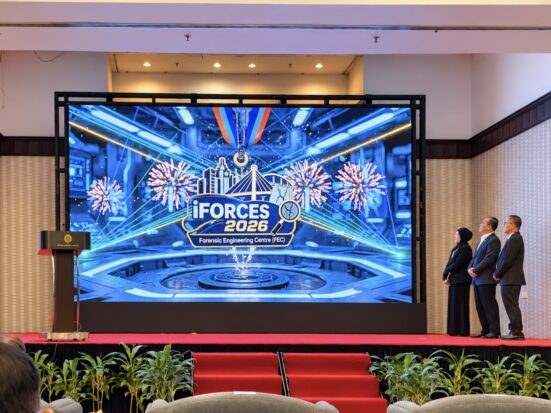
The seminar was supported by government, professional and industry stakeholders, including Director of ISIIC, Assoc. Prof. Ts. Dr. Izni Syarizal Ibrahim; Head of Government and Infrastructure, SIKA, Ts. Rashid Rafiq; Acting Senior Director of the Civil and Structural Engineering Branch, Public Works Department Malaysia (JKR), Ir. Md Khairi Yaacob; Director of the Forensic Engineering Centre and Director of iFORCES 2026, Assoc. Prof. Ir. Dr. Noor Nabilah Sarbini; representative of the Institution of Engineers Malaysia (IEM), Ir. Norakashah Saharil; and Acting Deputy Dean of Academic and Student Affairs and Head of the Department of Structure and Materials, FKA, Assoc. Prof. Dr. Roslli Noor Mohamed.
Prof. Ts. Dr. Ali Selamat concluded by calling on participants to ensure that lessons from infrastructure incidents are never lost.
“Every failure must teach us something. Every investigation must improve future practice. Every research finding must create value. And every innovation must ultimately benefit society.”
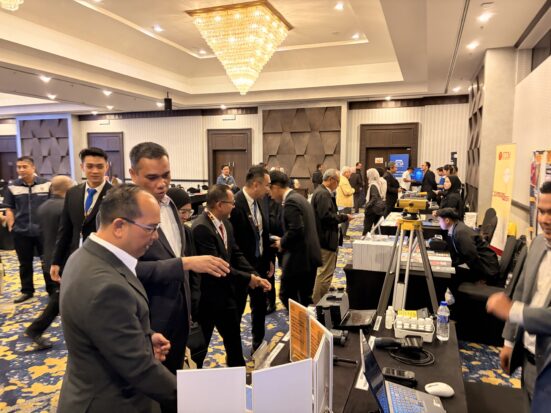
iFORCES 2026 provided a platform for knowledge exchange, advancement and research and industry collaborations, supporting UTM’s role in advancing safer, smarter, sustainable and resilient infrastructure and delivering research and innovation with meaningful societal impact.
By Prof. Ts. Dr. Ali Selamat, Deputy Vice-Chancellor (Research and Innovation), Universiti Teknologi Malaysia
