


📝 Summary
The Universiti Teknologi Malaysia (UTM) organized a program called “AI and Green Innovation: Learning Today, Leading Tomorrow” to nurture environmentally conscious future leaders. The program brought together 136 MRSM Batu Pahat students and 35 university participants from UTM and Indonesia to engage in knowledge transfer, intercultural interaction, and sustainability activities. Through hands-on activities, including biocomposting, participants learned about environmental sustainability and leadership skills.
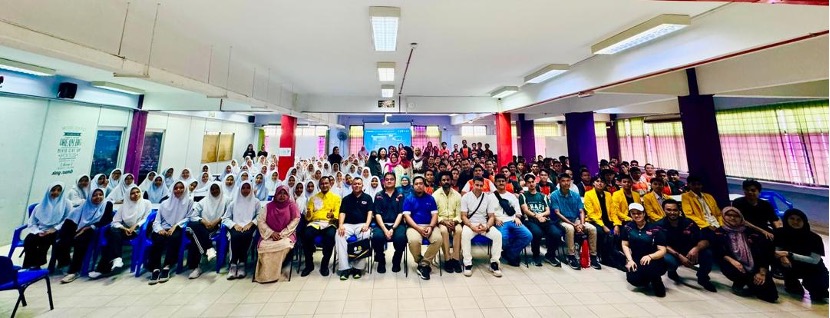
BATU PAHAT, Aug 13 – Universiti Teknologi Malaysia (UTM), in collaboration with Maktab Rendah Sains MARA (MRSM) Batu Pahat and EMRO Malaysia Sdn. Bhd., organised “AI and Green Innovation: Learning Today, Leading Tomorrow” at MRSM Batu Pahat, integrating environmental sustainability, internationalisation and leadership development through experiential learning.
The programme was an initiative of the Global Education and Student Experience (GESE) Unit, UTM International, led by Assoc. Prof. ChM. Dr. Norahim Ibrahim from the Department of Biosciences, Faculty of Science, UTM. It was supported by the Ministry of Higher Education (MOHE) through the Malaysia International Enrichment Matching Fund (MIEMF).
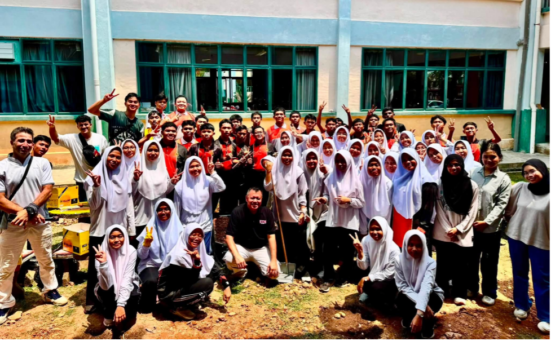
A total of 136 MRSM Batu Pahat students participated alongside 35 university participants comprising 30 UTM students and five students from Universitas Sriwijaya (UNSRI), Palembang, Indonesia. The UTM participants comprised 19 international and 11 local students, while four MRSM Batu Pahat teachers were also involved.
Together, the participants engaged in knowledge transfer, intercultural interaction and sustainability activities aimed at developing environmental awareness and leadership skills.
Internationalisation, Leadership and Public Diplomacy
The programme supported UTM’s Internationalisation at Home (I@H) agenda by bringing international exposure and intercultural learning directly to the local school community. Interaction with UTM international students and UNSRI students provided MRSM students with opportunities to exchange ideas, communicate across cultures and develop greater confidence in an international environment.
At the same time, leadership development formed a central part of the programme’s objectives. University students took active roles in facilitating activities, sharing knowledge and working with the school community, while MRSM students were encouraged to participate, collaborate and address real-world environmental challenges.
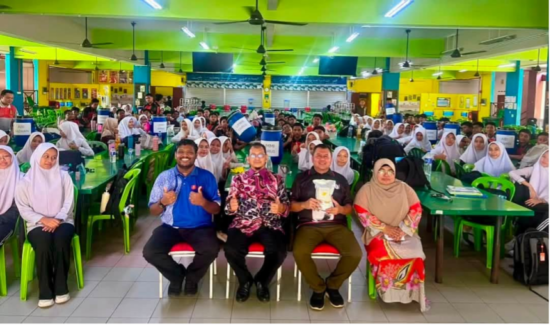
Through these activities, the programme sought to nurture future leaders who are technologically capable and internationally minded while remaining environmentally responsible and conscious of the long-term consequences of their decisions.
The programme also served as a platform for public diplomacy. Meaningful people-to-people interactions among Malaysian and international participants promoted mutual understanding across cultural and national backgrounds. Such engagement helps position UTM as a caring, socially responsible and globally engaged university, while presenting Malaysia as a welcoming nation that values international communities, intercultural understanding and educational collaboration.
In this way, Internationalisation at Home extended beyond international exposure to encompass knowledge exchange, leadership development, cultural understanding and community engagement.
Transforming 250 Kilograms of Waste into a Resource
A major green innovation activity focused on biocomposting using the Bokashi composting technique, conducted in collaboration with EMRO Malaysia Sdn. Bhd., which contributed expertise and materials related to Effective Microorganisms (EM) technology.
Assoc. Prof. ChM. Dr. Norahim Ibrahim, who served as the programme’s subject matter expert in biocomposting, led the knowledge-transfer component on the fundamentals of biocomposting and the sustainable conversion of organic waste into biofertiliser.
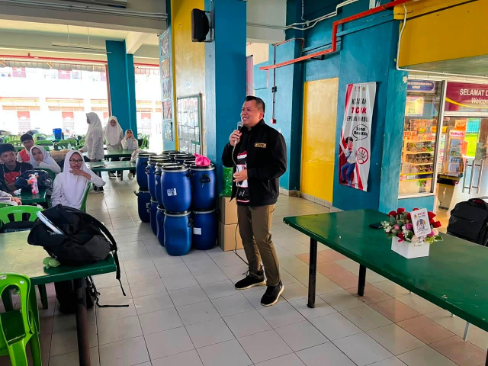
Approximately 250 kilograms of food and landscape waste were collected and used as starting materials for biofertiliser production. During the hands-on activity, students applied Bokashi bran supplied by EMRO Malaysia Sdn. Bhd. and learned how Effective Microorganisms can be incorporated into the biocomposting process.
The activity demonstrated how materials commonly regarded as waste can instead become valuable resources. Through appropriate treatment, food residues and landscape waste can be converted into materials for biofertiliser production, which can subsequently support organic farming.
This approach is particularly relevant because improperly managed food waste can contribute to greenhouse gas emissions, especially when organic matter decomposes under anaerobic conditions in landfills. Diverting organic waste towards biological treatment and resource recovery therefore offers a practical approach to reducing its environmental burden.
Rather than discussing waste management and climate change only as abstract concepts, the programme enabled students to experience first-hand how an environmental challenge could be addressed through a practical and sustainable solution.
Knowledge Transfer for Future Leaders
The Bokashi activity provided a practical knowledge-transfer platform for younger participants to understand the relationship between food waste, greenhouse gas emissions, resource recovery and sustainable agriculture.
Such experiential learning is particularly valuable for school students. Instead of merely learning about the environmental consequences of food waste, participants were directly involved in a potential solution and discovered how their actions could contribute towards keeping the environment clean, safe and sustainable.
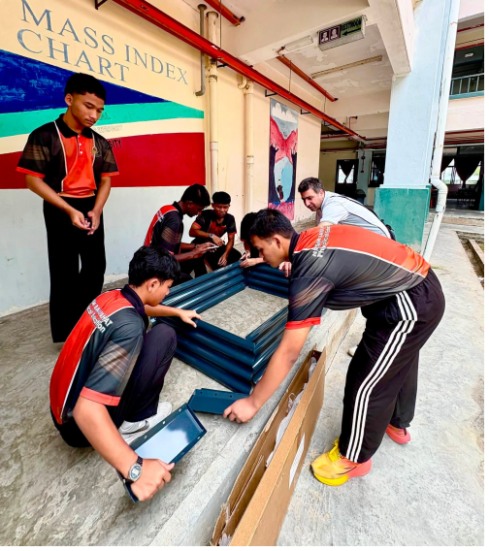
This hands-on approach also reinforced an important message about leadership. Leadership for a sustainable future requires more than academic knowledge; it requires the ability to recognise problems, collaborate with others and translate knowledge into meaningful action.
The activity reflected the spirit of University Social Responsibility (USR), whereby university knowledge and expertise are transferred to communities to generate wider societal and environmental benefits. Scientific knowledge was translated into an accessible practice that younger participants could understand and potentially adopt in their daily lives.
Sustainability as a Common Goal Across Borders
The programme brought MRSM students, local UTM students, international UTM students and UNSRI students together to work towards common sustainability goals.
Environmental protection provided a shared platform that transcended nationality and educational background. Participants learned that challenges such as food waste, greenhouse gas emissions and environmental degradation extend beyond national borders and require collective responsibility and cooperation.
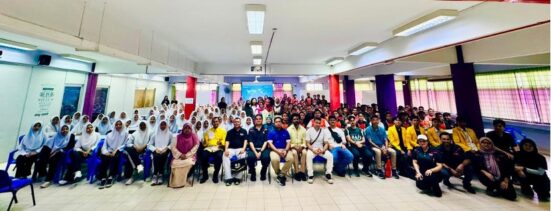
The programme also created a two-way leadership experience. University students developed their leadership and communication skills by facilitating activities and transferring knowledge, while MRSM students gained opportunities to ask questions, exchange ideas and take ownership of sustainable practices.
This intergenerational and intercultural engagement is particularly meaningful because today’s students will become tomorrow’s decision-makers, professionals, innovators and community leaders. Exposing them to sustainability and collaborative problem-solving today can help prepare them to make more responsible decisions in the future.
Learning Today, Leading Tomorrow
The integration of environmental education, international exposure and leadership development reflected the programme’s theme, “Learning Today, Leading Tomorrow.” Although composting and Artificial Intelligence (AI) represent different fields, both encourage qualities such as observation, continuous learning and creative problem-solving.
Through the initiative of the Global Education and Student Experience Unit, UTM International, support from MOHE through MIEMF, and collaboration with MRSM Batu Pahat, UNSRI and EMRO Malaysia Sdn. Bhd., the programme demonstrated how internationalisation, public diplomacy, leadership development and environmental sustainability can be integrated into a meaningful community-based educational experience.
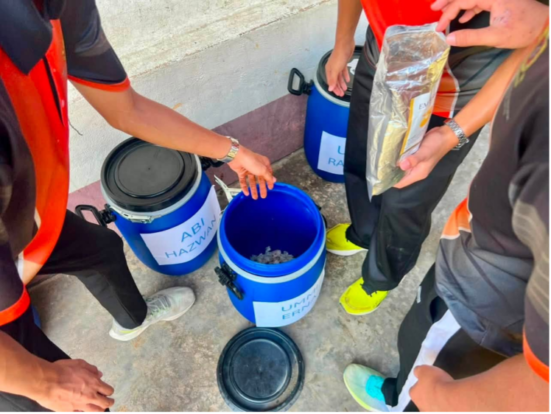
The transformation of 250 kilograms of food and landscape waste delivered a tangible message to the younger generation: what is considered waste today can become a valuable resource for tomorrow.
Ultimately, “AI and Green Innovation: Learning Today, Leading Tomorrow” went beyond teaching composting and introducing emerging technologies. It provided a platform for nurturing future leaders who are internationally minded, environmentally conscious and capable of working across cultures to address real-world challenges.
By equipping young people with knowledge, practical experience and opportunities to lead through action, the programme aims to make sustainability not merely something they understand, but a value they practise and champion as the leaders of tomorrow.
