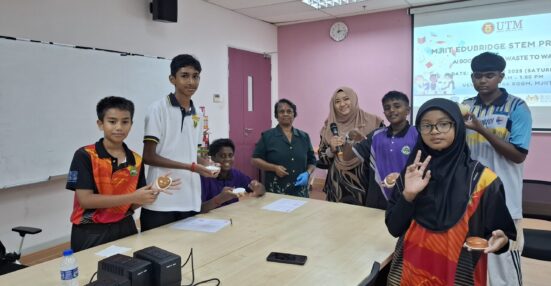
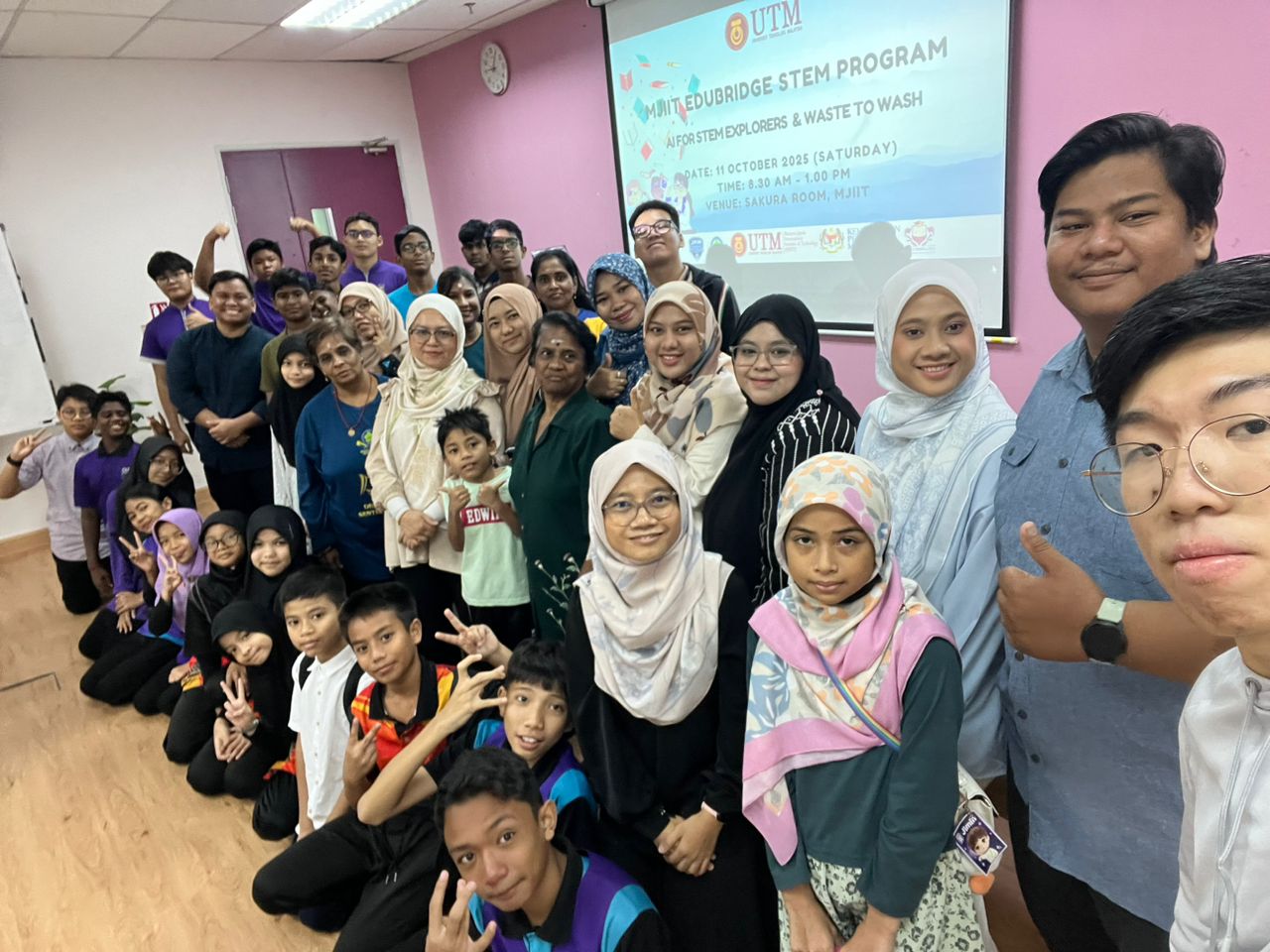

KUALA LUMPUR, Oct 11 – The STEM Soap-Making Program held at the Sakura Room, Malaysia–Japan International Institute of Technology (MJIIT), Universiti Teknologi Malaysia (UTM) Kuala Lumpur, marked a vibrant success as it brought together enthusiastic students from schools across Kuala Lumpur for a day of creative science and community learning. These events involved six schools namely Sri Al-Amin Wilayah Persekutuan, Sekolah Menengah Kebangsaan (SMK) Seksyen 5 Wangsa Maju, SMK Bandar Puchong Jaya B, SMK Taman Desa, SMK Taman Midah 2, and Sekolah Kebangsaan (SK) Setiawangsa.
The hands-on program was associated by Assoc. Prof. Ir. Dr. Dayang Norulfairuz Abang Zaidel and advised by Dr. Zatil Izzah Ahmad Tarmizi, who both guided participants through the fascinating process of transforming used cooking oil into eco-friendly soap — a real-life application of Science, Technology, Engineering and Mathematics (STEM) principles that promotes sustainability and innovation.
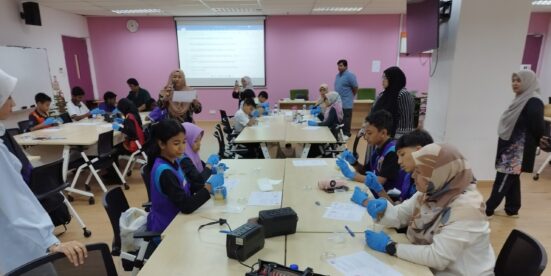
The initiative was a collaborative effort between the MJIIT community, residents of Perumahan Awam (PA) Desa Rejang, and MJIIT student volunteers, demonstrating how academic institutions can bridge knowledge and community empowerment. Through this program, students not only explored the chemistry of soap production but also gained awareness about environmental conservation, waste management, and responsible recycling practices.
By aligning with the United Nations Sustainable Development Goals (SDGs), particularly SDG 4: Quality Education, SDG 12: Responsible Consumption and Production, and SDG 17: Partnerships for the Goals, the program further strengthened its role as a meaningful platform for impactful learning. The soap-making workshop not only enriched participants’ scientific knowledge but also instilled values of sustainability, responsible waste management, and community-driven innovation.
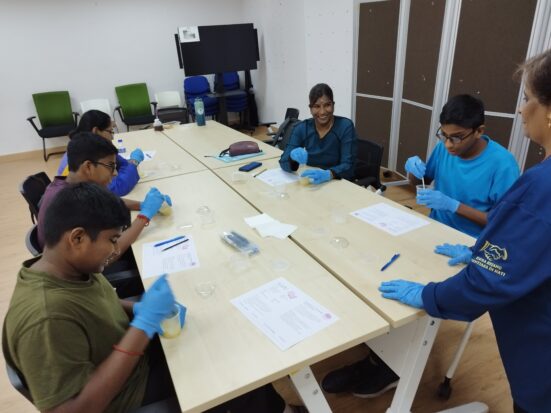
By integrating hands-on STEM activities with real-world environmental challenges, the program successfully demonstrated how experiential learning can empower young people to become responsible, future-ready citizens. Throughout the engaging session, participants worked in teams to measure, mix, and create their own soap products while learning about the science behind saponification. The interactive format encouraged teamwork, creativity, and problem-solving — key skills for future innovators.
Program advisor Dr. Zatil Izzah expressed her appreciation for the participants’ enthusiasm and the strong collaboration between MJIIT and the community, stating, “This initiative reflects MJIIT’s commitment to empowering youth through STEM-based community engagement. By combining scientific knowledge with sustainable action, we are nurturing a generation that understands both innovation and environmental responsibility.” Meanwhile, Assoc Prof Dr. Dayang Norulfairuz emphasized the educational impact of the event, noting that, “This program beautifully combines science education with social responsibility. Seeing students apply chemistry concepts to create something sustainable and meaningful is truly rewarding.”
The event concluded with a showcase of the students’ handmade soaps and a reflection session, where participants shared how the activity deepened their interest in science and sustainability. Many also expressed excitement to bring the knowledge back to their schools and communities. The STEM Soap-Making Program not only inspired young minds but also strengthened the partnership between universities, schools, and local communities in nurturing future leaders who value science, sustainability, and social impact.