


📝 Summary
Leo Marko, a 25-year-old Indonesian graduate, overcame obstacles to pursue a degree in nuclear engineering at UTM, including financial struggles and a language barrier. Despite initial setbacks, he persevered, changed his approach, and eventually excelled in his studies, earning a CGPA of 3.55. Leo now hopes to contribute to Indonesia through nuclear engineering and research.
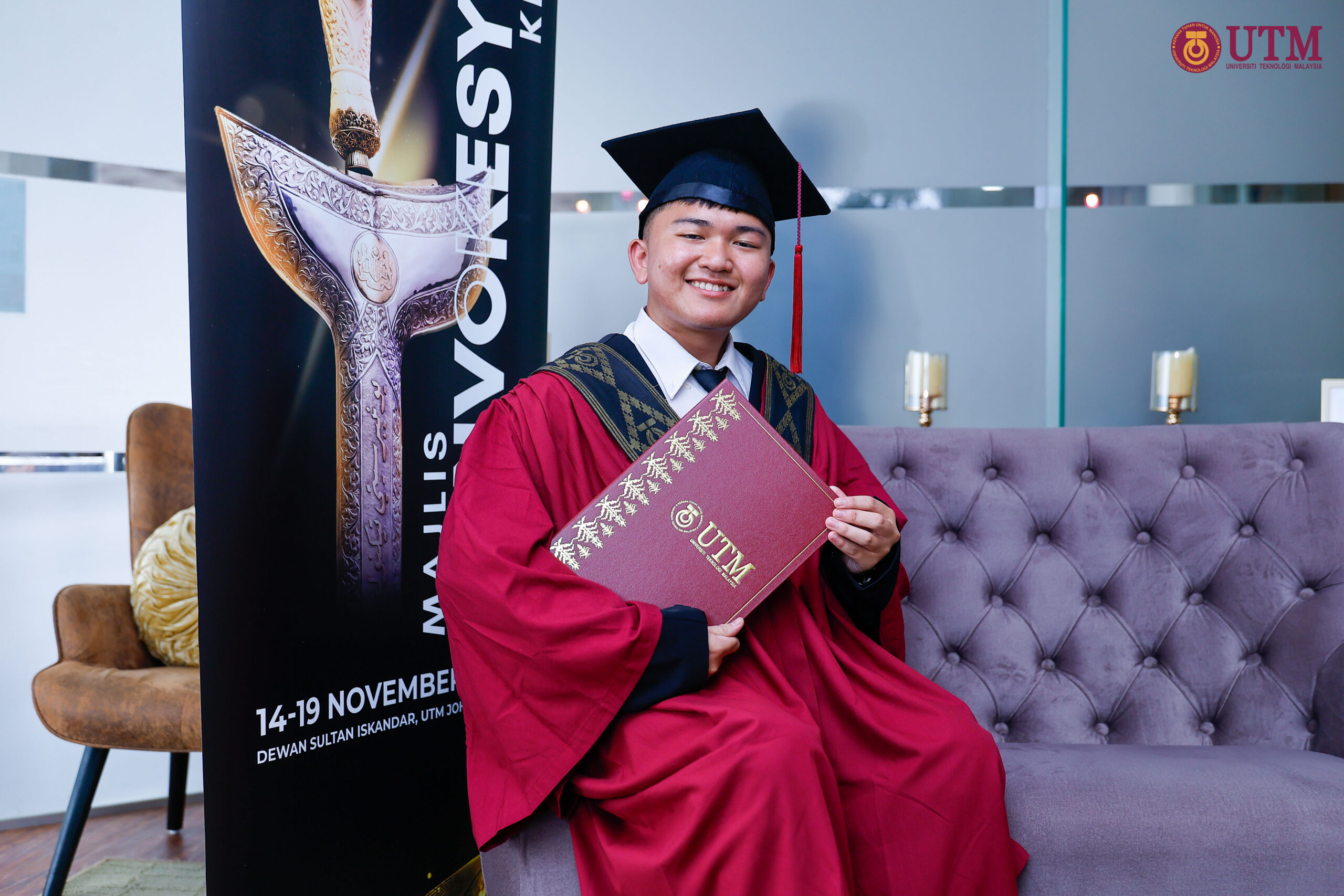
JOHOR BAHRU, 15 Nov. — Whenever Leo Marko tells people he studies nuclear engineering, they always think of atomic bombs. Throughout his years at university, he met this assumption nearly every day, often with a joke about building weapons. At 25, the Indonesian graduate has a different story to tell, one about clean energy, advanced materials, and the value of never giving up.
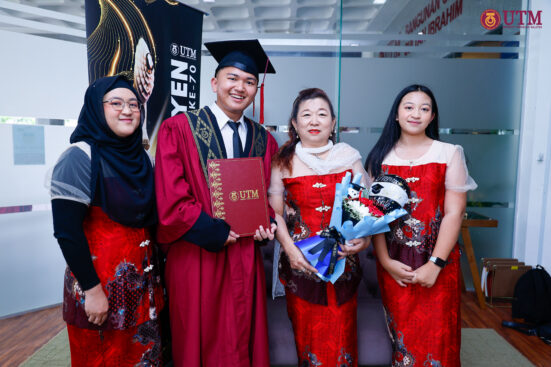
Leo comes from Tanjung Batu Kundur in Karimun, Riau Islands. He grew up with his mother, father, an older sister and a younger sister. His parents always put education first, believing it is a key to success and a way to gain new perspectives.
His interest in science began at SMA Negeri 1 Kundur, where he studied in the Science and Mathematics stream. Chemistry and physics drew him in, and from there he became curious about nuclear science. When he was rejected in Indonesia’s national university entrance selections, SNMPTN and SBMPTN, he refused to give up on his dream. He found that UTM offered the programme and took a leap of faith across the border.
The road at UTM was not direct. Leo began with a one-semester Intensive English Programme, since English is a foreign language for him, unlike for many Malaysians. He earned an IELTS score of 6.5, then completed a one-semester Bridging Programme covering chemistry, physics and mathematics. Only then did he enter Nuclear Engineering at the Faculty of Chemical and Energy Engineering (FKT), joining in Semester II of the 2021/2022 session. He finished his studies on 30 March 2026.
The early days were hard. Soon after arriving in Malaysia, he caught COVID-19 and spent seven days in quarantine before reaching campus. He then had to switch from online to face-to-face lectures midway through the semester. Without the pre-university foundation many of his Malaysian classmates had, he struggled to bridge the gap from the Indonesian curriculum. His first semester ended with a CGPA of 2.61, the lowest of his life.
Money was tight too. A weaker Indonesian currency strained his budget, and as an international student, he had no local subsidies. He worked weekends as a kitchen assistant and kept his daily food spending under RM10 by eating twice a day, often leftover vegetables with eggs and crispy mushrooms, which he says make a tasty and affordable substitute for chicken.
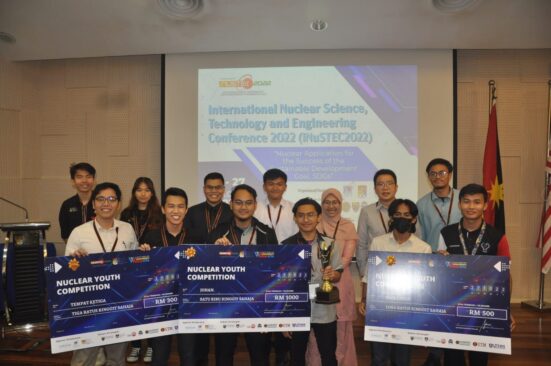
Instead of giving up, Leo changed his approach. He studied with friends, watched online tutorials and kept consulting his lecturers until concepts made sense. He placed fourth in the iNuSTEC 2022 Nuclear Youth Competition with his friend Danial. After a rejection from a KAIST summer school, his academic advisor, Dr. Nur Syazwani Binti Mohd Ali, encouraged him to enter the 2024 Intervarsity Nuclear Debate, held in formal Bahasa Melayu. He had only spoken colloquial Malay and he hesitated. His academic advisor’s advice stayed with him: it is not about winning, but about learning from other perspectives while we are young and energetic. His team lost, but he says the knowledge and confidence he gained were priceless.
He also became a student leader, serving as a Department Administrator for the Nuclear Engineering Student Society and as Program Director of the “Agriculture Heist: Ready for Deploy” sustainability initiative. His volunteer work with UTM’s foster family programmes in Jelebu, Negeri Sembilan, and Jeli, Kelantan, left him with lasting memories. In Kelantan, he was touched when shopkeepers left their stores unattended at prayer time, trusting that Allah would take care of their livelihood.
During his internship and final-year research at Agensi Nuklear Malaysia, he studied radiation shielding made from coconut shell and epoxy resin composites, using advanced testing equipment. The work led to a first-author manuscript submitted to Applied Radiation and Isotopes, an Elsevier journal he describes as Q2-ranked. In 2025, he also attended the High-Temperature Gas-cooled Reactor International Summer School at Tsinghua University in China. He finished with a CGPA of 3.55.
Leo points to Marie Curie and Albert Einstein when asked what inspires him, not only for their discoveries but for their dedication and perseverance. He enjoys experiments and says a failed one only motivates him more. “Every unsuccessful experiment gives me another opportunity to learn something new,” he says. Passion helps you begin, he adds, but dedication keeps you going when things go wrong.
His advice to young people is simple. Do not let your past define you, and treat past difficulties as lessons. Take the first step, whether it is submitting an application or asking a question, because the biggest barrier is often our own doubt. “Choose courage over fear, and growth over comfort,” he says.
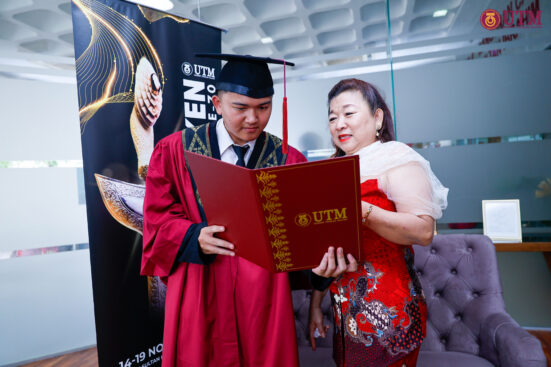
Leo is thankful to many people. He thanks Allah SWT first, then his family, especially his mother, who kept encouraging his education despite her own health struggles, including diabetes and eye surgery. He also thanks his father, his sisters and his Malaysian and international friends. At UTM, he credits Dr. Nur Syazwani for her guidance, his Final Year Project supervisor Dr. Muhammad Arif bin Sazali for his patience and belief in him, and his industrial supervisors Dr. Siti Madiha Binti Muhammad Amir and Mr. Asyraf Arif bin Abu Bakar. He extends his thanks to the staff of Agensi Nuklear Malaysia’s Industrial Technology Division.
Looking ahead, Leo hopes to pursue further studies and become a dedicated nuclear engineer who contributes to Indonesia through Small Modular Reactor technology and research into how materials behave under radiation. He wants to show how much good nuclear science can bring to the future.
