




📝 Summary
UTM’s 70th convocation celebrated 7,369 graduates, but the article questions the impact of their research, asking what happens to the knowledge produced and whether it leads to useful products or solutions. The article argues that universities should track the outcomes of research and celebrate graduates not just for completing their degrees, but for making meaningful contributions to knowledge.
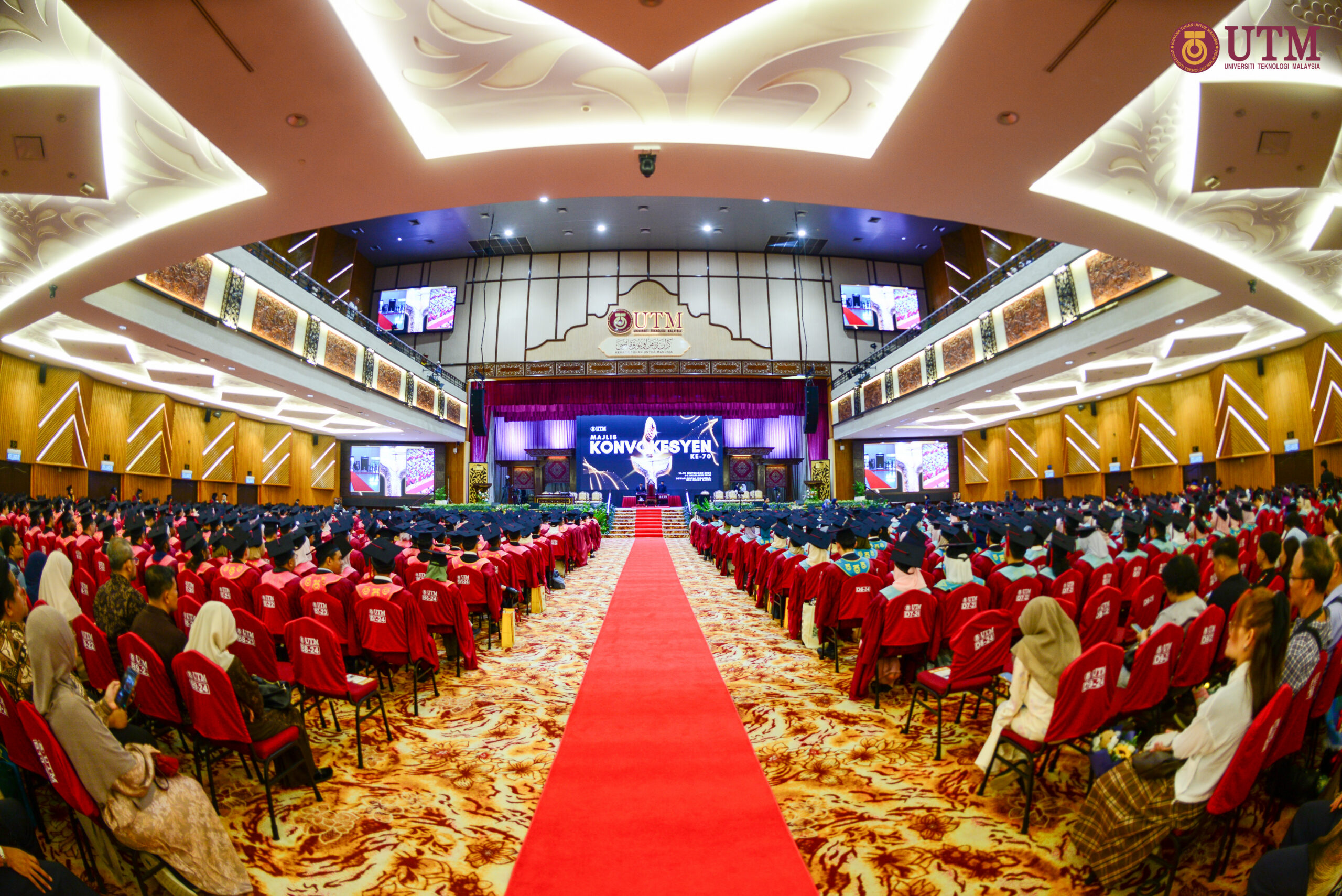
Congratulations to the 7,369 local and international graduates celebrated at UTM’s 70th convocation in Johor Bahru. Among them were 680 doctoral graduates, 1,614 master’s graduates, 4,228 bachelor’s graduates, 778 diploma graduates and 69 executive diploma graduates. These are substantial numbers, and every graduate has a story of effort behind the scroll.
UTM’s own story did not begin with a grand campus or a familiar name. It began in 1904, at the Treacher Technical School on Weld Road in Kuala Lumpur, with a modest purpose: to train the technical assistants a developing nation needed. From that modest beginning, the institution’s story unfolded alongside a nation in the making. It became a technical college, then the National Institute of Technology in 1972, marking its transition to university-level status. More than a century of change and ambition stands behind today’s convocation stage. Next year marks 55 years since that transition.
But this article is not about the ceremony’s grandeur. It is about what the numbers ask of us once the robes are folded and the stage lights go out.
Six hundred and eighty PhD graduates is an impressive figure. It is also a figure that invites questions. What becomes of the knowledge produced through those doctoral studies? How many findings lead to useful products, better policies, working solutions to real problems or new businesses? How many become books that change how people think or work? And how many reach the communities, industries or institutions they were meant to serve?
These are not accusations against the graduates. Nor are they an argument that every thesis must become a commercial product. Some research advances knowledge in ways whose value may only become clear years later. Some changes happen quietly: in a method adopted, a public decision improved, a professional practice revised. But if we cannot describe what happens to research after the viva, we have a problem of visibility, follow-through or impact that deserves attention.
There is also a basic distinction worth making. The 680 are PhD graduates who were conferred degrees at this convocation; that number does not mean 680 theses were written and completed in 2026. Doctoral research takes years, and its journey through examination and senate approval does not neatly fit the calendar year. That makes the question more urgent, not less: do we track what happens to this body of research over time, and can we tell the public what it contributes?
A university can count its graduates with precision. It can announce how many theses passed, how many candidates completed on time and how many publications were produced. But counting outputs is not the same as understanding outcomes. A thesis that satisfies its examiners has met an important academic standard. Yet the questions do not end there: What did it help us understand? Who might use that understanding? What changed because the research was done?
If the answer is always that the work was completed, examined and archived, then we should ask whether we have confused academic completion with public value. A PhD thesis should not end up as a glorified final paper that ticks all the boxes of the examination panel and survives the viva voce, only to be left behind once the degree is awarded. The doctorate should represent disciplined inquiry, intellectual independence and a meaningful contribution to knowledge. The title matters. So does the work that justifies it.
Pressure to improve ‘graduate on time’ rates may be part of the wider conversation. Timely completion is valuable: students need support, supervisors need clear expectations, and institutions should not let candidates drift indefinitely. But if speed becomes the dominant measure of success, it can narrow the meaning of success itself. We should be able to celebrate a candidate who finishes on time and still ask whether the research was rigorous, relevant and allowed to follow its evidence.
A colleague once put it bluntly: a thousand flies around a pile of faeces do not make it desirable. The image is crude, but the point is hard to miss. A large number does not prove quality simply by being large. Nor does questioning the number insult the people behind it. It asks us to look beyond accumulation and examine what the accumulation signifies.
Perhaps we should begin by asking faculties to follow research beyond graduation: where it is cited, adopted, translated into practice, developed further or made accessible to readers beyond academia. Not every project will have an immediate impact. But every institution should be able to show that it has made a serious effort to find out.
We should celebrate our graduates. Their families, supervisors and the university community have earned that moment with them. The ceremony can be grand; there is nothing wrong with honouring achievement. But pomp becomes empty when it is allowed to substitute for reflection.
We celebrate because learning has taken place. We celebrate because knowledge has been pursued and, we hope, can now be shared. Beyond the stage, the robes and the numbers are the purpose that gives the ceremony meaning: the propagation of ‘ilm’—knowledge that does not end with a scroll (in the case of UTM, the album), but continues to serve humanity.
