


📝 Summary
The School of Human Resource Development and Psychology at Universiti Teknologi Malaysia has strengthened undergraduate research through inter-university collaborations with Universiti Malaya and the University of Nottingham Malaysia. The collaborations provided research internship and co-supervision opportunities for students, enhancing their Final Year Project supervision and exposing them to different research perspectives. The initiatives aim to complement existing supervision with external expertise and wider research community exposure.
The School of Human Resource Development and Psychology (SHARPS), Faculty of Social Sciences and Humanities (FSSH), Universiti Teknologi Malaysia (UTM), is strengthening academic partnerships with Universiti Malaya (UM) and the University of Nottingham Malaysia (UNM) through research internships and co-supervision initiatives involving four third-year students from the Bachelor of Psychology with Human Resource Development (Honours) programme.
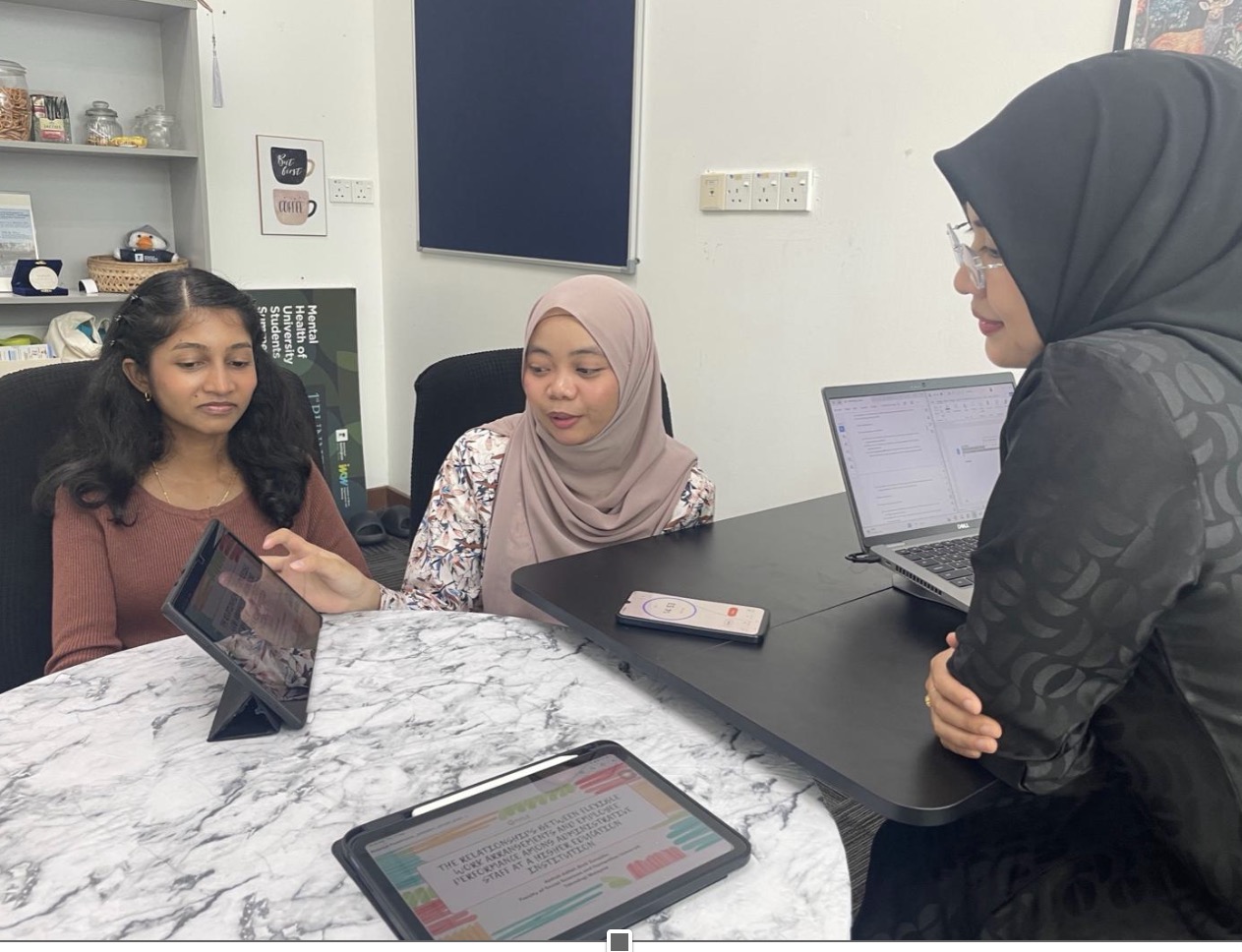
The initiatives aim to enhance Final Year Project (FYP) supervision by giving students opportunities to engage with academics from other institutions, gain different research perspectives and receive additional guidance. Through online consultations and face-to-face sessions, students could discuss their research progress while experiencing academic environments beyond UTM.
Research internship and co-supervision with the University of Nottingham Malaysia
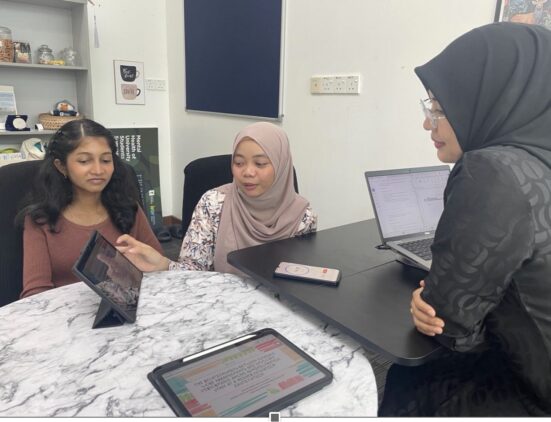
In collaboration with the School of Psychology, UNM, two students, Arichinee Kutty S.J. Sathiskumar and Aishah Adilah Zunaidin, took part in research internship and co-supervision activities. Both were supervised by Prof. Dr. Siti Aisyah Panatik from SHARPS, UTM, with Assoc. Prof. Dr. Siti Khadijah Zainal Badri from UNM as co-supervisor.
The students attended research consultations and academic discussions with supervisors from both institutions. They presented their progress, discussed methodological considerations and received feedback on their FYP research. Input from an external academic encouraged them to review their research decisions and strengthen their arguments. A combination of online and physical sessions also enabled continued discussions and direct exposure to the UNM’s research environment.
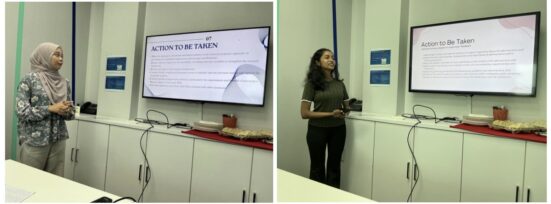
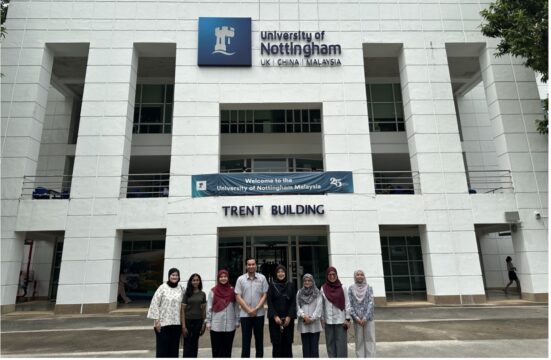
The initiative concluded with a session on 30 September 2026 at the UNM, where the students shared their progress, reflected on their learning experiences and discussed their work with the participating academics. The engagement also created opportunities for students and supervisors to exchange views on research practices across institutional settings and build professional connections that may support future academic engagement.
Research internship and FYP co-supervision with Universiti Malaya
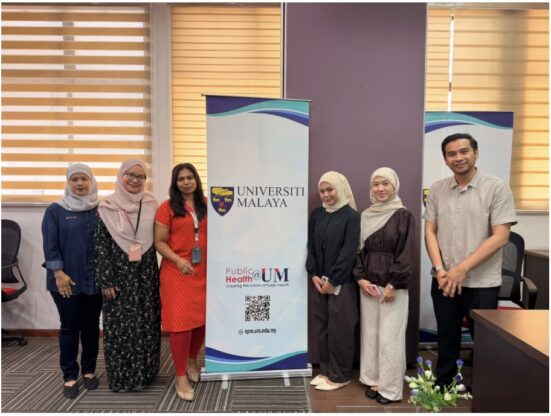
SHARPS also collaborated with the Centre for Population Health (CePH), Department of Social and Preventive Medicine, Faculty of Medicine, Universiti Malaya, to provide research internship and FYP co-supervision opportunities. From 14 August to 17 September 2026, two students, Nadiya Hannah Azlan and Neisya Insyirah Badli, joined the programme. At UTM, Nadiya was supervised by Dr. Nur Asyikin Yakub and Neisya by Dr. Nurul Izzah Shari. At UM, Dr. Darishiani Paramasivam provided academic supervision, supported by the Head of the Centre for Population Health, Prof. Nik Daliana Nik Farid.
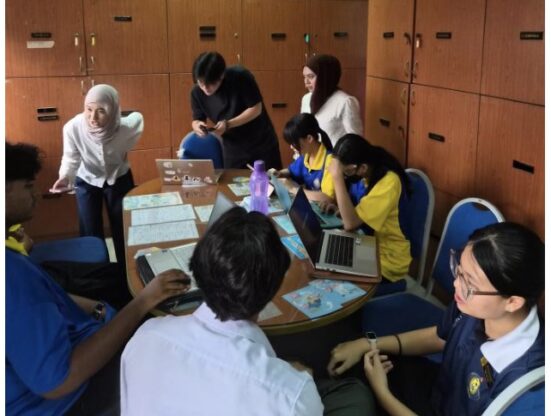
During the placement, the students gained practical experience in mental health and public health research. Through the Super Skills for Life (SSL-R) programme, which focuses on addressing depression and anxiety among adolescents, they developed educational posters on stress management, problem-solving, relationships and social skills. The activity demonstrated how psychological knowledge can be translated into accessible materials to promote adolescents’ mental well-being.
They also participated in a dengue vaccine research project under the Centre for Epidemiology and Evidence-Based Practice (CEBP). Their tasks included assisting participants and parents with research forms, supporting research staff and coordinating participant flow during community-based data collection. One large-scale activity involved approximately 400 participants. Through this work, the students gained exposure to research ethics, participant communication, teamwork and the practical demands of field research.
The internship connected classroom learning with research practice. Experience in both mental health and public health projects broadened the students’ understanding of how research can respond to community needs and contribute to individual and public well-being.
They also participated in a dengue vaccine research project under the Centre for Epidemiology and Evidence-Based Practice (CEBP). Their tasks included assisting participants and parents with research forms, supporting research staff and coordinating participant flow during community-based data collection. One large-scale activity involved approximately 400 participants. Through this work, the students gained exposure to research ethics, participant communication, teamwork and the practical demands of field research.
The internship connected classroom learning with research practice. Experience in both mental health and public health projects broadened the students’ understanding of how research can respond to community needs and contribute to individual and public well-being.
Strengthening undergraduate research through collaboration
The two initiatives reflect SHARPS’ efforts to enrich undergraduate research through a collaborative supervision approach. FYPs require students to apply theoretical knowledge, research methods, analytical skills and academic communication in conducting independent research. Input from academics at other institutions can help students examine their research ideas, justify methodological decisions and communicate their findings more effectively.
The collaborations also encourage knowledge sharing and professional engagement among academics from UTM, UM and the University of Nottingham Malaysia. They provide a foundation for exploring further activities, such as joint research discussions, student presentations and academic workshops.
For SHARPS, the initiatives offer a way to complement existing FYP supervision with external academic expertise and wider exposure to research communities. They also support UTM’s commitment to educational experiences beyond the classroom, helping students develop as independent and reflective researchers. SHARPS aims to continue strengthening inter-university engagement and explore opportunities to extend similar initiatives to more undergraduate students.
Prepared by Dr. Amalina Ibrahim, FYP Coordinator, and Dr. Nur Asyikin Yakub, Industrial Training Coordinator, School of Human Resource Development and Psychology (SHARPS), Faculty of Social Sciences and Humanities (FSSH, UTM
