


📝 Summary
The films Unbelievable and Ghostland explore the complexities of trauma through fragmented memory, silence, and psychological conflict, challenging societal expectations of how victims should recount their experiences. By examining these narratives through a psychoanalytic lens, we can gain a deeper understanding of the internal struggles of characters like Marie and Beth, who use creative coping mechanisms to deal with their trauma. These stories encourage careful readings of complex characters and remind us to approach people’s experiences with care and nuance, rather than making assumptions based on outward behavior.
Note to readers: This article discusses sexual assault, trauma and psychological distress as represented in the films Unbelievable and Ghostland. The psychoanalytic concepts used are literary interpretive frameworks, not clinical diagnoses or definitive explanations of trauma responses.
There is something about stories based on true events that makes them difficult to forget. Perhaps it is knowing that, somewhere in the real world, someone actually lived through what is portrayed on screen. We may watch it as a television series or a film, but behind the story is a reality somebody had to live with.
With a background in English Language and Literature, there is often a tendency to look beyond the storyline when watching films and series like these. A story can do more than entertain; it can make audiences question how they see people, the assumptions they make about behaviour, and how quickly they decide whether someone is telling the truth. This perspective is relevant to Unbelievable and Ghostland, two different screen narratives that explore trauma through memory, silence and psychological conflict.
One such story is the series Unbelievable, which follows a teenage girl named Marie who reports being sexually assaulted by an intruder. While the crime itself is disturbing, the tension lies in what happens after. Following police questioning and a physical examination, Marie struggles to tell her story in a clear, chronological order. Because she was blindfolded and tied, her memories are broken and confused. Rather than confronting the trauma directly, her mind shifts towards happier memories, including images of the beach.
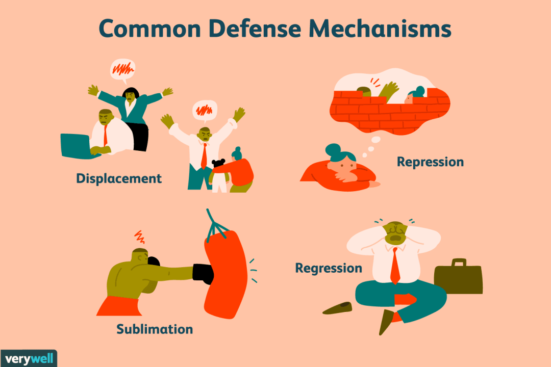
This is where psychoanalytic criticism gives us a useful framework. Instead of seeing Marie’s inconsistent story as a sign that she is lying, we can view her fragmented narrative as a representation of trauma. In psychoanalytic terms, repression is a defence mechanism in which distressing thoughts or experiences are kept outside conscious awareness. This offers one possible way of interpreting Marie’s difficulty in recalling and expressing what happened. The contrast between her fragmented memories of the assault and her beach memories is significant. The series shows the gap between what she experienced and what others expect her to explain.
Yet, because the investigators and her foster parents expect a consistent, step-by-step explanation, Marie is pressured until she takes back her statement and says she made the whole thing up. She is expected to provide the truth in a way that others can accept, but the difficulty of telling her story becomes the very reason they doubt her. Unbelievable shows how societal expectations fail victims, challenging the assumption that a truthful account must always be clear, chronological and free from contradiction. It also draws attention to the harm that can arise when uncertainty is met with suspicion rather than care.
The film Ghostland explores a similar internal struggle, using surreal storytelling techniques to depict psychological escape. Beth creates a detailed alternate reality in her mind to escape the extreme trauma she experiences as a teenager. In this imagined world, she is an adult with a successful writing career, a husband and a peaceful life. At first, this appears to be the life she has built, but as the story reveals her true circumstances, the audience is forced to question what is real and what is imagined.
When viewed through a psychoanalytic lens, Beth’s imagined world can be read as a form of wish fulfilment, while the separation between her imagined life and immediate reality suggests dissociation as an interpretive framework. The film moves between her safe fantasy life and the painful reality of her ongoing trauma. This gradual revelation changes how we understand Beth. Her imagined life is not simply a plot twist; it functions as a protective escape within the narrative, making an internal struggle visible. By creating a reality where she is a successful writer, the story shows the distance between the person she imagines herself to be and the painful reality she struggles to face.
Looking at these two works together shows how narrative structure shapes our understanding of a character. Unbelievable focuses on the difficulty of being believed when memories are fragmented, while Ghostland uses the gradual revelation of an alternate reality to show psychological escape. Through these contrasting choices, both stories explore the difficulty of confronting painful experiences. In both, memory, silence and imagined realities communicate experiences that the characters struggle to confront directly.
Approaching these stories through literary criticism allows us to look beyond the surface. By examining narrative choices, characterisation, memory, silence and psychological conflict, we can consider how stories represent experiences that may not be visible from the outside. A character’s silence can make us question what remains unspoken. A contradiction can reveal an internal struggle rather than dishonesty. An imagined reality can show the distance between what a character wishes to experience and what they are actually facing. These interpretations do not offer a single explanation for trauma; they encourage careful readings of complex characters.
This way of thinking also connects with what we teach in academic reading. Students learn to look beyond surface information, examine context, question assumptions and consider what may be implied rather than accepting the first interpretation. These skills are valuable beyond academic work, encouraging us to approach people’s experiences with greater care and nuance.
Unbelievable and Ghostland remind us that trauma cannot always be understood through outward behaviour. Through fragmented memory, contrasting realities, silence, contradiction and psychological escape, both stories represent experiences that resist simple interpretation. Before we judge, perhaps we should remember that we have never had to live through someone else’s pain.
By Farah Hamizah Muhd Zaimi, English Lecturer, Centre of Degree and Foundation Studies (PPI), SPACE UTM
