

📝 Summary
Architecture students from Universiti Teknologi Malaysia (UTM) have reimagined Pasar Awam Kluang as a contemporary civic, cultural, and economic hub through their final-year design studio. The project aimed to address challenges in the existing market, including spatial inefficiencies and competition from supermarkets and e-commerce, while also promoting sustainable urban development and community engagement. The studio’s collaborative approach with local authorities and community organizations has highlighted the importance of dialogue and co-learning in shaping responsible future architects.
As public markets across Malaysia face aging infrastructure, changing consumer behavior, and pressure from large-scale commercial developments, a group of architecture students from Universiti Teknologi Malaysia (UTM) is re-examining what these spaces can and should become.
In a final-year design studio titled Heritage Preservation and Cultural Appreciation: Rethinking Pasar Awam Kluang, eight Bachelor of Science in Architecture with Honours students produced comprehensive architectural proposals that reimagine Pasar Awam Kluang not only as a place of trade, but also as a contemporary civic, cultural, and economic hub for the town of Kluang.
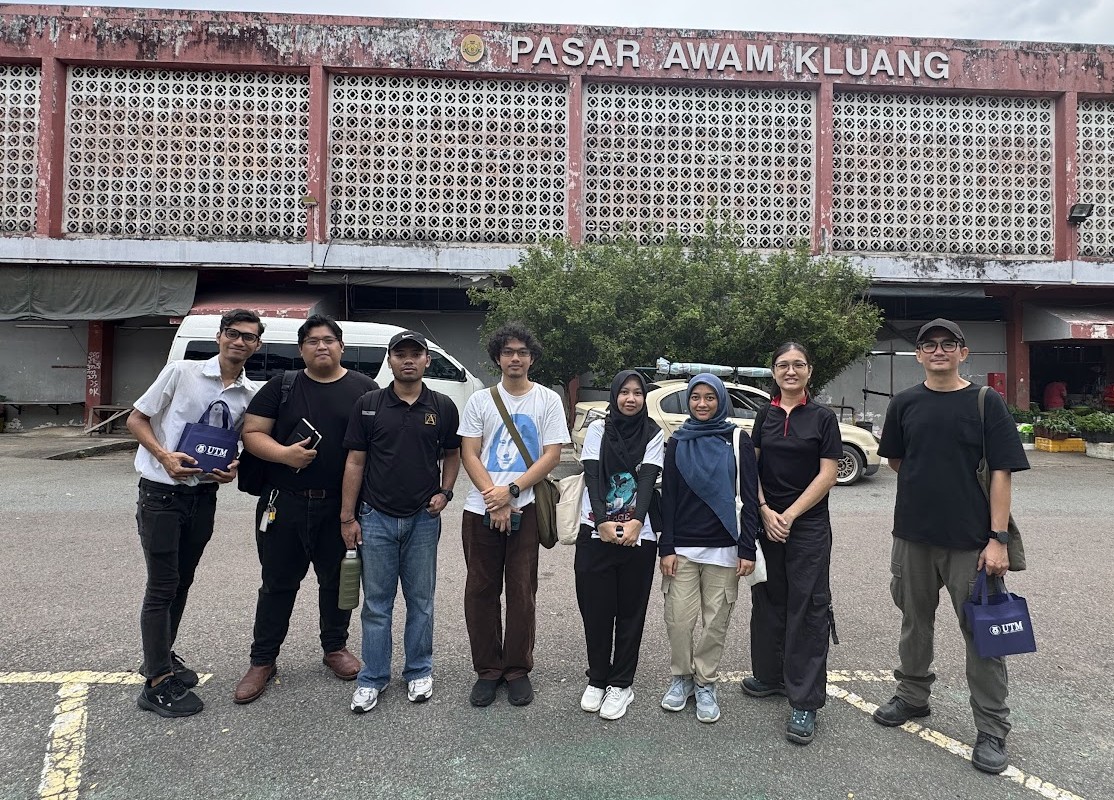
To ground architecture education in real-world contexts, the project was conducted as part of the Design 6 (SBEA3169) course, a 14-week studio led by Dr. Fadhlina Ahmad @ Taufik from the Department of Architecture, Faculty of Built Environment and Surveying (FABU). Instead of treating the market as a hypothetical site, the studio was intentionally based on actual conditions, including planning frameworks, community needs, and local governance structures.
From the beginning of the semester, students worked closely with the Kluang Municipal Council (MPK), engaging directly with architects from the Building Control Department, Ts. Shahrudin Rosdi and Ts. Juhana Turiman. Their involvement gave students practical insights into regulatory processes, development controls, and the realities of implementing architectural proposals within the local authority framework.
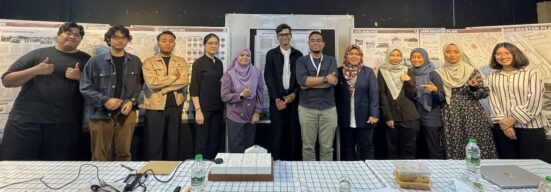
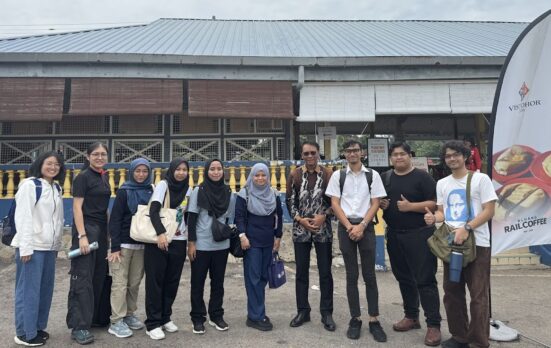
Equally significant was the collaboration with Rejoin Collective Association, a local non-governmental organization that has spent the past three years actively revitalizing Pasar Awam Kluang through community-driven initiatives. The studio benefited from the direct engagement of Rejoin Collective representatives Amirul Hakim Jamil and Cheong Gin Yih, who shared on-the-ground perspectives regarding vendor needs, public usage patterns, and the social significance of the market. Throughout the process, students also received additional input from external panels, including UTM Architecture alumni Affan Hamzan from Freight Architects LLP, Singapore; Ar. Noor Halim Jamaludin from RDC Arkitek Sdn. Bhd.; as well as Dr. Aiman Mohd Rashid and Assoc. Prof. Ar. Dr. Lim Yaik Wah from the Department of Architecture.
The presence of representatives from the local authority and community organizations highlighted a shared commitment to dialogue, co-learning, and long-term urban stewardship. Through these exchanges, students gained firsthand insight into the market’s intangible heritage, including its social rhythms, informal economies, and cultural meaning beyond the physical structure. These exercises have also served as a shared platform for academia, authorities, and the community, as well as for building networks with the outside world.
Across the studio, the eight student proposals addressed persistent challenges in the existing market, including spatial inefficiencies, circulation issues, hygiene and accessibility concerns, and competition from supermarkets and e-commerce. Each proposal explored strategies for adaptive reuse and mixed-use development, integrating traditional wet and dry markets with community facilities, cultural spaces, and opportunities for local entrepreneurship.
More importantly, the studio encouraged students to think critically about broader systemic issues in the built environment. Questions about who benefits from development, the oversupply of architectural graduates, and the limited platforms for young designers to engage meaningfully with real projects were openly examined. In this context, Pasar Awam Kluang became a lens through which architecture was framed not only as design production but also as social agency.
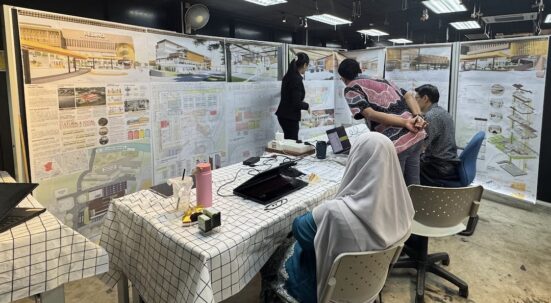
The Final Design Assessment, held in January 2026, brought together academic panels, reinforcing the collaborative nature of the studio. Such engagement is critical in shaping responsible future architects, as students are exposed to real communities and decision-makers, and design moves beyond aesthetics. It becomes about accountability, negotiation, and long-term impact.
The studio also demonstrated how sustained grassroots efforts, when supported by academic research and design inquiry, can contribute to more inclusive urban development. By aligning student proposals with ongoing initiatives by Rejoin Collective Association and the strategic outlook of Majlis Perbandaran Kluang, the projects opened constructive conversations about the future direction of Pasar Awam Kluang.
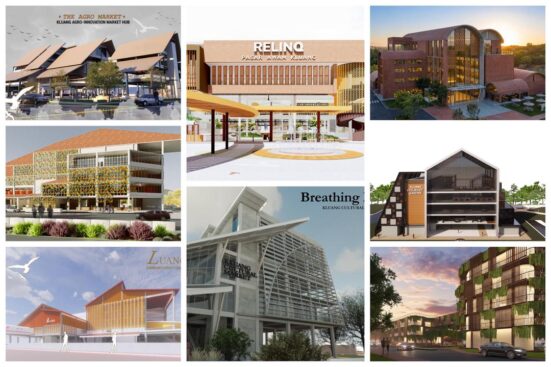
Rethinking Pasar Awam Kluang exemplifies UTM’s commitment to socially responsive architectural education, where learning extends beyond the studio to contribute meaningfully to local contexts. The project highlights the university’s evolving role, not only as a center for professional training but also as an active participant in shaping livable, culturally grounded towns. As Malaysian cities continue to evolve, initiatives like this signal an important shift in architectural pedagogy, one in which education engages directly with society and design becomes a shared endeavor among academia, authorities, and the community.
