
📝 Summary
Universiti Teknologi Malaysia (UTM) successfully organized an AI-Driven Entrepreneurial Journeys program, which brought together 200 undergraduate students from diverse faculties to learn about the practical application of artificial intelligence in entrepreneurship. The program featured industry speakers who shared insights on how AI can enhance productivity, support idea validation, and improve venture scalability. Through this initiative, UTM aims to equip students with applied insights and adaptable skills to succeed in a technology-driven economy.
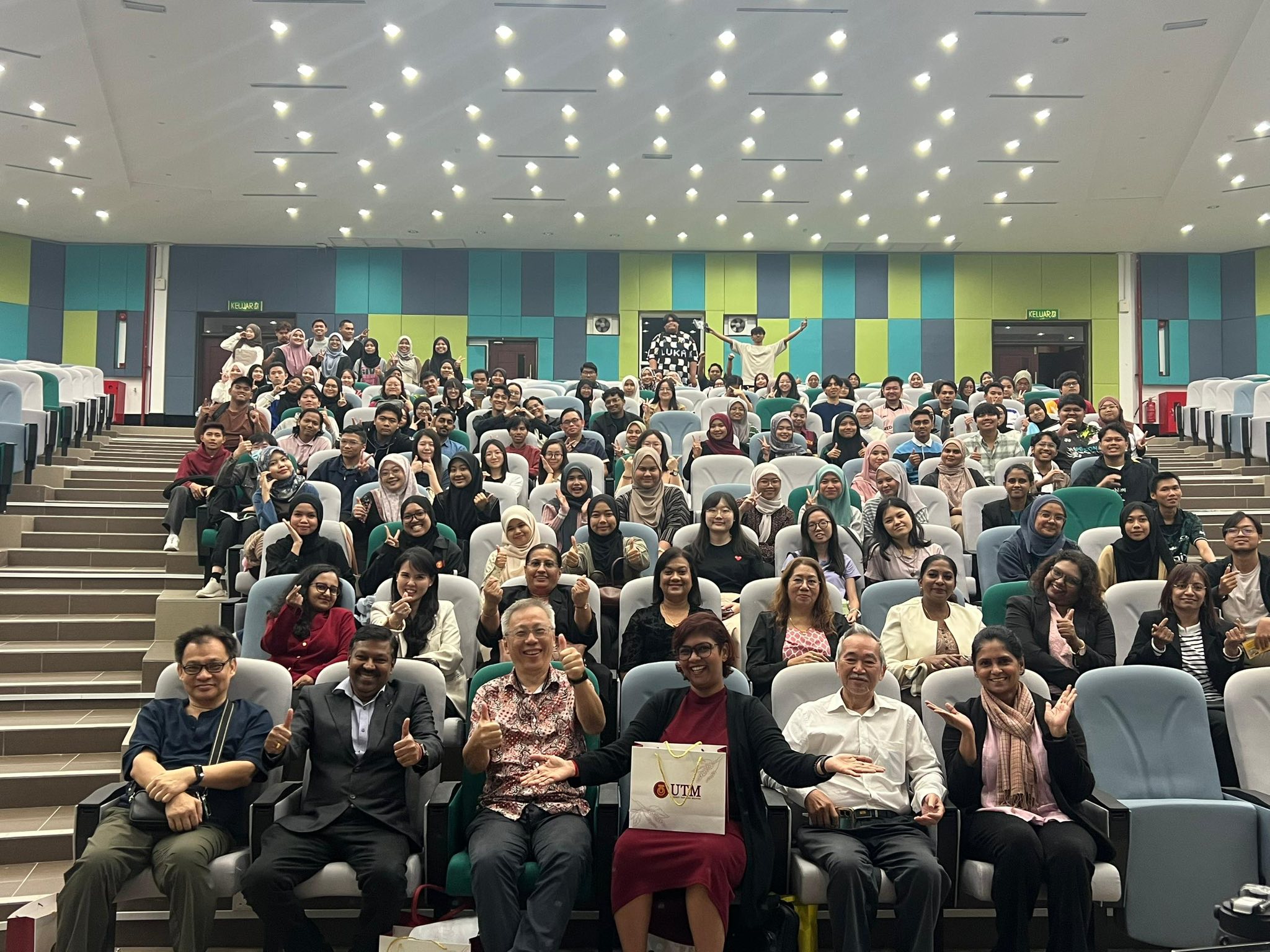
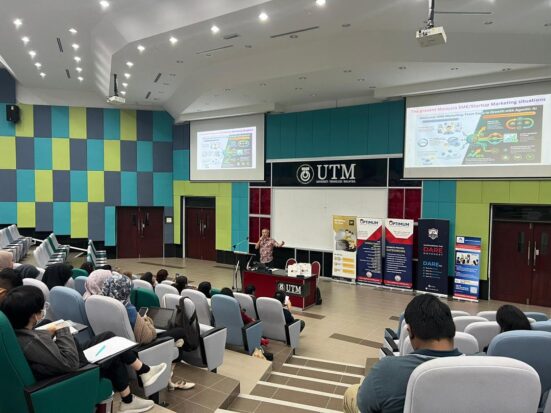
JOHOR BAHRU, Jan 7 – Universiti Teknologi Malaysia (UTM), through the Faculty of Management and the School of Undergraduate Studies (UGS), successfully organised the ‘AI-Driven Entrepreneurial Journeys: Where Theory Meets Practice, An Industry Collaboration’ programme at UTM Johor Bahru.
The program was conducted as part of the ULRS 3032 Entrepreneurship and Innovation course and involved approximately 200 undergraduate students from diverse faculties across UTM, reflecting strong interdisciplinary interest in entrepreneurship and artificial intelligence (AI). While AI is increasingly introduced in classrooms through conceptual and theoretical discussions, the program was intentionally designed to shift the focus towards how AI is practiced, implemented, and leveraged in real entrepreneurial settings. This approach addresses the growing need for experiential and industry-driven learning, ensuring that students are equipped with applied insights rather than theoretical understanding alone.
Assoc. Prof. Dr. Mahyuddin Arsat, Dean of UGS, emphasised that entrepreneurship education is essential in preparing undergraduates for a technology-driven economy. He noted that UGS prioritises learning experiences that integrate artificial intelligence with real industry practice, enabling students to translate knowledge into action and develop adaptable, industry-relevant skills for the future.
In line with this value promised to the studnts, the program also welcomed around 10 entrepreneurs from Johor, whose participation enriched the learning experience by bringing real-world business perspectives into the academic environment. Their involvement strengthened university–industry–community engagement and enabled meaningful knowledge exchange through the sharing of practical challenges, decision-making processes, and entrepreneurial experiences.
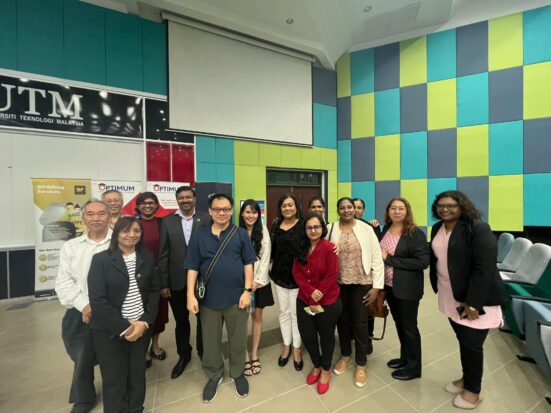
Under the Memorandum of Understanding (MoU) framework between UTM and E3 Global, the programme enabled direct interaction between students and industry practitioners. All invited speakers and participating entrepreneurs were members of E3 Global, reflecting active industry knowledge sharing and the effective mobilisation of E3’s entrepreneurial ecosystem in supporting applied entrepreneurship education.
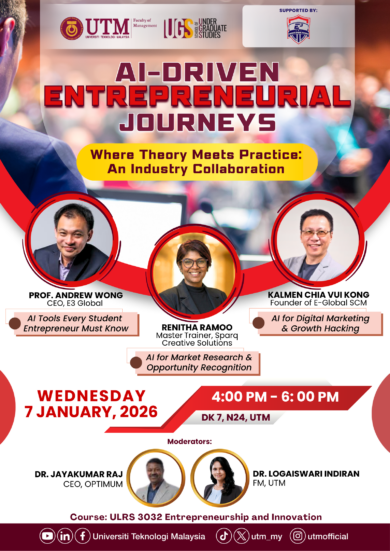
The programme featured several distinguished industry speakers who shared valuable insights on the application of AI in entrepreneurship. Prof. Andrew Wong, Chief Executive Officer (CEO) of E3 Global, spoke about essential AI tools that student entrepreneurs should know, highlighting how AI can enhance productivity, support idea validation and improve venture scalability. Kalmen Chia Vui Kong, Founder of E-Global SCM, discussed the use of AI in digital marketing and growth hacking, demonstrating how data-driven strategies and automation can accelerate business growth.
In addition, Renitha Ramoo, Master Trainer at Sparq Creative Solutions, delivered an engaging session on the use of AI for market research and opportunity recognition, emphasising practical approaches to identifying viable business opportunities through AI-driven analytics.
During his session, Prof. Andrew Wong also shared a practical framework on how entrepreneurs should think about artificial intelligence. He outlined three levels of AI usage, AI as a tool, AI as a co-pilot integrated into daily thinking and execution, and AI as core infrastructure to automate business processes from the early stages. He further emphasised that entrepreneurs should leverage AI strategically across key business functions, including thinking and strategy, research and market intelligence, branding and marketing, operations and productivity, and financial decision-making.
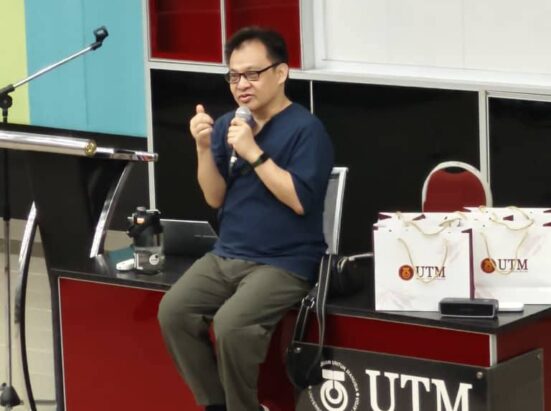
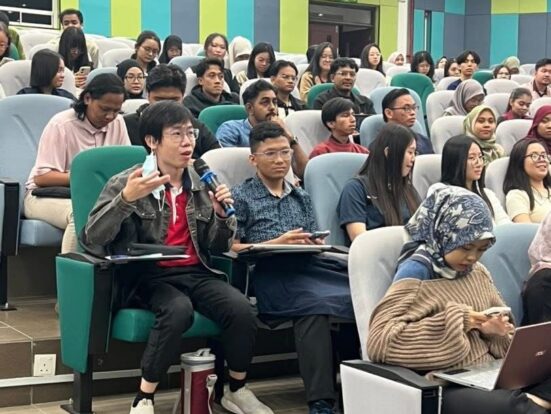
Student engagement was highly encouraging throughout the session, with participants actively raising questions and engaging in discussion. One recurring theme centered on common mistakes faced by new entrepreneurs. In response, Prof. Andrew Wong reframed the discussion by emphasizing that these are not failures, but learning experiences that build entrepreneurial maturity.
Prof. Dr. Ahmad Jusoh, Dean of the Faculty of Management and organiser of the programme, highlighted the Faculty’s commitment to applied learning.
“The Faculty of Management is committed to ensuring that students move beyond theoretical exposure to artificial intelligence and gain practical, industry-relevant experience. Through strong collaboration with industry partners, we aim to develop future-ready graduates who are able to apply AI meaningfully and responsibly in entrepreneurial and business settings,” he said.
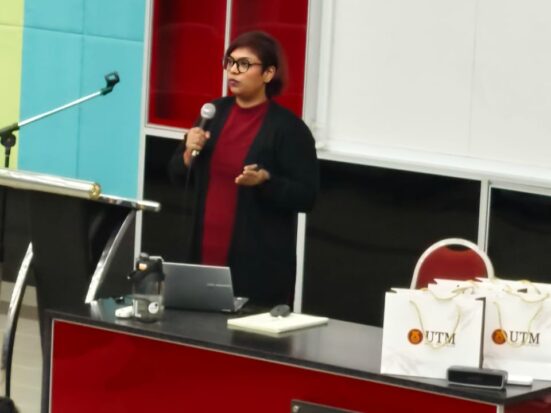
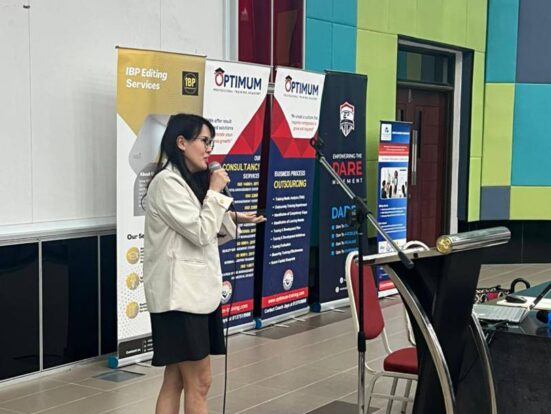
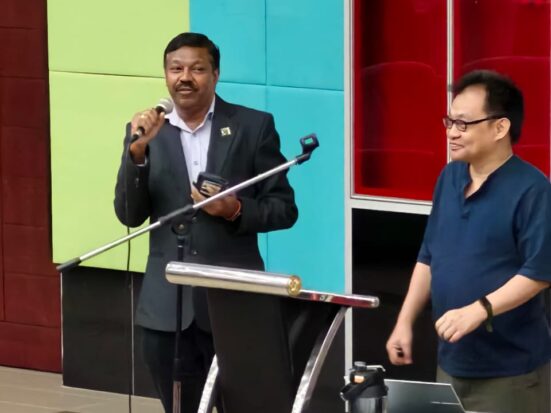
The session was moderated by Dr. Jayakumar Raj, CEO of OPTIMUM, who addressed one of the key challenges often faced by students, understanding how artificial intelligence can be realistically applied despite limited experience and resources.
During the discussion, he guided industry speakers to break down complex AI concepts into practical, step-by-step examples that students could relate to early-stage entrepreneurial contexts. By steering conversations towards real constraints such as cost, skills, and implementation readiness, he helped students see how AI adoption can begin incrementally rather than at scale. His moderation ensured that discussions remained grounded, relevant, and accessible, allowing students to better understand how AI can be applied thoughtfully and progressively in real entrepreneurial journeys.
Beyond practical demonstrations, the programme also deepened students’ understanding of AI as a strategic enabler rather than merely a technological tool. Students were exposed to how AI can support opportunity recognition, enhance decision-making, and reduce uncertainty in entrepreneurial ventures. By linking AI applications to real business challenges and outcomes, the programme helped students appreciate the ethical, strategic, and long-term implications of integrating AI into entrepreneurial and organizational contexts.
Led by Dr. Logaiswari Indiran, together with Dr. Noraindah Abdullah Fahim and Dr. Heamalatha Krishnan, the initiative represents more than a single programme. It underscores UTM’s broader vision of cultivating entrepreneurial thinking enhanced by artificial intelligence, and preparing students to become future-ready changemakers capable of applying technology meaningfully in real-world contexts.
