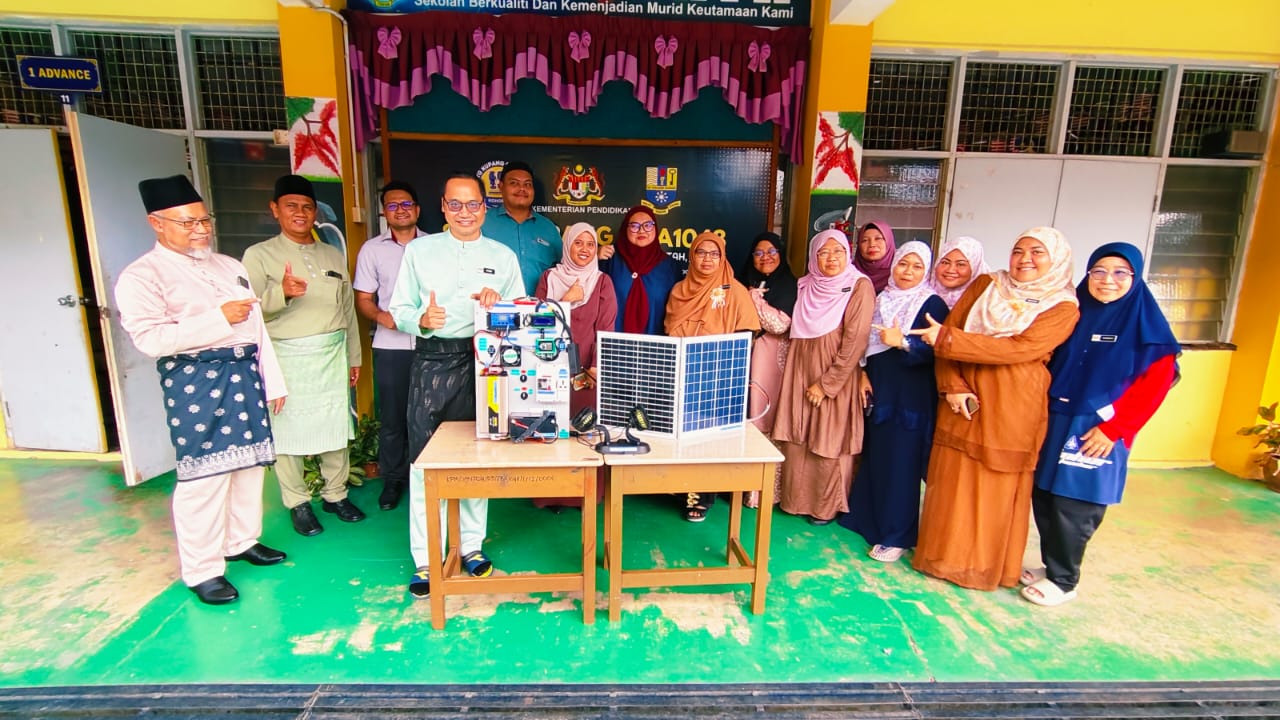

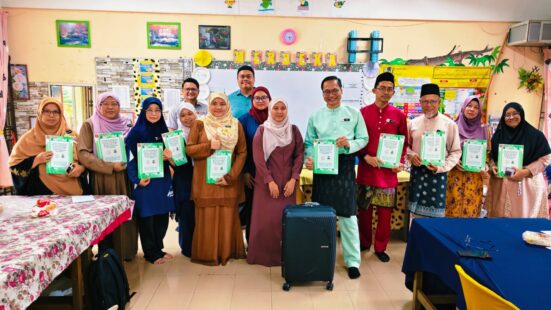
GELANG PATAH, Dec 9 – In an important step toward strengthening sustainable education, Universiti Teknologi Malaysia (UTM) lecturers successfully handed over a newly developed educational kit, the Sistem Fotovoltaik–Internet Pelbagai Benda (PV-IoT) for agriculture education, to the partner school involved in the ongoing All-Party Parliamentary Group Malaysia on Sustainable Development Goals (APPGM-SDG) food-security initiative. The handover was carried out by Ts. Dr. Nur Ayeesha Qisteena Muzir and Dr. Muhammad Amin Abd Wahab, and was also attended by Dr. Raihana Ridzuan and Dr. Razman Ayob.
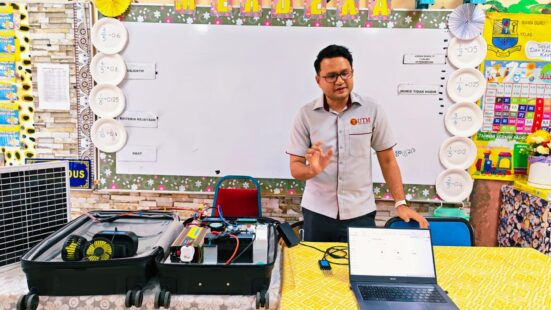
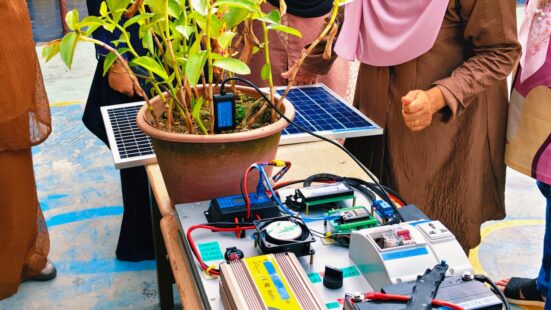
The educational kit consists of two main components: a DC-DC section, which demonstrates how solar energy can be converted to power small direct-current loads such as a direct current (DC) fan, and a DC-AC (alternating current) section that illustrates how solar-generated electricity can be supplied to standard socket outlets. The kit also incorporates an IoT system that monitors plant humidity, allowing students to observe how renewable energy and digital sensing technologies can complement each other in modern agricultural applications. Designed for hands-on learning, the PV-IoT kit enables teachers to effectively introduce key concepts of clean energy and smart farming in an engaging, practical manner.
To support the implementation, a dedicated teaching module was also developed alongside the kit. This module provides clear guidance and structured activities, ensuring that teachers can fully understand the system’s functions and confidently deliver lessons to their students.
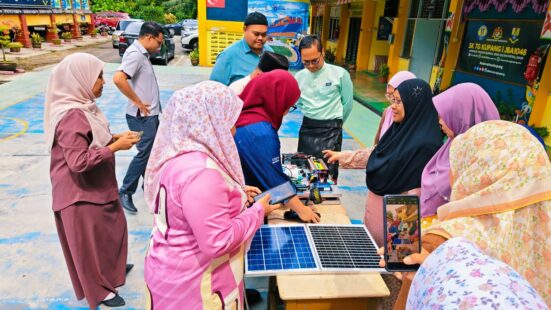
This handover marks a significant extension of UTM’s commitment to sustainable food systems and community education. The original APPGM-SDG project under which this initiative falls, previously highlighted in September 2025, focused on a solar-powered hydroponic garden at the partner school, aiming to teach hydroponic cultivation, generate produce, and offer possible income for the community.
With the addition of the PV-IoT educational kit, UTM now equips the school not only with a means to grow vegetables sustainably, but also with a demonstration model of how solar energy and IoT technology can be applied in agriculture. This helps embed practical Science, Technology, Engineering and Mathematics (STEM) learning into the school’s curriculum, while aligning with several United Nations Sustainable Development Goals (SDGs), including clean and affordable energy (SDG 7), zero hunger (SDG 2), and sustainable consumption and production (SDG 12).
The educational kit serves as a comprehensive tool that introduces students to the integration of solar energy systems and IoT applications within agricultural activities. By engaging with both the power-conversion features and digital monitoring functions, students gain exposure to the growing field of smart farming technologies. This approach not only strengthens classroom learning but also encourages curiosity and foundational skills related to sustainable technology.
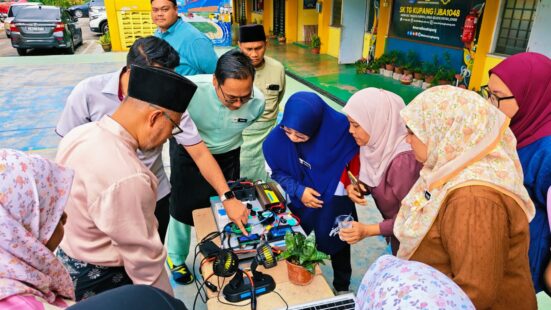
The UTM team hopes the kit and accompanying teaching module will support educators in conducting effective STEM-based activities related to renewable energy and smart farming. By combining both solar and IoT elements in a single platform, the project aims to nurture problem-solving abilities among students and highlight the relevance of clean-energy innovations in addressing real-world agricultural challenges.
