

KUALA LUMPUR, Dec 8 – The Malaysia–Japan International Institute of Technology (MJIIT), Universiti Teknologi Malaysia (UTM) Kuala Lumpur, in collaboration with the Japan International Cooperation Agency (JICA) Malaysia, successfully organised a five-day intensive training programme on the Vacuum Freeze-Drying Machine. Held from 4 to 8 December 2025 at MJIIT’s Food Security Laboratory, the programme provided both theoretical exposure and practical experience for researchers, technical staff, and laboratory personnel.
The training aimed to deepen participants’ understanding and operational competence in freeze-drying—an advanced preservation technique widely used in food technology, pharmaceuticals, biomaterials, and research applications. Unlike conventional drying, freeze-drying removes moisture while maintaining nutritional integrity and physical structure, resulting in high-quality, shelf-stable products.
Throughout the programme, participants learned the key principles of vacuum freeze-drying, including sublimation, vacuum control, heat transfer, and moisture removal mechanisms. Trainers also explained the workflow and main components of the freeze-dryer, enabling participants to appreciate how each stage contributes to consistent drying performance.
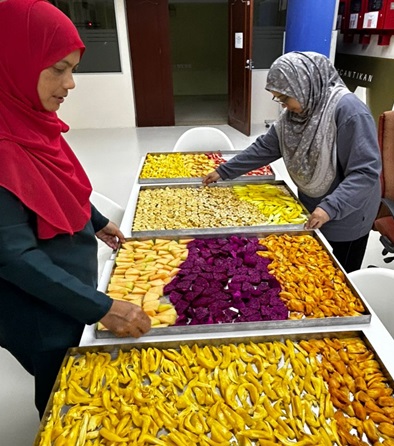
To strengthen theoretical knowledge, hands-on activities were conducted using the machine. Participants prepared fruit samples—cleaning, slicing, and arranging them on trays—before loading them into the freeze-dryer. They gained experience in setting drying parameters, monitoring chamber conditions, and applying proper safety procedures. This real-world application helped them understand how process variables influence final product quality.
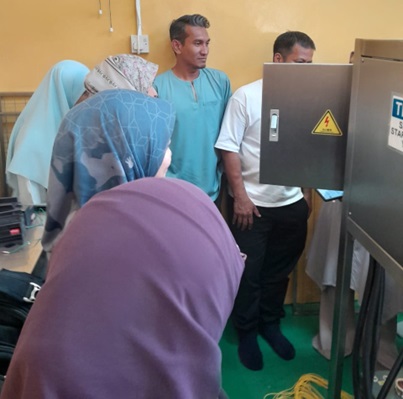
The training also covered essential aspects of the machine’s electrical and control systems. Participants were introduced to sensor readings, programmable logic controller (PLC) functions, and preventive maintenance practices. These skills are crucial for diagnosing technical issues, avoiding downtime, and ensuring reliable operation of laboratory equipment. The practical sessions significantly enhanced the participants’ confidence and technical capabilities.
This programme brings long-term benefits to MJIIT. By developing skilled personnel and strengthening laboratory capacity, the institute is better positioned to advance research in food technology and modern preservation methods. The expertise gained is expected to support future projects, publications, and collaborative research aligned with MJIIT’s academic and innovation goals.
Beyond academic impact, the programme contributes to societal progress. Freeze-drying technology plays a critical role in improving food preservation, reducing waste, and expanding access to nutritious products—particularly for rural communities, disaster relief, and healthcare applications. Through this initiative, participants are empowered to apply freeze-drying knowledge in their laboratories, industries, and communities, supporting national food security and economic development.
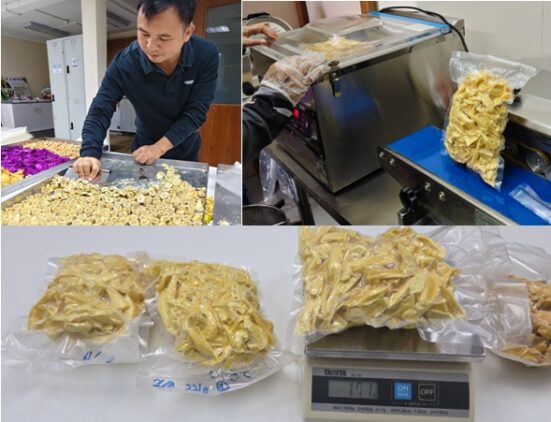
In the final stage of the training, participants learned how to harvest, weigh, package, and store freeze-dried products. Demonstrations of vacuum and nitrogen packaging techniques highlighted how proper handling preserves texture, flavour, and nutritional value while extending shelf life and preventing moisture absorption.
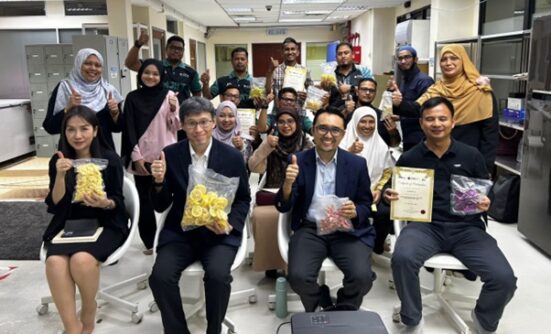
A closing ceremony held on 8 December 2025 featured tasting and sensory evaluation of the freeze-dried fruit products. Participants compared fresh and dried samples, gaining insight into sensory quality, flavour retention, and product acceptability. Certificates of participation were then presented to trainers and trainees in recognition of their commitment throughout the programme.
Overall, the successful completion of this training reflects MJIIT’s dedication to nurturing practical competency, advancing technological capability, and strengthening Malaysia–Japan cooperation. It reinforces MJIIT’s position as a centre of expertise in freeze-drying and food preservation—benefitting academic institutions, local industries, and society as a whole.