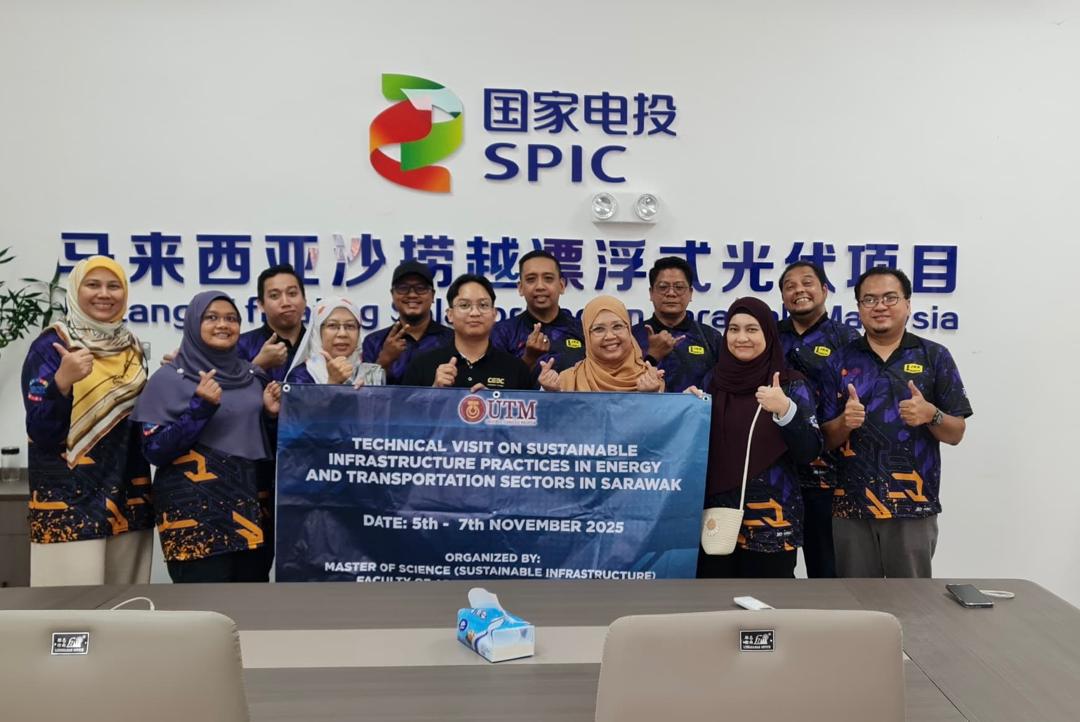

KUCHING, Nov 7 — A cohort of students from the Master of Science (Sustainable Infrastructure) programme recently concluded a three-day technical visit to Sarawak, held from November 5 to 7, 2025, to gain real-world exposure to contemporary engineering, science, and technology practices related to sustainable infrastructure. The visit focused on critical developments in the state’s energy and transportation sectors, underscoring Sarawak’s commitment to low-carbon development and its Post-COVID Development Strategy (PCDS) 2030.
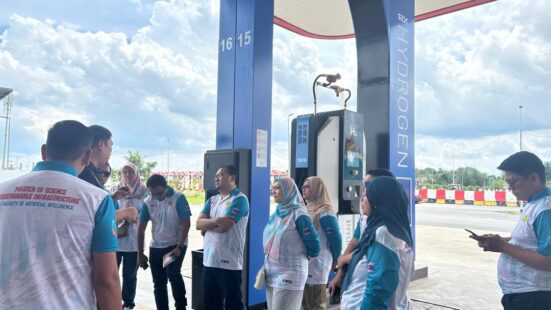
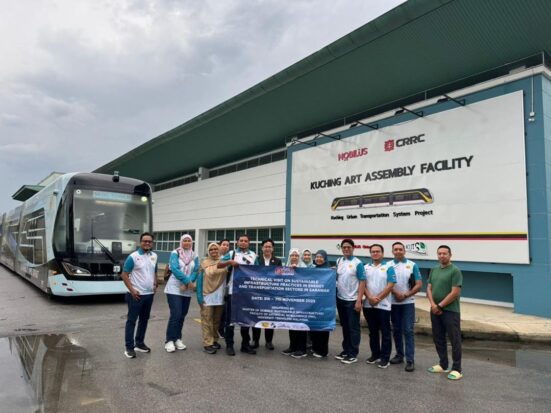
The tour began with an immersive look at the Kuching Urban Transportation System (KUTS), led by Sarawak Metro Sdn. Bhd. The core of the system is the Autonomous Rapid Transit (ART) vehicle, a trackless, sensor-guided solution that utilises the Hydrogen Production and Refuelling Facility at the PETROS Station. The ART system is powered by Proton Exchange Membrane (PEM) fuel cell technology, ensuring zero tailpipe emissions. Students explored the concept, operation, and maintenance of this unique urban transport system.
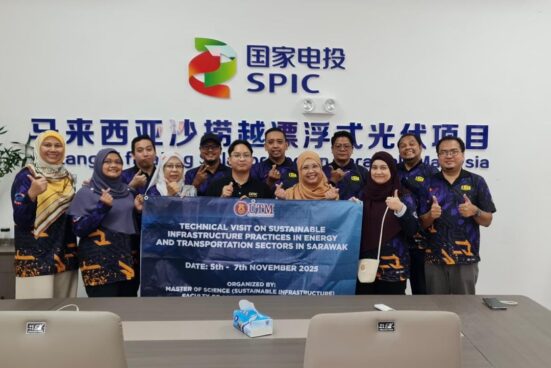
The visit continued at the Batang Ai Floating Solar Farm, a 50-megawatt (MW) facility by Sarawak Energy Berhad (SEB), recognised as Malaysia’s first and largest hybrid power facility integrating large-scale solar generation with the existing Batang Ai Hydroelectric Plant (HEP) reservoir. Students examined strategies for improving energy efficiency and system reliability. The project uses less than three percent of the reservoir area, avoiding deforestation and land clearing. The operational hybrid system ensures a stable and continuous supply of renewable energy and is projected to avoid approximately 52 kilotonnes of carbon dioxide (CO₂) emissions annually, contributing meaningfully to climate change mitigation.
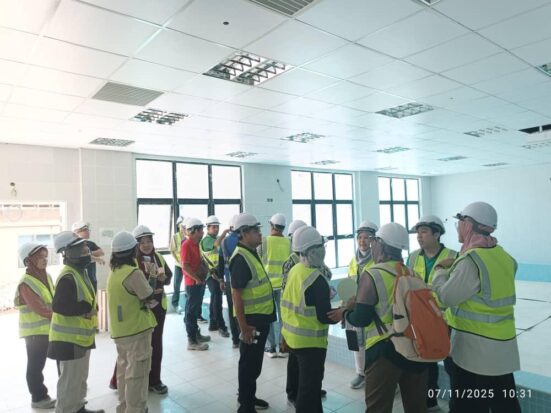
The final stop was the Hospital Petra Jaya project site, a 300-bed tertiary hospital in Kuching. Through presentations and discussions, students reviewed the implementation of resilient and specialised infrastructure, noting that the project is a “rescue project” tasked with completing works previously left abandoned. The hospital design incorporates innovations in infection control and asset durability, including stainless-steel wall panels in the Central Sterile Supply Department (CSSD), which are resistant to harsh chemical disinfection, and seamless polyurethane (PU) flooring in high-risk areas such as the Mortuary. This flooring eliminates grout lines—common sites for bacterial growth—making it a critical infection-control measure.
Overall, the technical visit offered valuable exposure to sustainable infrastructure practices in Sarawak, illustrating how large-scale projects integrate technological innovation with environmental and socio-economic considerations, reinforcing the state’s commitment to long-term sustainable growth.
By Assoc. Prof. Dr. Rozana Zakaria and Assoc. Prof. Sr Dr. Siti Uzairiah Mohd Tobi, Faculty of Artificial Intelligence (FAI), Universiti Teknologi Malaysia (UTM) Kuala Lumpur