




📝 Summary
Universiti Teknologi Malaysia (UTM) is strengthening its partnerships with ASEAN and Japan to drive regional innovation and achieve Malaysia’s 2030 ambitions. UTM’s Deputy Vice-Chancellor (Research and Innovation) Prof. Ts. Dr. Ali Selamat participated in a symposium on science, technology, and innovation coordination between ASEAN and Japan, highlighting the need for long-term institutional partnerships and measurable outcomes. UTM’s initiatives, including its leadership of the ASEAN-Japan-Africa Smart Energy Consortium, aim to translate research into scalable solutions that benefit industries, communities, and the nation.
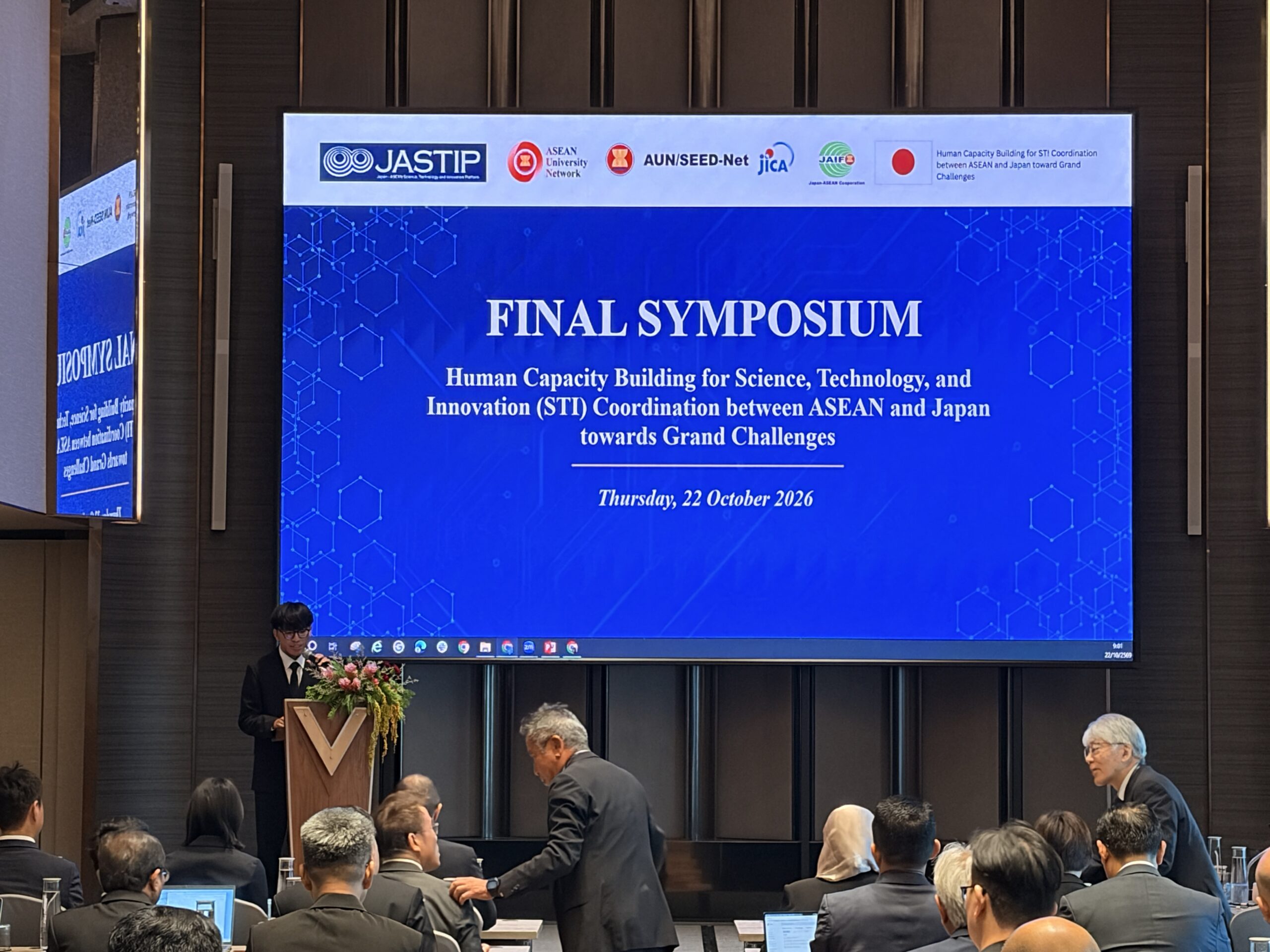
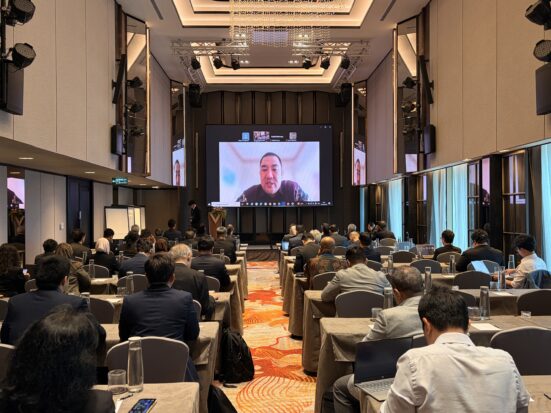
BANGKOK, Oct 22 Oct – Universiti Teknologi Malaysia (UTM) is strengthening its role in regional research, talent development and innovation through its participation in the Final Symposium on Human Capacity Building for Science, Technology and Innovation (STI) Coordination between the Association of Southeast Asian Nations (ASEAN) and Japan towards Grand Challenges in Bangkok, Thailand.
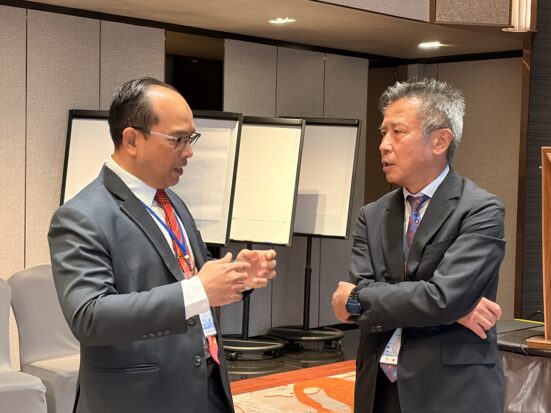
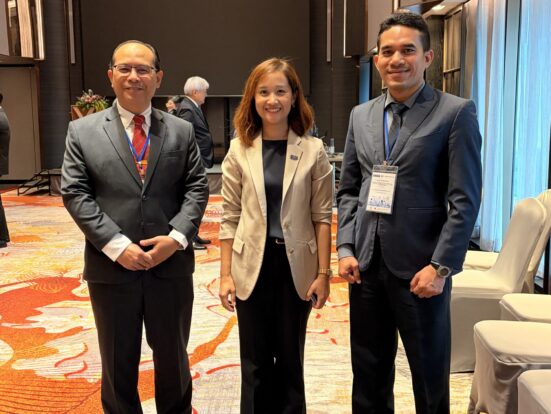
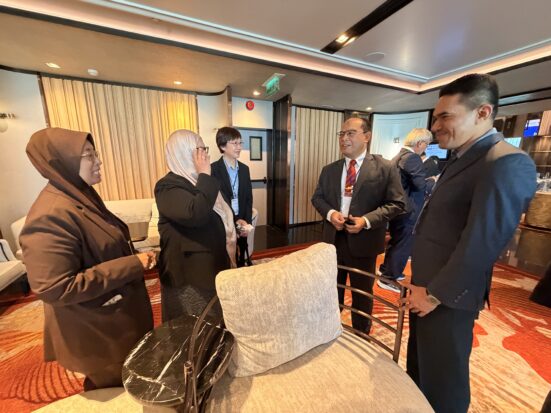
Representing UTM, Deputy Vice-Chancellor (Research and Innovation) Prof. Ts. Dr. Ali Selamat joined university leaders, researchers and STI representatives to review achievements and explore future collaborations. The symposium was jointly organised by the ASEAN University Network (AUN), Japan-ASEAN Science, Technology and Innovation Platform (JASTIP) and AUN/Southeast Asia Engineering Education Development Network (AUN/SEED-Net).
Under the theme “Beyond Borders, Beyond Projects: Celebrating ASEAN-Japan STI Coordination Success and Future Partnerships”, discussions highlighted the need to move beyond individual projects towards long-term institutional partnerships with clear targets, sustainable funding and measurable outcomes.
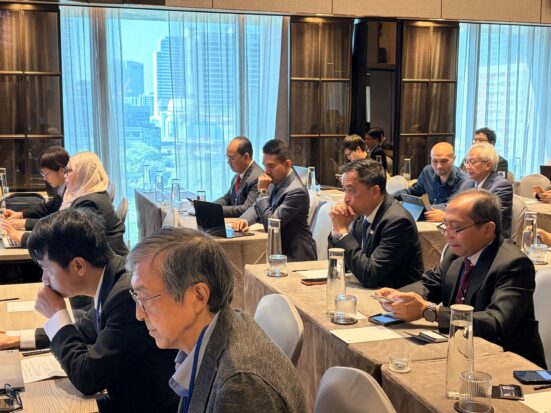
During the “Shaping What’s Next” roundtable, Prof. Ali emphasised collaboration in artificial intelligence (AI), digital transformation, sustainable energy, green technology, disaster resilience, research talent development and research management. He stressed that universities must connect research with industry, government and communities to ensure scientific discoveries deliver practical benefits.
UTM’s participation builds on its involvement in AUN/SEED-Net, which entered its 2026–2031 Platform Enhancement Phase in March 2026 to strengthen talent exchange, collaborative research and university-industry connections between ASEAN and Japan.
A major achievement is UTM’s leadership of the ASEAN-Japan-Africa Smart Energy Consortium (AJA-SEC), supported under the Artificial Intelligence Research and Education Grant for University Consortium (AI REd-UC) 2026. The initiative focuses on AI-enabled Internet of Things (IoT) sensor networks and distributed energy management systems for net-zero-energy buildings. UTM is one of only three consortia awarded the grant for Japanese Fiscal Year 2026.
UTM also hosted the AUN/SEED-Net Regional Conference on Environmental Engineering (RCEnvE 2026) and International Conference on Sustainable and Environmental Technology (ISET 2026) in Johor Bahru from 22 to 24 September. Organised with UTM’s Advanced Membrane Technology Research Centre (AMTEC), the conferences connected ASEAN and Japanese researchers in environmental technology, resource recovery and sustainable solutions. Activities included mock interviews for young researchers and exposure to laboratories and SATREPS projects, strengthening international research skills and collaboration.
These initiatives position UTM, supported by its Malaysia-Japan International Institute of Technology (MJIIT), as a strategic bridge linking Malaysia, ASEAN and Japan. They align with UTM ASCEND 2030 ambitions to strengthen research excellence, expand global networks and increase the impact of knowledge and innovation, as well as Malaysia’s National Science, Technology and Innovation Policy 2021–2030. Through sustained ASEAN–Japan cooperation, UTM aims to translate research into scalable solutions that benefit industries, communities and the nation.
