


📝 Summary
The Universiti Teknologi Malaysia (UTM) has strengthened its research collaboration with the National University of Sciences and Technology (NUST) in Pakistan through the Young Scientists’ Fellowship Program. The program, hosted by NUST from August to October 2026, facilitated institutional engagement, collaborative research, and knowledge exchange between Malaysia and Pakistan. The collaboration has laid the groundwork for future research proposals, scholarly publications, and academic mobility between the two universities.
Universiti Teknologi Malaysia (UTM) has strengthened research engagement with the National University of Sciences and Technology (NUST), Islamabad, Pakistan, through the participation of a Senior Lecturer at the Faculty of Chemical and Energy Engineering (FKT) and Deputy Director of the Centre for Advanced Composite Materials (CACM), Ir. Ts. Dr. Ahmad Ilyas Rushdan, in the Young Scientists’ Fellowship Program (YSFP).
The YSFP is a joint initiative of the Mustafa (PBUH) Science and Technology Foundation (MSTF) and COMSTECH (OIC Standing Committee on Scientific and Technological Cooperation). Hosted by NUST’s School of Chemical and Materials Engineering (SCME) from 15 August to 15 October 2026, the two-month fellowship provided a platform for institutional engagement, collaborative research, postgraduate capacity building and scientific knowledge exchange between Malaysia and Pakistan.
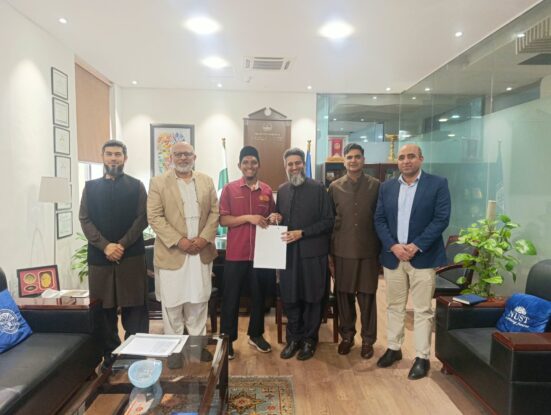
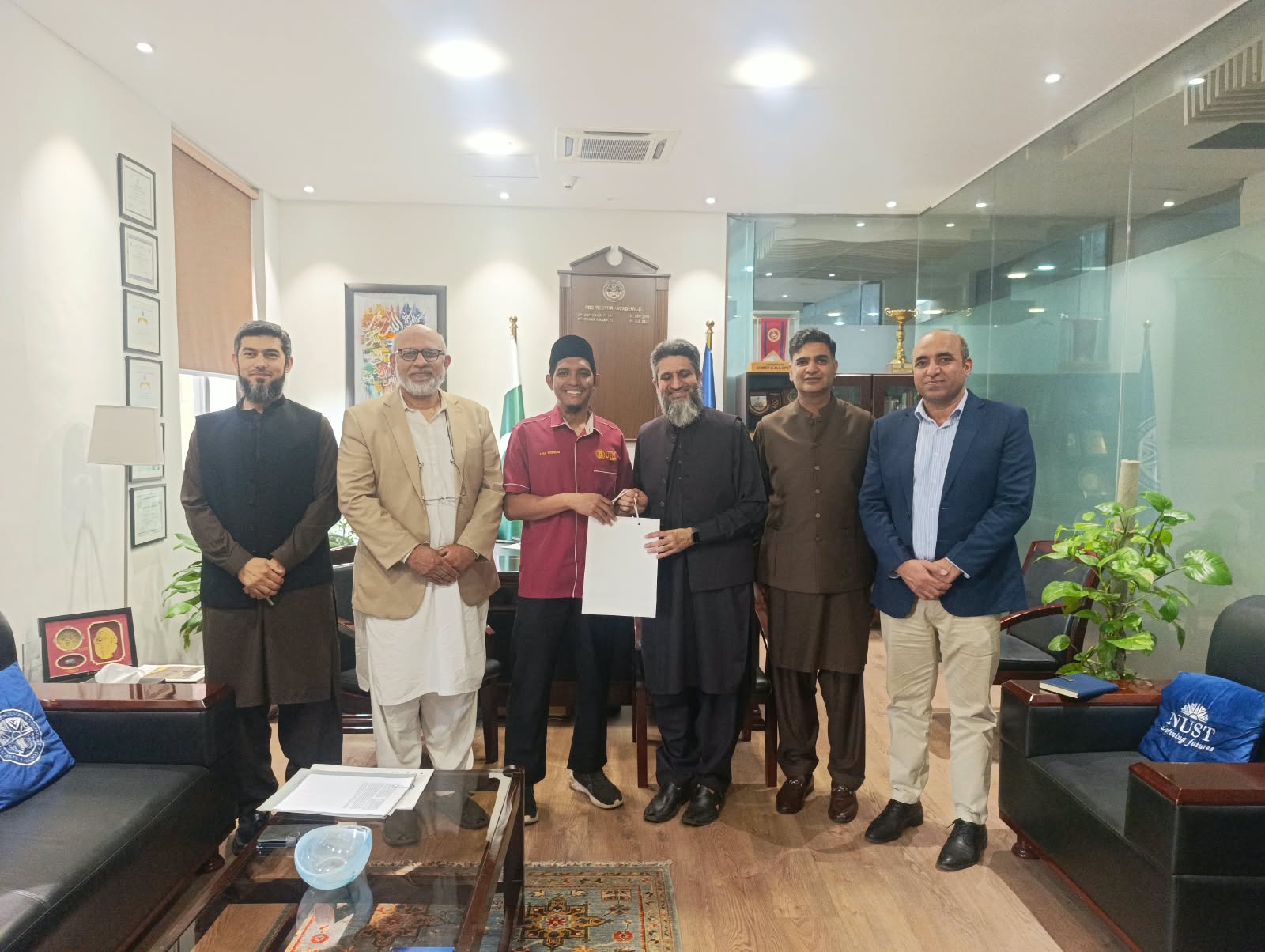
A significant engagement was a meeting with the Pro-Rector (Academics) of NUST, Prof. Dr. Osman Hasan, to discuss potential academic and research collaboration. The discussion explored how the universities could build on complementary strengths in engineering, scientific research and postgraduate development. Potential areas for further exploration include joint research, academic and postgraduate mobility, collaborative supervision, knowledge sharing and institutional research programs. These remain prospective areas of cooperation rather than formally approved agreements.
At SCME, Dr. Ilyas also met the Principal of the school, Prof. Dr. Umair Manzoor, and the Head of the Department of Chemical Engineering, Dr. Iftikhar Ahmad Salarzai. Their discussions examined opportunities to connect expertise and facilities in sustainable polymers, nanocellulose, advanced composites and materials characterisation.
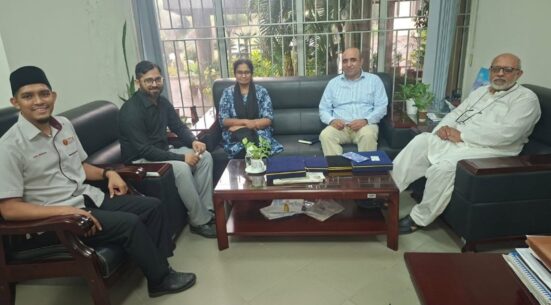
Throughout the fellowship, Assoc. Prof. Dr. Salman Haider of SCME and Manager of the NUST International Office (NIO), Uzair Hashmi, served as key institutional contacts, supporting the coordination of academic engagements, communications and programme arrangements.
Throughout the fellowship, Assoc. Prof. Dr. Salman Haider of SCME and Manager of the NUST International Office (NIO), Uzair Hashmi, served as key institutional contacts, supporting the coordination of academic engagements, communications and program arrangements.
Another research engagement with Assoc. Prof. Dr. Muhammad Shoaib Butt of SCME’s Department of Materials Engineering focused on extracting nanocellulose from Hibiscus-derived biomass and exploring its potential as reinforcement in biomedical materials. Further research could assess extraction efficiency, cellulose purification, nanoscale morphology, material performance and biocompatibility, subject to experimental validation.
International networking also included discussions involving Assistant Prof. Dr. Zia Ur Rahman of NUST and Dr. Dinie Muhammad of UTM, as well as Assoc. Prof. Dr. Salman Haider and Dr. Muhammad Khairol Annuar Zaini of Universiti Malaya. A separate discussion with Prof. Dr. Malik Adeel Umer examined possible research links with CACM, particularly in advanced composite materials and sustainable engineering applications.
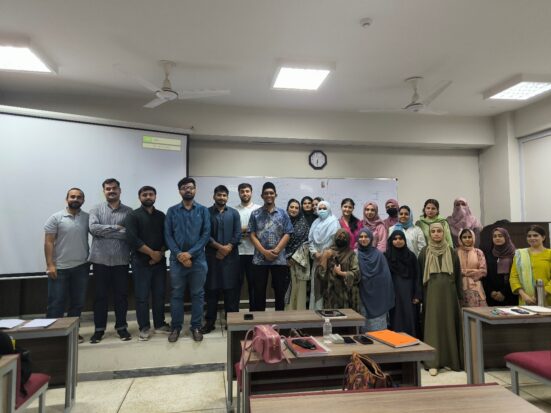
A major academic contribution was the five-week Research and Methodology Class for master’s and doctoral researchers at SCME, conducted in collaboration with Assistant Prof. Dr. Muhammad Tajmeel Feroze. The sessions addressed research questions, experimental approaches and the communication of findings through well-structured scientific publications. Discussions also covered research novelty, critical assessment of literature, reproducibility, data interpretation and the expectations of peer-reviewed journals. These skills support postgraduate researchers in producing rigorous and internationally relevant work.
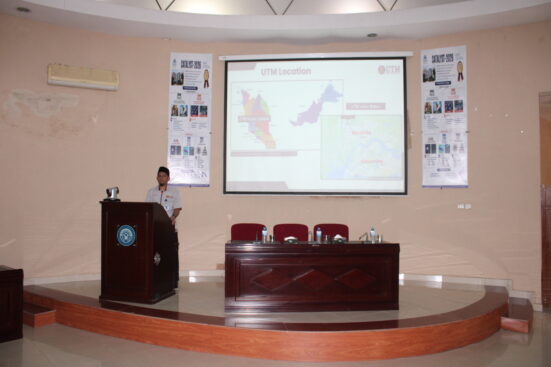
Dr. Ilyas was also invited as an honorary speaker for CATALYST-2026, a summer programme organised by SCME. Its specialist modules under Sustainable Technologies (SUSTECH) and Modelling and Simulation in Process Industries (MOSPI) covered areas including sustainable packaging, membranes, energy storage, artificial intelligence, computational fluid dynamics and surface chemistry. The contribution provided an opportunity to engage students in discussions linking sustainable materials, engineering innovation and potential practical applications.
The fellowship also contributed to the development of a proposed international edited volume, Nanocellulose: Fundamental Material for Science and Technology Applications, with Elsevier identified as the intended publisher. The initiative involves Dr. Ilyas, Assistant Prof. Dr. Humayun Nadeem of NUST, Dr. Melbi Mahardikar of Indonesia’s National Research and Innovation Agency (BRIN), and Prof. Dr. Ning Yan of the University of Toronto, Canada. The proposed book will bring together expertise on nanocellulose extraction, material properties, functionalisation, characterisation, composites and emerging applications. It remains under development and subject to publisher acceptance and the usual editorial process.
Dr. Ilyas also participated in the Knowledge and Technology Transfer Workshop held on 1–2 October 2026 at the OIC-COMSTECH Secretariat in Islamabad. The workshop complemented the fellowship by highlighting interdisciplinary exchange, technology transfer and regional cooperation in advancing research concepts towards real-world applications.
The fellowship lays the groundwork for future UTM–NUST research proposals, scholarly publications and academic mobility, supporting the global engagement aspirations of UTM ASCEND 2030. Dr. Ilyas thanked MSTF, COMSTECH, NUST and UTM for supporting the fellowship, with special appreciation to Assoc. Prof. Dr. Salman Haider and Uzair Hashmi for their coordination and hospitality.
