


📝 Summary
Nur Farain Asikin, a UTM student, gained international research experience through a 12-week internship at the University of Tsukuba in Japan. She worked on a project evaluating the production of recalcitrant organic matter by algae as a carbon dioxide removal process, developing her skills in scientific data analysis, critical thinking, and research communication. The experience helped her connect chemical engineering knowledge with environmental research and strengthened her technical and analytical skills.
Nur Farain Asikin, a third-year Chemical Process Engineering student from the Malaysia-Japan International Institute of Technology (MJIIT), Universiti Teknologi Malaysia (UTM), gained international research experience through a 12-week industrial training programme at the University of Tsukuba, Japan.
The internship provided an opportunity to step beyond the classroom and experience the research environment of a Japanese university. Under the supervision of Asst. Prof. Yuko Omori, she worked on a research project entitled “Evaluating the Production of Recalcitrant Organic Matter by Algae as a Carbon Dioxide Removal (CDR) Process.” The research explored the production and characteristics of organic matter associated with algae and its relevance to carbon dioxide removal.
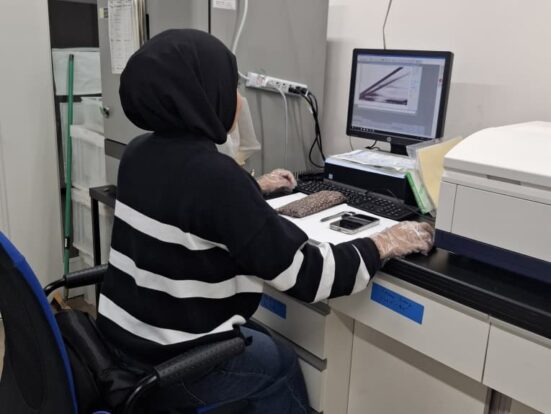
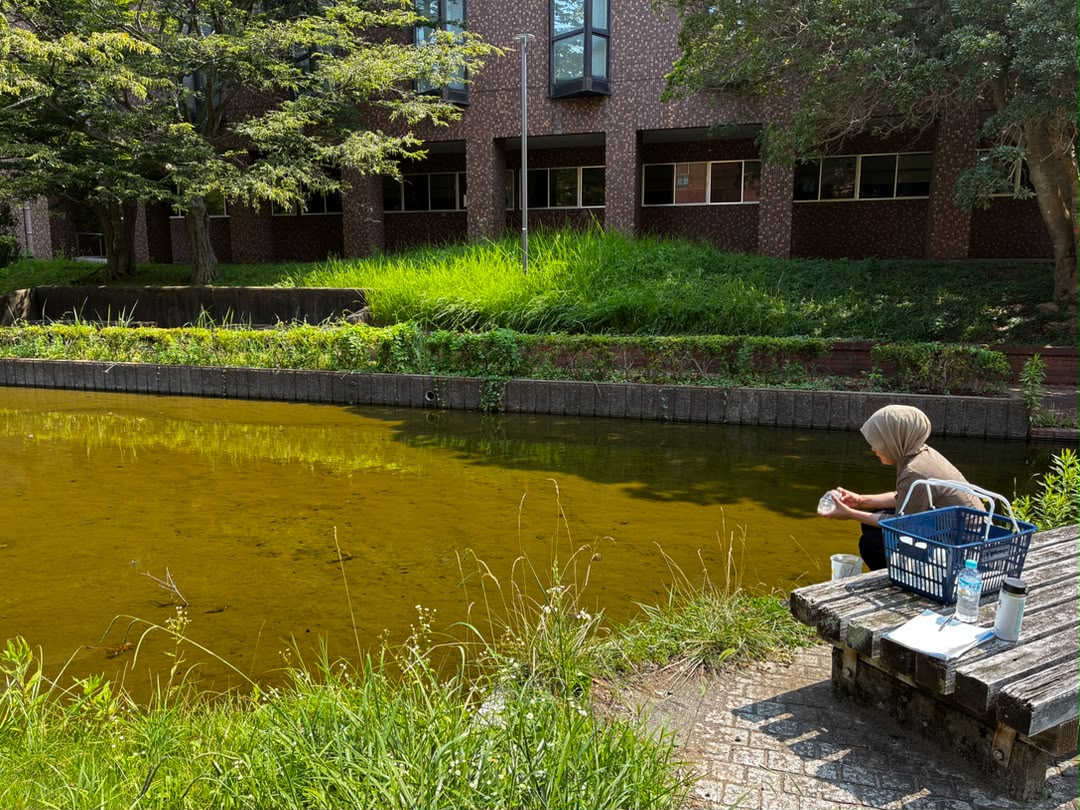
Throughout the internship, she was involved in various stages of the research process, including sample preparation, filtration, incubation, fluorescence measurements and data analysis. Working with samples from different algal species and natural water sources provided an opportunity to observe how the characteristics of fluorescent organic matter varied under different conditions.
A major part of the research involved Excitation–Emission Matrix (EEM) fluorescence analysis and the study of fluorescent dissolved organic matter (FDOM). The fluorescence data were further analysed using Parallel Factor Analysis (PARAFAC) to identify and compare the fluorescent components present in the samples. Natural water samples were also examined before and after a one-week incubation period to observe changes in fluorescence characteristics and component composition.
As the research progressed, she became increasingly involved in interpreting the results. This included comparing fluorescence patterns, examining changes in component intensities, identifying possible protein-like and humic-like fluorescence, and referring to previous studies to support the interpretation. She also prepared graphs and organised research findings into presentation slides to communicate the results more clearly.
The experience provided an opportunity to apply knowledge gained from chemical engineering studies in an environmental research setting. It also strengthened her skills in scientific data analysis, critical thinking, problem-solving and research communication, particularly when interpreting experimental results and discussing possible explanations for the observed changes.
In September, she travelled with members of the laboratory to the Shimoda Marine Research Center for a research visit involving the preparation of an algal cultivation experiment. At the centre, she assisted with preparing materials and observed how the laboratory team arranged the cultivation system, including the carbon dioxide (CO₂) supply, humidification system, tubing, cultivation containers and equipment for monitoring cultivation conditions. She also observed the preparation and checking of the pH sensor system before the experiment.
Although the cultivation experiment was conducted by the supervisor and laboratory team, the visit provided practical exposure to the preparation of a controlled algal experiment. It also helped connect the cultivation process to the wider research, particularly in understanding how cultivation conditions may influence algal growth and the characteristics of algal-derived organic matter.
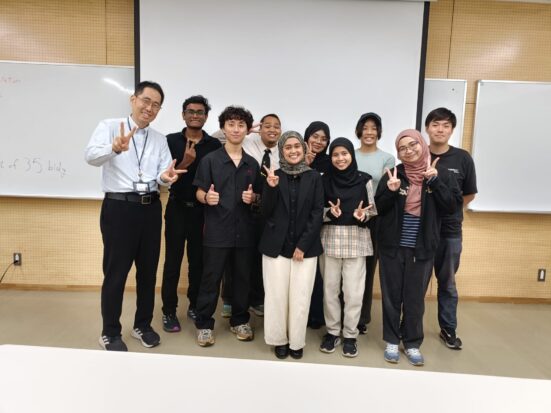
Beyond the laboratory, the internship provided valuable experience of working in an international research environment. She participated in research discussions, attended progress meetings and presentations, and communicated regularly with the supervisor and laboratory members. These interactions provided opportunities to receive feedback, ask questions and improve the interpretation and presentation of research findings.
Towards the later stages of the internship, the focus shifted towards organising the results and preparing research presentations. She presented research progress and findings to supervisors, including discussions on EEM fluorescence results, FDOM characteristics and PARAFAC components. Preparing for these discussions helped build her confidence in explaining technical information and communicating scientific findings.
Living and working in Japan also provided an opportunity to adapt to a different academic and cultural environment. Experiencing a new working environment and interacting with people from different backgrounds encouraged greater independence, adaptability and openness to different ways of working. These experiences complemented the research activities and added an important personal dimension to the 12-week placement.
The internship at the University of Tsukuba provided more than laboratory experience. It allowed her to experience the research process firsthand, from preparing samples and obtaining experimental data to analysing results, discussing findings and presenting scientific work.
For her, the experience was an important step in connecting chemical engineering knowledge with environmental research. It strengthened her technical and analytical skills while providing a broader understanding of research, collaboration and the potential role of scientific knowledge in addressing environmental challenges such as carbon dioxide removal.
Ultimately, the 12-week internship was an opportunity to learn beyond the classroom, gain international research experience and develop greater confidence as a young engineer and researcher.
