


📝 Summary
Malaysian student Muhammad Shahrul Nabeel Yusof gained hands-on engineering experience in Japan through a three-month industrial training program at Kojundo Chemical Laboratory Co., Ltd. He worked on designing, assembling, and troubleshooting a machine, and also handled chemical materials directly, developing practical skills and adapting to different equipment and safety expectations. The experience helped him connect classroom concepts with practical engineering work and develop the skills needed in an international workplace.
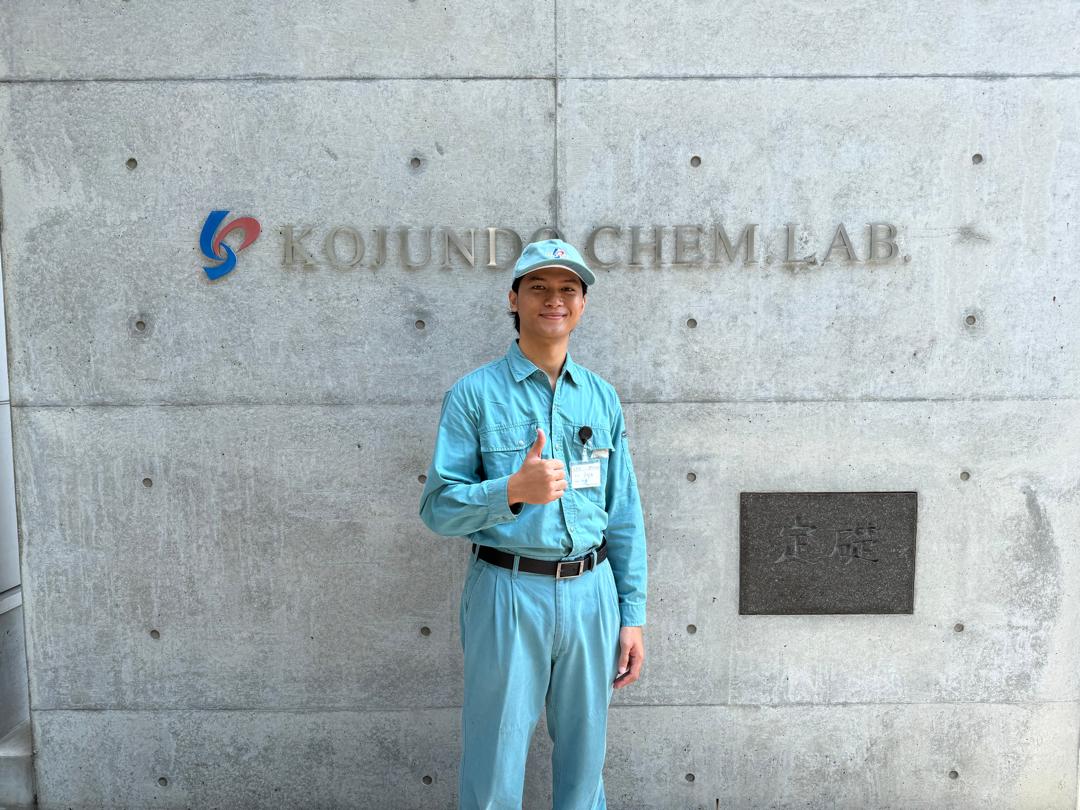
When Muhammad Shahrul Nabeel Yusof arrived at Kojundo Chemical Laboratory Co., Ltd. in July 2026, his first assignment was to help design storage tanks for a machine he had never worked with outside his classes at the Malaysia-Japan International Institute of Technology (MJIIT). Over the three months that followed, the Chemical Process Engineering student at MJIIT, Universiti Teknologi Malaysia (UTM), progressed from an initial design sketch to assembling, wiring and troubleshooting the finished machine before rotating into the company’s chemical synthesis operations for his final two weeks. The placement, completed under MJIIT’s industrial training programme at the company’s facilities in Saitama, gave him a structured introduction to the work of a Japanese engineering team and the demands of an industrial setting.
For most of the training, Nabeel was attached to Kojundo’s Engineering Service (ES) Department, where he joined an ongoing project to build a lab-scale machine for the company’s in-house semiconductor research. His responsibilities covered several stages of the work, allowing him to see how an equipment design develops into a working machine. Rather than focusing on one isolated task, he gained experience across design, assembly, wiring and troubleshooting, each requiring attention to how individual components function together.
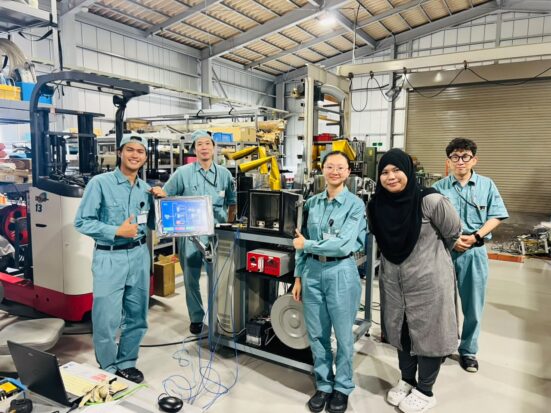
Along the way, he worked through engineering problems that differed from the examples encountered in textbooks. When a cooling component could not fit inside a tank as originally designed, he took part in reworking its placement with his project team. He also diagnosed and fixed a control-logic fault on his own, and helped trace a recurring equipment shutdown to a mismatched electrical component rating. These experiences required him to consider practical constraints and test possible causes instead of relying on a ready-made answer.
In his final two weeks, Nabeel rotated into a sub-section of the Fine Materials (FM) Department, where the work shifted from building equipment to handling chemical materials directly. He learned to pack air-sensitive compounds under an inert atmosphere, assisted with safety inspections of the plant’s gas-scrubbing systems, and took part in a sol-gel synthesis process, from preparing the precursor solution through to drying and analysing the resulting powder. Moving between the two departments meant adapting to different equipment, instructions and safety expectations within a short period. He said this change required him to adjust quickly while maintaining care and accuracy in unfamiliar tasks.
Running through both rotations was a set of workplace habits Nabeel said he had to develop quickly. Safety came first: every chemical-handling task was governed by rules, such as keeping a scrubber’s neutralising solution within a specified pH range before it is released, or drying ethanol-contaminated material only in explosion-proof equipment. He also had to become comfortable solving problems with incomplete information, piecing together the causes of equipment faults from test data and senior colleagues’ observations rather than relying solely on a manual.
Communication was another important part of the experience. As his day-to-day supervisors primarily spoke Japanese, Nabeel learned to communicate technical details precisely across a language gap. Each evening, he translated his daily logbook entries into Japanese so his supervisor could review and sign them at the end of the week. The routine required him to explain what he had done clearly and accurately, while helping him adjust to the communication practices of the workplace.
Nabeel sees a direct connection between this work and his MJIIT coursework. Calculating a solution’s mass from its density, drying and milling powders, and reading an X-ray diffraction pattern to check a material’s purity all drew on unit operations and materials characterisation concepts from his process engineering classes. The scrubber inspections also echoed environmental and safety engineering principles he had previously studied in class. At the same time, the placement exposed gaps in his classroom preparation, particularly in industrial control systems and metal fabrication, both of which he had to learn on the job.
“You learn to work within real constraints such as safety, cost and time,” he said, “and to communicate clearly with people from a completely different working culture.”
For Nabeel, the value of the placement extended beyond technical skills. Presenting a short update to the company’s senior management during its anniversary event, and later showing his visiting MJIIT lecturer the machine he had helped build, pushed him to explain technical work clearly to different audiences. These opportunities helped him recognise that engineering work also involves communicating decisions and progress to people with different roles and levels of technical knowledge.
Outside working hours, he also made time to experience more of Japan, including a hike up Tanigawadake near the hot-spring town of Minakami and a camping trip into the Kamikochi valley. The outings offered a change of pace from the workplace and, he said, were reminders that adapting to unfamiliar surroundings was a theme both on and off the clock.
Nabeel credits MJIIT’s ties with Japanese industry partners for making the placement possible. The experience has left him more confident about entering unfamiliar technical and professional situations as he completes his final year at MJIIT and prepares for the next stage of his career. His training illustrates how industrial exposure can help students connect classroom concepts with practical engineering work, while developing the adaptability, safety awareness and communication skills needed in an international workplace.
