
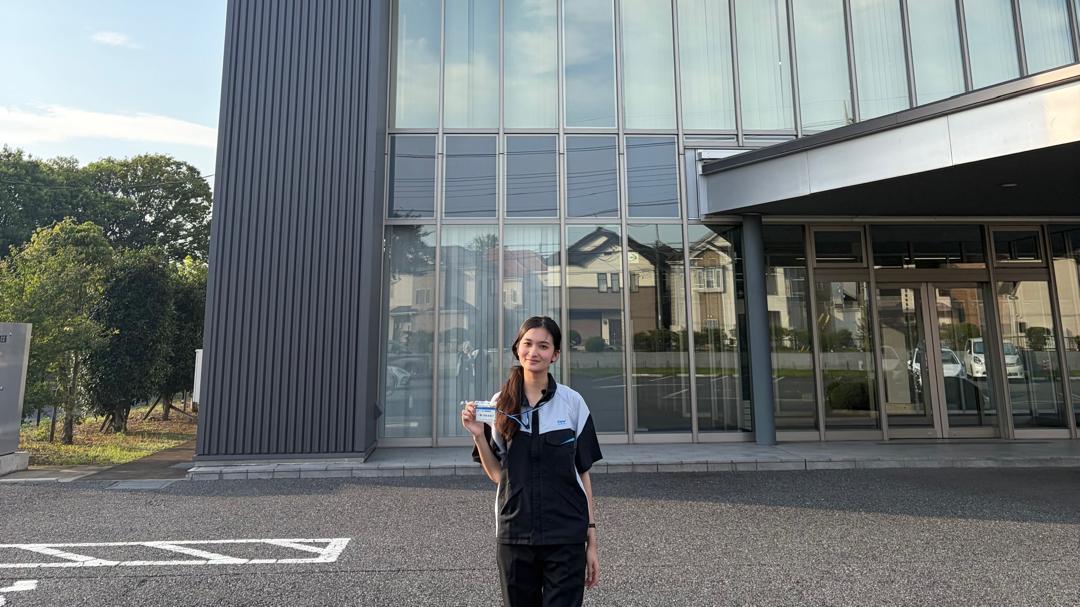


📝 Summary
A third-year student from the Malaysia-Japan International Institute of Technology (MJIIT) completed an international industrial internship at Eagle Industry Co., Ltd. in Japan, gaining practical engineering exposure and insights into international industry practices. The student, Yaw Yi Ting, worked on various engineering projects, including mechanical seal geometry modelling and material science testing, and developed skills in collaborative robotics and manufacturing automation. The internship had a significant impact on her professional and personal development, broadening her technical competencies and adaptability for future careers.
A third-year student from the Malaysia-Japan International Institute of Technology (MJIIT), Universiti Teknologi Malaysia (UTM), has completed an international industrial internship at Eagle Industry Co., Ltd. (KK), at its Saitama Plant in Japan. The experience provided practical engineering exposure and insights into international industry practices, workplace culture and potential industry-academia collaboration.
Yaw Yi Ting underwent a multi-departmental attachment at EKK, a company specialising in precision sealing technologies and mechatronic components under the NOK Group. Attached to the Engineering Division, she rotated through the Engineering Research Department, Material Engineering Department and Manufacturing Engineering Department, gaining exposure to different aspects of engineering development and industrial operations.
In the Engineering Research Department, Yi Ting worked on challenges involving energy efficiency and wear in advanced mechanical seals under the supervision of the Engineering Research Department Leader, Iwa Ou. Her responsibilities included mechanical seal geometry modelling, numerical simulation, computer-aided design (CAD), laser surface texturing, fluid dynamics evaluation and surface friction analysis under varying operating conditions. These activities helped her understand how surface micro-geometry designs can improve hydrodynamic pressure generation and reduce operational torque in rotating machinery.
She also gained experience in material science through the Materials Engineering Department, where she conducted ball-on-ring testing on ceramic seal materials using a specialised friction tester. The experiments allowed her to analyse friction coefficients, load-bearing characteristics and surface wear behaviour. In the Manufacturing Engineering Department, she developed practical skills in collaborative robotics using the COBOTTA robot, including direct teaching techniques, simulation software programming, system integration and automated palletising logic.
The exposure across these departments strengthened Yi Ting’s technical knowledge, analytical thinking and attention to detail. Working with specialised engineering equipment and processes also gave her a clearer understanding of the precision required in industrial research, material testing and manufacturing automation.
Reflecting on her experience, Yi Ting shared that the internship had a significant impact on her professional and personal development.
“My internship at Eagle Industry Co., Ltd. provided me with valuable opportunities to apply the knowledge I learned at UTM-MJIIT in a real industrial environment. Through hands-on experience and guidance from experienced engineers, I gained practical skills, technical knowledge, and a better understanding of professional engineering practices. Adapting to EKK’s high standards of engineering precision and teamwork has strengthened my technical confidence and given me a clear vision of my future engineering career.”
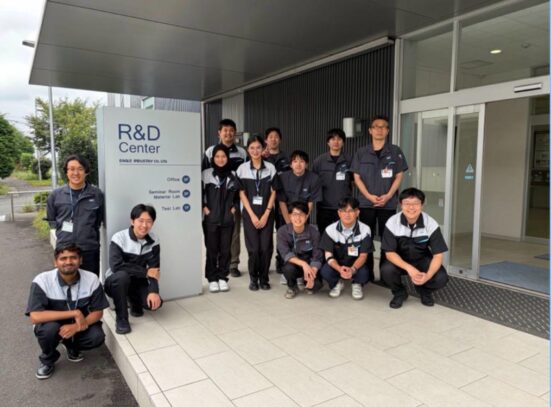
Yi Ting expressed her gratitude to the engineering team at the EKK Saitama Plant, particularly Iwa Ou and her department colleagues, for their guidance and support throughout the internship. She also acknowledged MJIIT, UTM, her academic supervisor, Dr. Zalikha Khalil, her parents and all parties involved in facilitating the international industrial training programme.
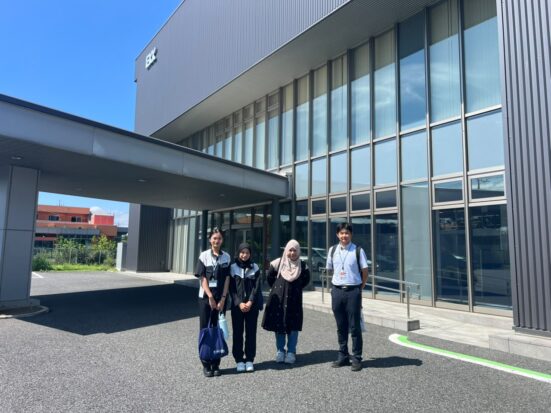
Yi Ting expressed her gratitude to the engineering team at the EKK Saitama Plant, particularly Iwa Ou and her department colleagues, for their guidance and support throughout the internship. She also acknowledged MJIIT, UTM, her academic supervisor, Dr. Zalikha Khalil, her parents and all parties involved in facilitating the international industrial training programme.
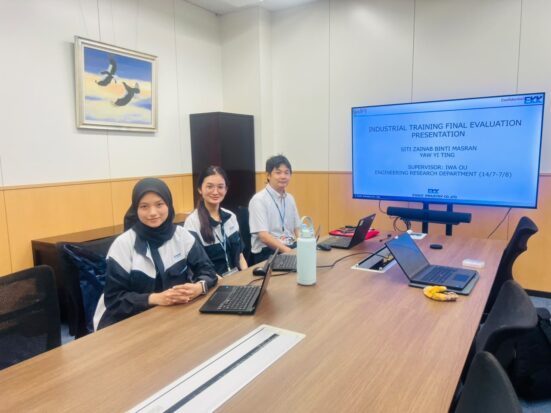
As part of the internship’s final evaluation, Dr. Zalikha Khalil visited the EKK Saitama Plant to assess Yi Ting’s work scope and training outcomes. During the visit, Yi Ting presented her technical findings and engineering project outputs to her academic supervisor, department heads and EKK engineers. The session also facilitated discussions on expanding student mobility programmes and exploring potential joint research initiatives in tribology and precision automation between UTM MJIIT and EKK.
Beyond the workplace, Yi Ting gained insights into Japanese culture and everyday life. During the Obon holiday, she travelled to Osaka with her friend, Ho Jia Hui, where she explored the city, sampled regional delicacies and observed how local traditions are celebrated. She also experienced Japan’s public transport system and food culture while observing how values such as respect and punctuality are reflected in daily life.
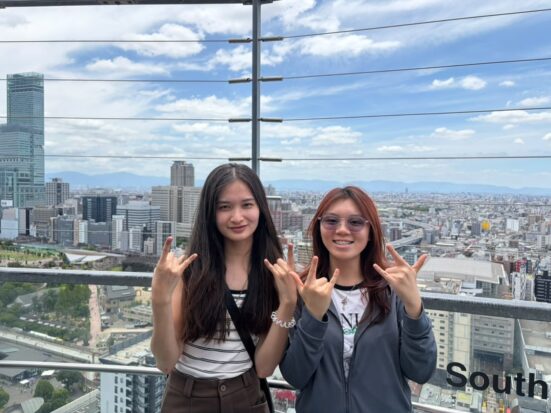
These cultural experiences complemented her professional training by helping her adapt to a different environment and appreciate the relationship between workplace practices and broader cultural values. Her interactions with colleagues also strengthened her communication, teamwork and interpersonal skills.
Overall, Yi Ting’s international industrial internship demonstrates the value of combining academic knowledge with practical industry experience and cross-cultural learning. Through opportunities such as this, MJIIT students can broaden their technical competencies, gain a deeper understanding of international engineering practices and develop the adaptability needed for future careers. Continued engagement with industry partners such as EKK can also provide a foundation for student mobility and further academic-industry collaboration.
