

📝 Summary
The 7th Malaysia-Japan Tribology Symposium (MJTS2026) brought together researchers, students, and industry representatives from Malaysia, Japan, and the region for three days of knowledge exchange and international collaboration. The symposium featured 50 research presentations, with 62% of academic registrations and 54% of research presentations from international participants. The event aimed to create opportunities for collaboration and knowledge exchange between Malaysia and Japan in the field of tribology.
KUALA LUMPUR, Jul 29 – Friction may be at the heart of tribology, but at the 7th Malaysia–Japan Tribology Symposium (MJTS2026), the focus was on creating connections.
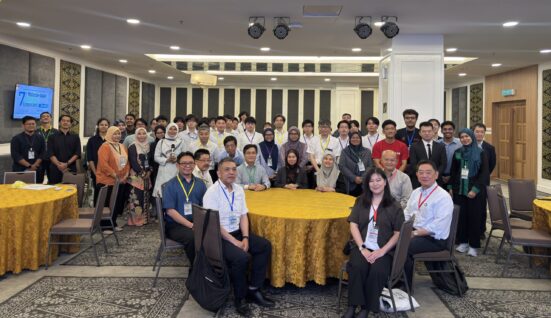
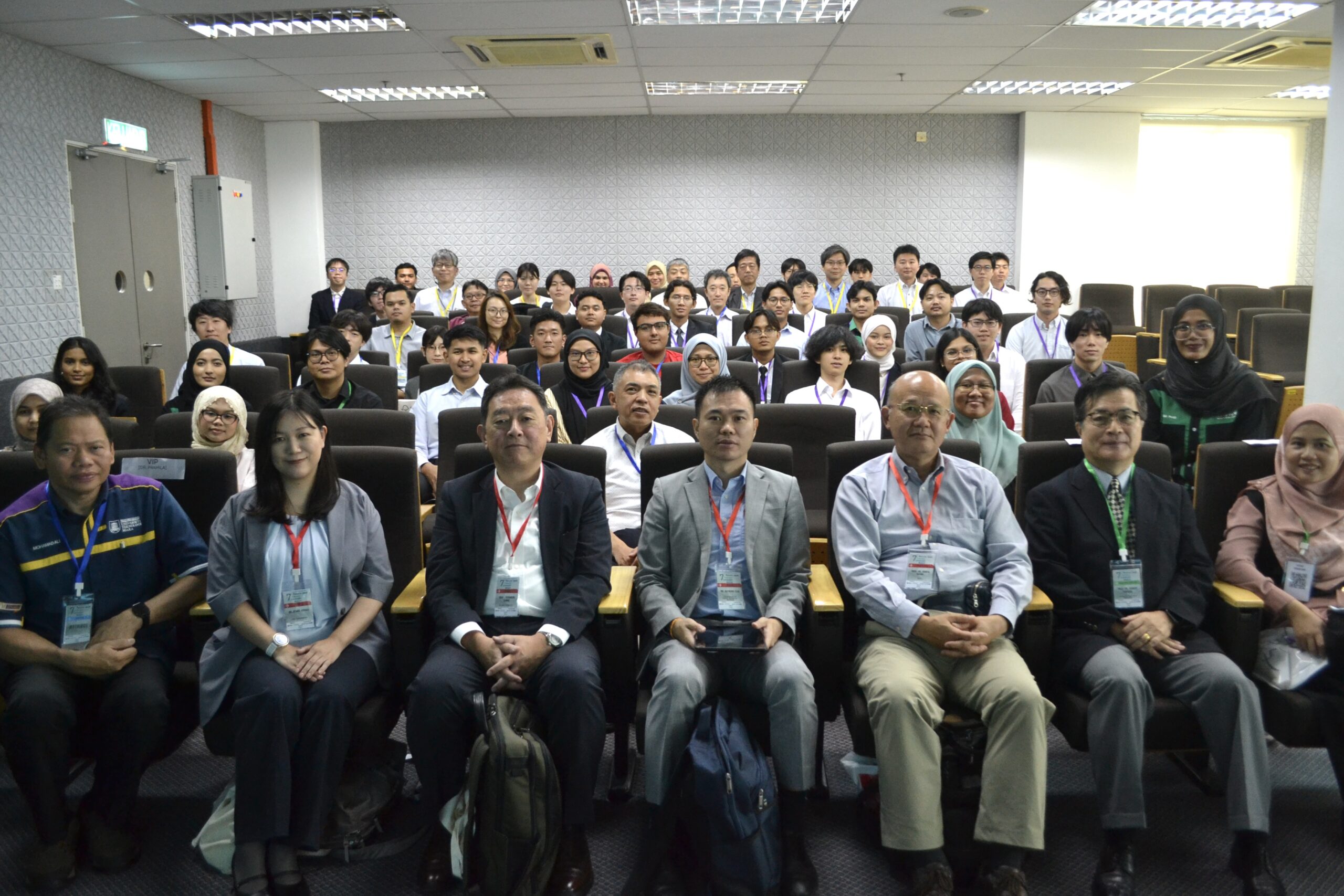
Held from 27 to 29 July 2026 at Universiti Teknologi Malaysia (UTM) Kuala Lumpur, MJTS2026 brought together researchers, students, industry representatives and societies from Malaysia, Japan and the region for three days of knowledge exchange, industry engagement and international exchange. The symposium was organised by the Tribology and Precision Machining i-Kohza (TriPreM), Malaysia-Japan International Institute of Technology (MJIIT), with the Japanese Society of Tribologists (JAST) and the Malaysian Tribology Society (MYTRIBOS) as co-organisers.
MJTS2026 was designed as a platform where research, industry and international collaboration could meet in one space, combining keynote lectures, an industry–academia–government forum, industry pitching, oral and poster presentations, laboratory engagement, networking activities, an award ceremony and a technical excursion.
A key highlight was the strong international and student presence. The symposium featured 50 research presentations, comprising 20 oral and 30 poster presentations. Among the 50 academic registrations, 62% were international participants, while 60% were students, reflecting the symposium’s role in providing young researchers with opportunities to present their work and gain international exposure. The programme included contributions from Malaysia, Japan and Indonesia, representing at least 15 universities and several industrial organisations.
“MJTS2026 is not only about presenting research findings. What matters most is creating opportunities for our students, researchers and industry partners from Malaysia and Japan to meet, exchange ideas and discover possibilities for future collaboration,” Ts. Dr. Noor Ayuma Mat Tahir, Director of MJTS2026
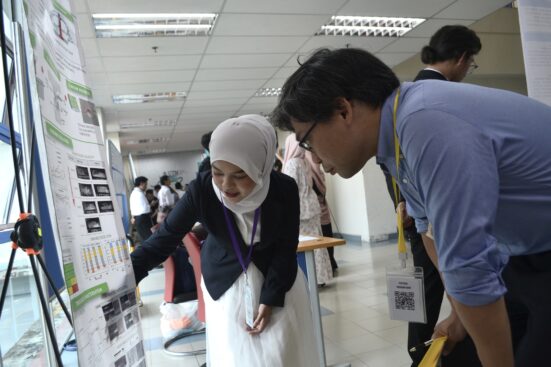
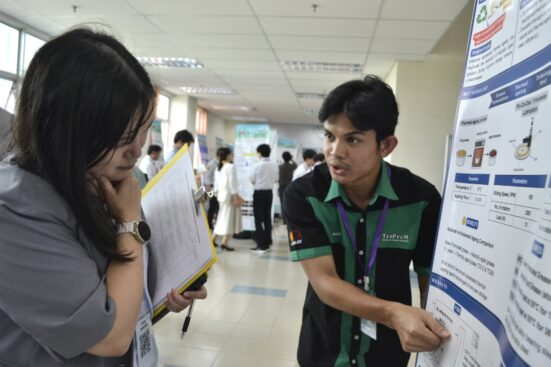
The scientific programme covered lubrication, surface engineering, coatings, polymer tribology, biotribology, manufacturing processes and sustainable materials, reflecting the growing importance of tribology in improving energy efficiency, component reliability and sustainable manufacturing.
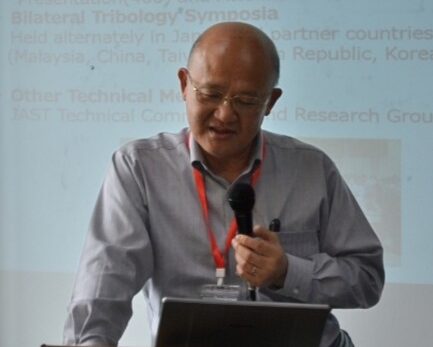
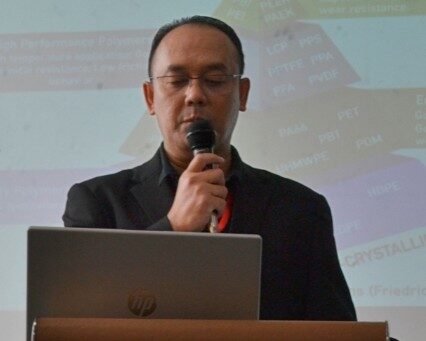
Adding an important international perspective were two distinguished keynote speakers, President of MYTRIBOS, Prof. Dr. Mohd Fadzli Abdollah, and President of JAST, Prof. Dr. Shinya Sasaki. Their lectures addressed emerging directions in tribology, additive manufacturing, sustainability and industry–academia collaboration.
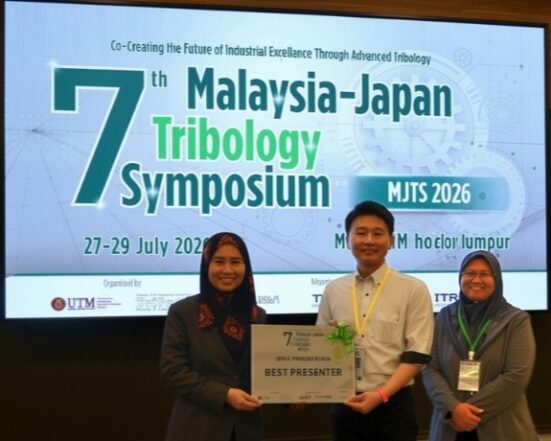
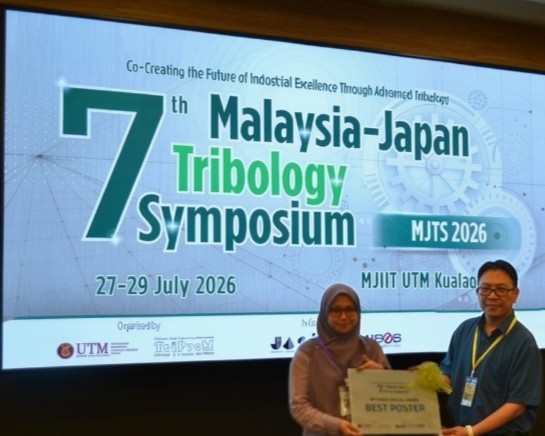
MJTS2026 also celebrated research excellence through 11 presentation awards, consisting of three MYTRIBOS Special Awards, five MJTS Best Poster Presenter Awards and three MJTS Best Oral Presenter Awards. Among the award recipients were researchers from UTM, Universiti Teknologi MARA (UiTM), Tokyo City University, University of Hyogo and Kyushu University.
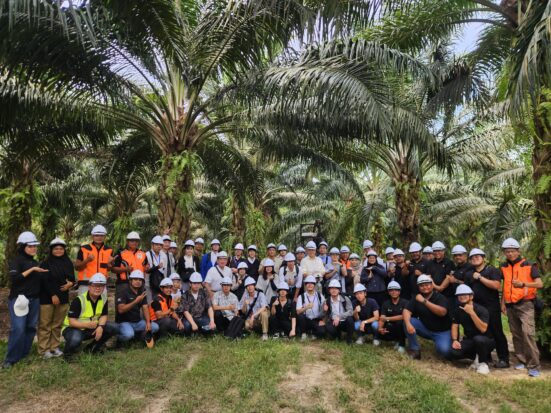
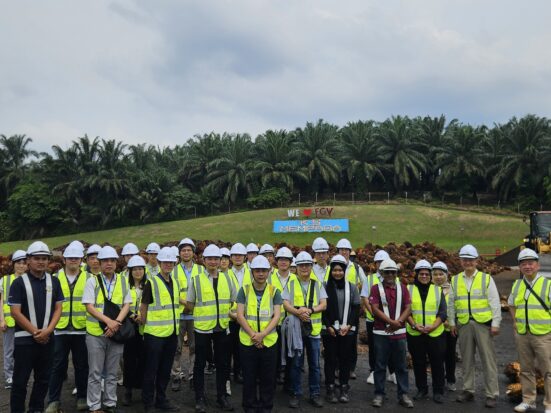
On the third day, Japanese participants, accompanied by TriPreM members, travelled beyond the UTM campus for a technical and cultural excursion, visiting Ladang Krau 4, Kilang Sawit Mempaga and the Royal Selangor Visitor Centre. The FGV Holdings Berhad visits offered first-hand exposure to plantation operations, palm-oil processing, machinery maintenance and industrial reliability challenges.
The impact of MJTS2026 was evident in its strong international representation. International participants accounted for 62% of academic registrations and 54% of research presentations, demonstrating the continuing relevance of MJTS as a Malaysia–Japan platform for scientific exchange.
Through research presentations, industry dialogue, laboratory interaction and technical visits, MJTS2026 demonstrated that meaningful collaboration does not happen only through formal agreements. The symposium remains an important avenue for nurturing young researchers, strengthening university–industry links and long-term international collaboration.