


📝 Summary
A five-member delegation from Universiti Teknologi Malaysia (UTM) participated in an international summer course in Tanjung Batu, South Sumatra, Indonesia, to explore rural cultural landscapes through the Historic Urban Landscape (HUL) approach. The program focused on adapting HUL to rural areas and provided participants with hands-on experience in documenting and conserving heritage sites. The experience expanded the perspectives of UTM students and academics on rural heritage and the potential of the HUL approach to inform architectural education and conservation practice.
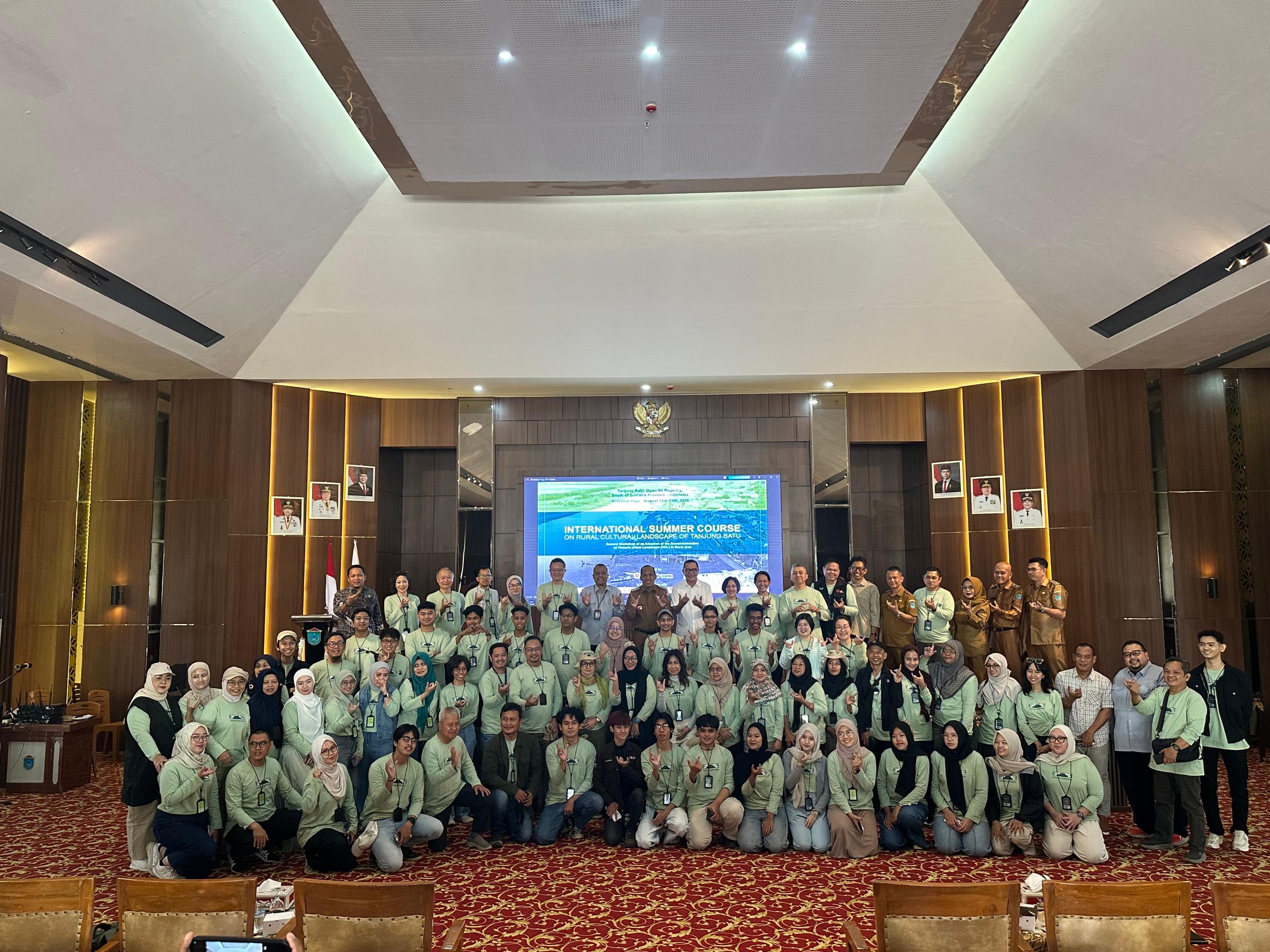
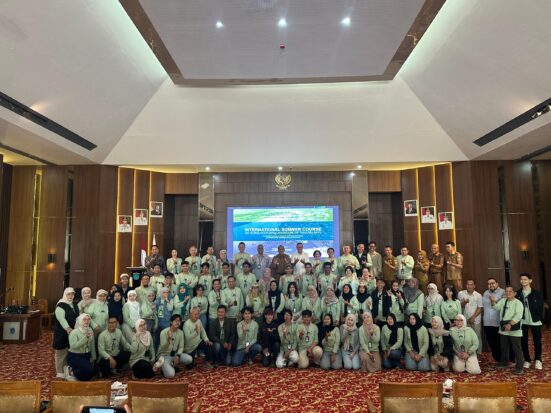
TANJUNG BATU, Aug 15 – A five-member delegation from the Architecture Department, Faculty of Built Environment and Surveying (FABU), Universiti Teknologi Malaysia (UTM), comprising two academics and three undergraduate architecture students, participated in the International Summer Course: Rural Cultural Landscape of Tanjung Batu, held from 11 to 15 August 2026 in Tanjung Batu, South Sumatra, Indonesia.
Organised by the Pan-Sumatra Network for Heritage Conservation (Pansumnet) in collaboration with Universitas Sriwijaya, the programme explored the adaptation of the United Nations Educational, Scientific and Cultural Organization (UNESCO) Recommendation on the Historic Urban Landscape (HUL) approach to a rural context, with a focus on the relationship between built heritage, intangible heritage, natural landscape, local communities and sustainable development.
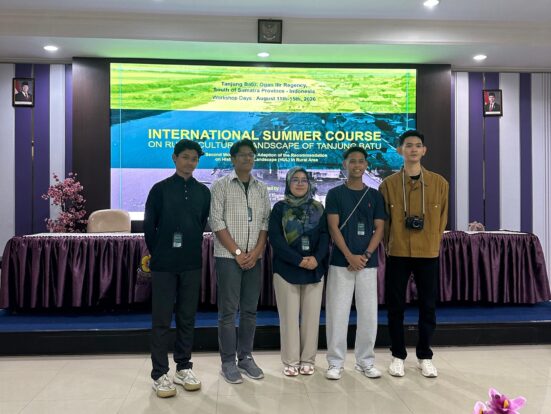
Representing UTM were Dr. Azalillah Ramdani Musa, senior lecturer at the Department of Architecture; Mohamed Rohaizad Mohamed Anuar, lecturer under the Flexible Scheme; and three Bachelor of Science in Architecture with Honours students, Muhammad Naqiuddin Shamsuddin, Muhammad Ismail Muiz Mhd Nor and Muhammad Aiman Asyraaf Mofti.
Tanjung Batu was selected as the study area for its rich cultural and architectural heritage, including traditional Rumah Limas and Rumah Panggung, the local knock-down house industry, gold and silver craftsmanship, Songket weaving and its preserved wetland landscape. These resources provided a valuable setting for participants to understand heritage not as isolated buildings, but as part of a living cultural landscape shaped by architecture, environment, traditions, livelihoods and community identity.
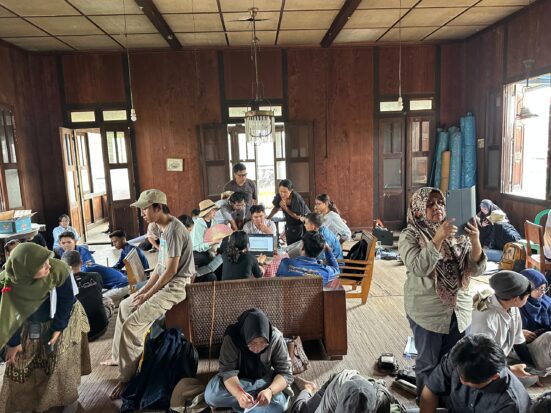
Throughout the workshop, participants engaged in lectures, field observations and documentation of tangible and intangible heritage as well as the surrounding cultural landscape using the HUL Quick Scan Method. The programme also emphasised community-based learning through site visits, direct interaction with local communities and hands-on activities involving the construction and assembly of traditional knock-down houses. Participants subsequently worked in groups to analyse their findings and develop conservation and heritage-based development recommendations, which were presented to the organisers and local stakeholders during the closing session.
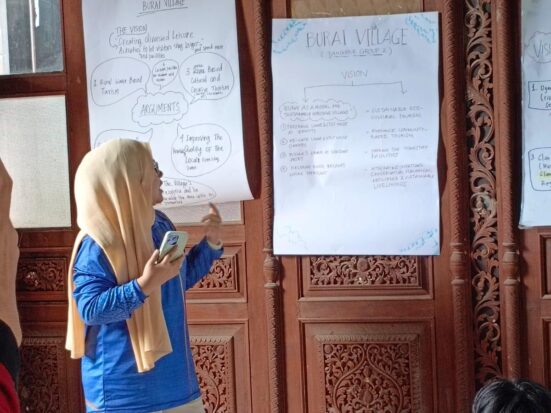
Importantly, the workshop extended beyond academic learning by contributing to the local community. The field-based process provided an opportunity to identify the potential of existing cultural, architectural and environmental assets as resources for sustainable village development. The resulting discussions and recommendations were intended to provide strategic input to the village head and local authorities in planning future economic development while ensuring that the village’s heritage assets are recognised, protected and integrated into its development agenda. In this way, heritage conservation was approached not as an obstacle to economic growth, but as a potential foundation for strengthening local identity, community livelihoods and sustainable economic opportunities.
The international setting also enabled the UTM delegation to exchange knowledge with academics, heritage practitioners, professionals, local experts and participants from different countries. The programme brought together several areas of expertise, including tangible heritage, intangible heritage, landscape and tourism, while involving local government and the Tanjung Batu village administration as key stakeholders.
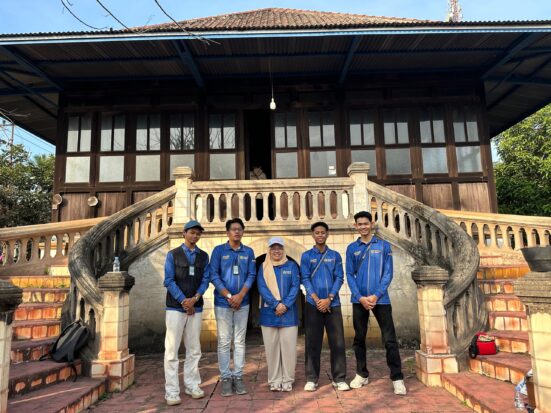
For the UTM architecture students, the experience provided an opportunity to extend their learning beyond the classroom and design studio. By engaging directly with traditional settlements, vernacular construction techniques, cultural practices and local communities, they gained a deeper understanding of how architecture is connected to social, environmental and cultural contexts. For the accompanying academics, the programme provided a platform for academic exchange and strengthened professional networks in architecture, heritage conservation, cultural landscape and sustainable development.
The participation also supports UTM’s broader internationalisation agenda by strengthening academic networks with Universitas Sriwijaya, Pansumnet and international heritage organisations. The programme has the potential to encourage future research collaboration, joint publications, academic mobility and knowledge exchange, while contributing new perspectives to teaching and research in heritage architecture, vernacular architecture, cultural landscape and sustainable development at UTM.
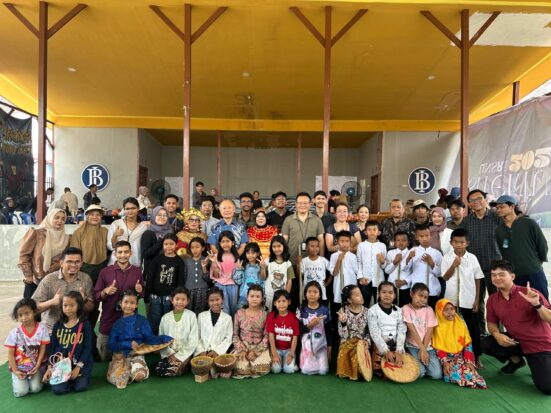
Ultimately, the International Summer Course in Tanjung Batu demonstrated how architectural education and heritage conservation can contribute directly to community development. By placing students and academics within a living cultural landscape, the workshop encouraged a more integrated understanding of development—one that seeks to generate economic opportunities for local communities while safeguarding the architectural, cultural and environmental assets that define the identity of the village.
Authors: Dr. Azalillah Ramdani Musa and Mohamed Rohaizad Mohamed Anuar
