
📝 Summary
Seven students from Universiti Teknologi Malaysia (UTM) were fully sponsored to participate in the Sakura Science Exchange Program at Kyoto University in Japan, where they learned about advanced vibration sensing and infrastructure management. The program included academic lectures, laboratory experiments, and technical visits, as well as a cultural exchange session where the students shared Malaysian traditions with their Japanese counterparts. The experience broadened the students’ global perspectives and strengthened institutional ties between UTM and Kyoto University.
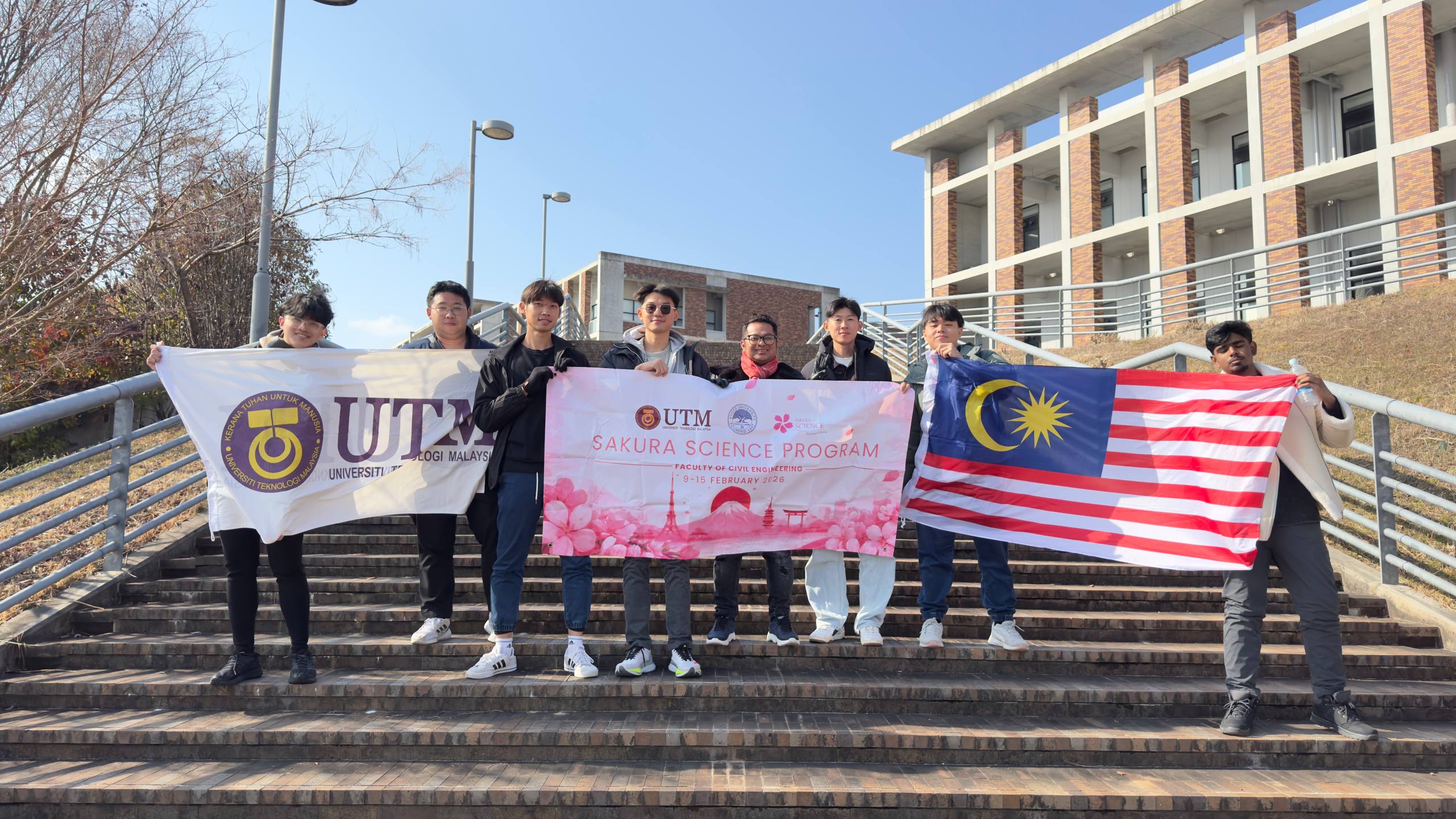
KYOTO, Feb 15 – A delegation of seven students, together with their advisor, Ts. Dr. Mohd Khairul Afzan Mohd Lazi from the Faculty of Civil Engineering (FKA), Universiti Teknologi Malaysia (UTM), had the privilege of being fully sponsored by the Sakura Science Exchange Program, an international initiative organized by the Japan Science and Technology Agency (JST), to travel to Kyoto, Japan.
Hosted by the Graduate School of Engineering, Kyoto University, from 9 to 15 February 2026, the program was conducted under the theme “Sensing for Infrastructure Management and Data Analysis”. The exchange brought together academic excellence and practical exposure in one of Japan’s leading research environments. As infrastructure systems worldwide face increasing environmental and loading demands, the integration of sensing technologies and data-driven analysis has become essential to ensure safety, resilience, and sustainability.

Throughout the seven-day program, the UTM delegation engaged in a series of academic lectures, laboratory experiments, and technical visits led by Prof. Kim Chul-Woo, Vice Director of the Institute of Liberal Arts & Sciences and a professor at the Disaster Prevention Research Institute, Kyoto University.
A foundational lecture on structural health monitoring introduced participants to modern sensor technologies and identification techniques used in infrastructure maintenance. This theoretical knowledge was reinforced through hands-on laboratory work at Kyoto University’s Structural Laboratory, where students installed sensors, conducted structural health monitoring experiments on bridges, and collected real-time structural response data.


Beyond experimentation, participants analyzed the acquired data and interpreted structural behavior under guided supervision. The short-term project culminated in a formal presentation session, where findings were shared and discussed with Japanese professors and students. This academic exchange strengthened analytical thinking, communication skills, and collaborative problem-solving abilities.
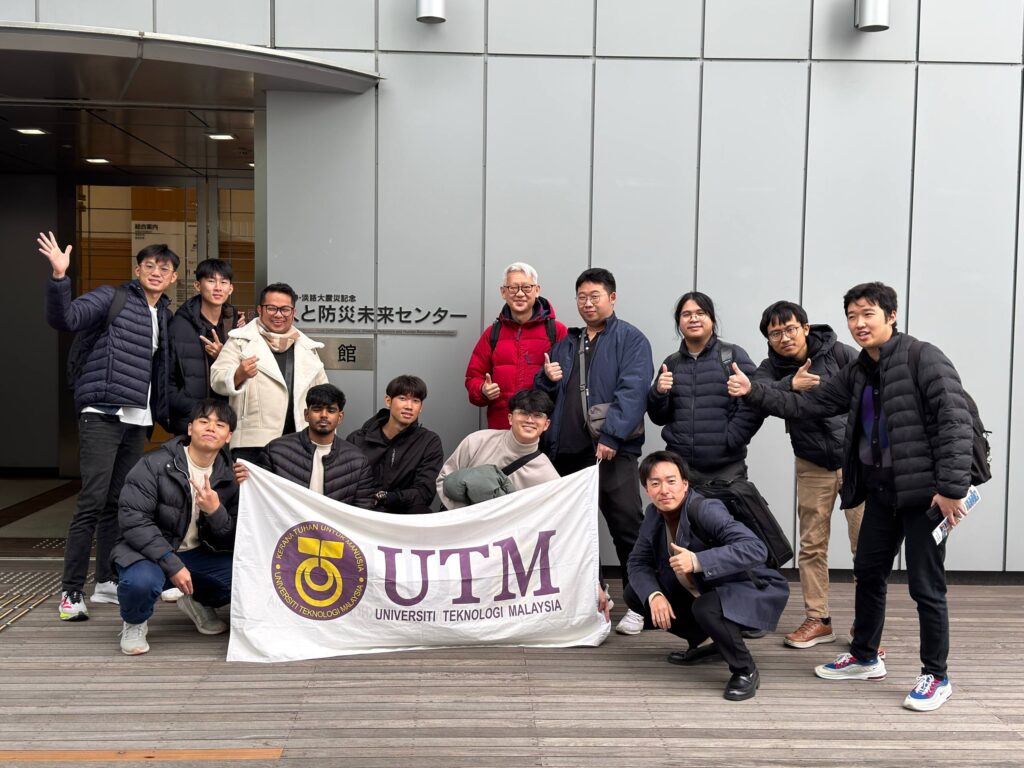
The program also included technical visits that enriched the learning experience. A visit to the Disaster Reduction and Human Renovation Institution in Kobe, Japan, exposed participants to Japan’s advanced disaster mitigation strategies, while a technical tour of the Akashi Kaikyo Bridge offered firsthand insight into large-scale bridge engineering and long-term monitoring systems.

In addition to academic and technical activities, a cultural exchange session was organized by the UTM delegation to promote Malaysian heritage.
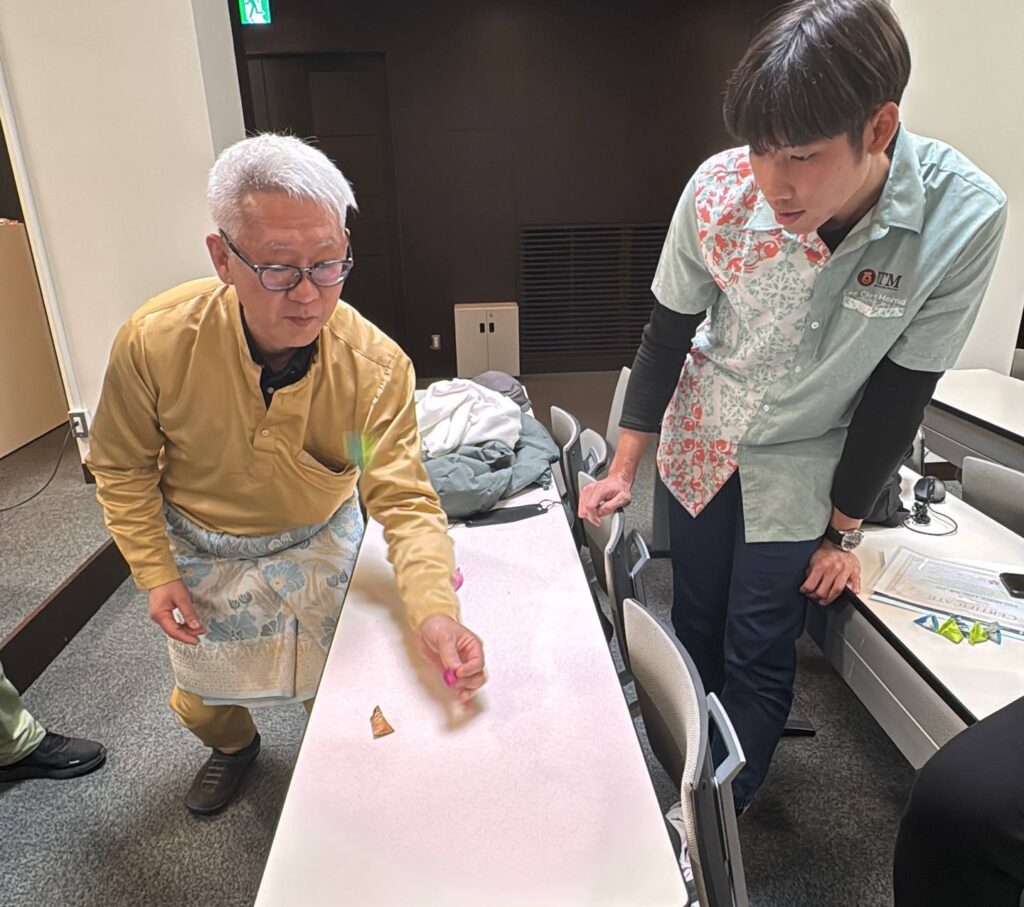
The Malaysian team wore traditional Baju Batik, while the Japanese team also experienced wearing Baju Melayu with sampin, which were brought from Malaysia by the UTM delegation. The Malaysian students shared the cultural significance, symbolism, and historical background of Baju Melayu, allowing their Japanese counterparts to gain a deeper appreciation of Malaysian traditions.

The UTM team also introduced traditional Malaysian games such as congkak and batu seremban, which were brought from Malaysia as gifts to the Kyoto University team. The interactive session created a lively and meaningful cultural experience, as participants learned how to play the games while strengthening bonds of friendship and mutual understanding.

Beyond technical knowledge, the Sakura Science Exchange Program fostered cross-cultural understanding and international friendship. The collaboration between UTM and Kyoto University not only strengthened institutional ties but also broadened the students’ global perspectives.
The students involved, Niclorance Ling How Jun, Dylan Tay Wang An, Ang Zhong Xian, Lim Zi Xian, Andrew Wong Zhi Yong, Lee Chorn Horng, and Tejeswaran Pubalan, were very pleased to be selected for the program and were especially grateful for the opportunity to experience snow for the first time. The participants expressed their sincere gratitude to FKA, UTM, for the additional financial support provided through a travel allowance.
The experience stands as a meaningful milestone for the UTM delegation, an opportunity to witness how innovation in sensing and data analysis is shaping the future of infrastructure management, and a stepping stone toward contributing similar advancements within Malaysia and the Southeast Asian region.
