
📝 Summary
A professor from Universiti Teknologi Malaysia participated in an International Faculty Exchange Programme at Chandigarh University in Punjab, India, where they taught and collaborated with colleagues on sustainable construction and research projects. The programme helped establish a bridge between the two institutions and provided valuable international academic exposure for the professor. The experience reaffirmed the importance of deliberate international engagement in shaping universities and higher education.
When the call for the International Faculty Exchange Programme (IFEP) at Chandigarh University (CU) reached Universiti Teknologi Malaysia (UTM) staff emails in late December 2025, I did not hesitate, despite having just returned from a three-year secondment with an agency under the Ministry of Transport — and despite participants needing to self-fund their travel. My decision was pragmatic: international academic exposure truly matters, and it was something I had missed over the past three years. I also assumed that travel to India would be more economical than long-haul exchanges to the United States, for instance. That assumption, however, proved only partly true.
Since India is often framed through various global narratives, particularly concerning safety for women, I sought advice from artificial intelligence (AI). According to AI-generated insights, Punjab in North India has long been perceived as more orderly and outward-facing compared to some other states. My earlier experience in Mumbai nearly two decades ago — intense and uncompromising — provided a useful benchmark. How much more daunting could Punjab be compared to Mumbai?
In an early misstep, I again relied on AI to select my flight — a direct Kuala Lumpur–Amritsar route offered by Malaysia Airlines. It appeared cost-efficient, especially using my Enrich points, until I informed the CU office of my ticket purchase and was told that Amritsar is more than 200 kilometres from Chandigarh University. I ended up paying additional cancellation fees, ironically undermining my initial intention to save money.
I finally arrived in Chandigarh on 21 January 2026 after transiting through Delhi. The city is systematically planned, which contrasts with popular perceptions of other Indian cities. While Chandigarh serves as the capital of both Punjab and Haryana, the university itself is located in Mohali.
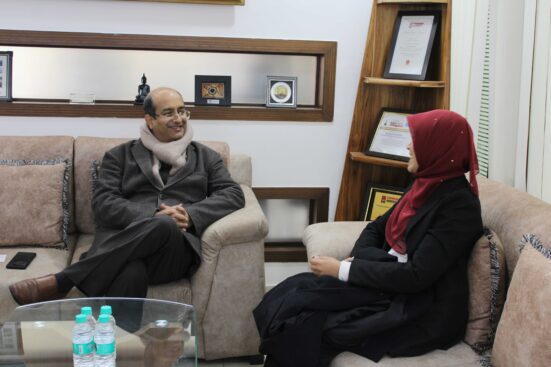
Following arrival formalities at CU’s 100-acre campus — home to over 30,000 students and 3,000 academic and professional staff across more than 300 programmes — I met Prof. Dr. Rajan Sharma, Executive Director of International Affairs. I was then introduced to colleagues from the Construction Technology and Management Department, University Institute of Engineering, where we refined my teaching plan to better align institutional priorities, student readiness, and my areas of expertise.
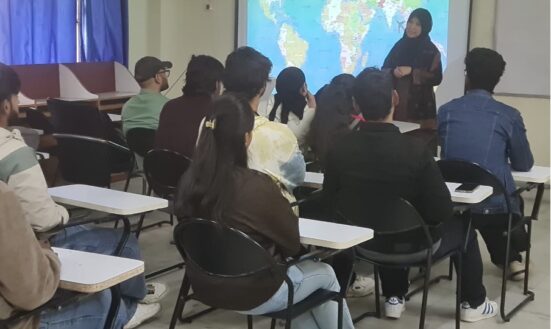
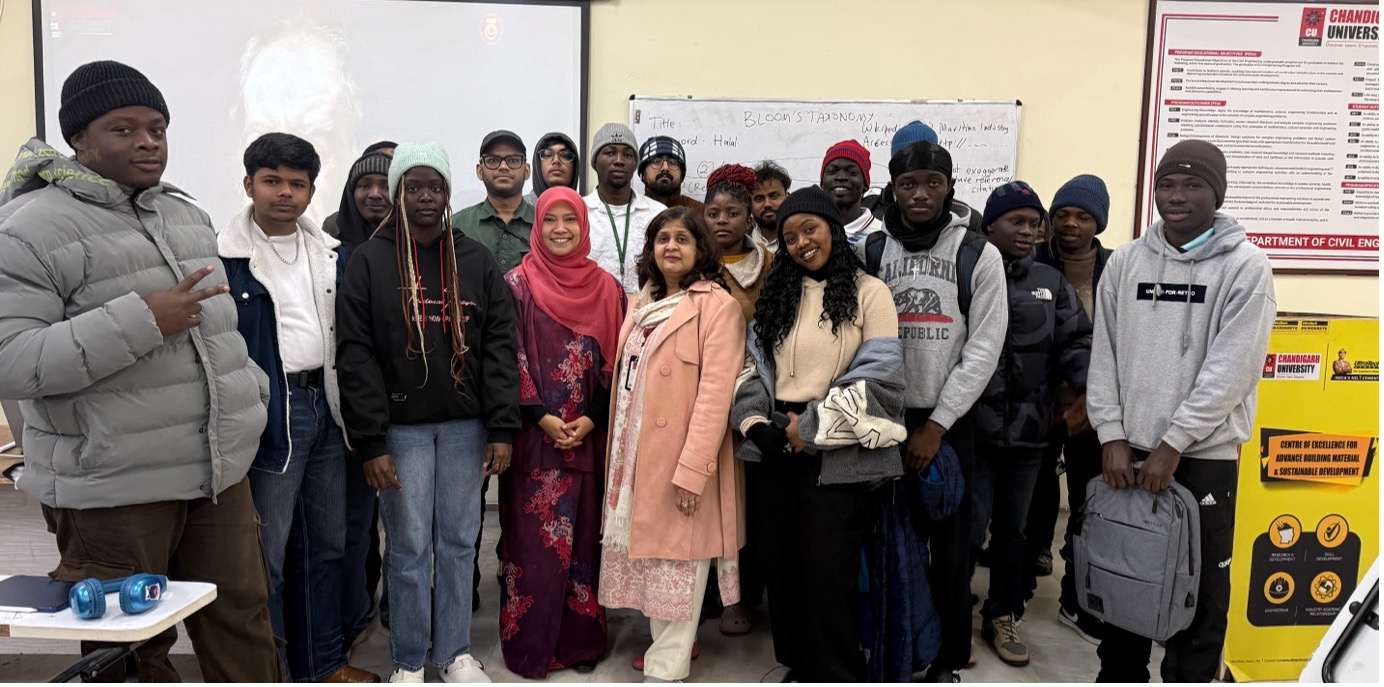
Over the two-week attachment, I engaged with BEng students from Semesters 4 to 7 and MEng students in Semester 2. My sessions covered biophilic design and nature-based engineering solutions in sustainable construction and port development, civil engineering career pathways beyond conventional construction roles, and practical research skills, including academic writing and publication strategy. I also conducted face-to-face consultations with faculty members and MEng students to discuss research projects and potential collaborative publications.
Another key engagement was with the University Centre for Research and Development (UCRD), where discussions focused on areas of mutual interest — particularly sustainable construction materials and circular economy applications in the built environment. India’s research ecosystem is advancing rapidly, with CU partnering with over 500 institutions worldwide.
I also joined campus visits with another IFEP participant from Johannesburg, South Africa. We toured student-run business incubators, industry-aligned laboratories, and the architecturally distinctive library.
Beyond scheduled academic commitments from 9.00 a.m. to 4.00 p.m., Monday to Friday, I intentionally engaged with India outside campus life to better understand its cultural and social context. Through food, conversations, and short weekend journeys to Himachal Pradesh and Kashmir, I gained perspective on the geographical, social, and cultural landscapes that shape both students and academic institutions in India.
On my final day, 2 February 2026, I returned to Prof. Dr. Rajan Sharma’s office to receive an official International Visiting Faculty appointment letter. The letter recognised UTM staff’s contribution at CU while formalising an institutional bridge with long-term potential between MJIIT and the University Institute of Engineering.
Frankly, this is neither my first nor likely my last international academic mobility. Programmes such as IFEP are not about academic tourism or visibility alone. They position universities within global knowledge ecosystems, translate presence into partnerships, and ensure that international engagement delivers sustained academic value for both institutions and scholars. For me, participating in IFEP was worthwhile because it reaffirmed why deliberate international academic engagement remains one of the most powerful instruments for shaping universities, scholars, and the future of higher education.