

Erasmus+ Staff Mobility Programme continues to play a pivotal role in advancing international academic cooperation, research capacity building, and institutional internationalisation across higher education institutions worldwide. By facilitating structured short-term mobility for academic staff, the programme enables the exchange of specialised expertise, fosters joint research initiatives, and strengthens long-term institutional partnerships that extend well beyond the duration of the visit.
In line with Universiti Teknologi Malaysia (UTM )’s strategic commitment to global engagement and research excellence, Assoc. Prof. Dr Hasrinah Hasbullah was awarded the Erasmus+ Staff Mobility Grant to attend the programme at Universidad de Almería (UAL), Spain. The five-day academic mobility took place from 1 to 5 December 2025, following a competitive application process submitted in January 2025 and formal approval coordinated by UTM International in February 2025. Also selected under the same mobility cycle at UAL was DDrMuhammad Aliif Ahmad from UTM’s Faculty of Computing, reflecting the multidisciplinary scope and inclusive reach of the Erasmus+ framework.
Building on Established Academic Trust and Research Synergy
Dr Hasrinah was hosted by Assoc. Prof. Dr Tania Mazzuca Sobczuk of the Department of Chemical Engineering, UAL, with whom a strong academic relationship had already been established. This collaboration began when Dr Tania visited UTM in 2024 under the same Erasmus+ programme, an engagement that laid the groundwork for mutual trust, aligned research interests, and a shared technical language—particularly in the domain of membrane-based separation technologies and water treatment applications.
The continuity of this collaboration enabled immediate, high-level technical discussions during the mobility, effectively bypassing the typical introductory phase associated with short-term academic visits. Prior collaboration activities further strengthened the partnership, as Dr Tania had previously hosted one of Dr Hasrinah’s PhD students for a summer research attachment at UAL. This continuity highlights Erasmus+ as a mechanism not only for staff exchange, but also for sustaining postgraduate training and research development pipelines.
The mobility was strongly supported by Hugo González Martínez and Francisco Javier Vallelado Hernando from UAL’s International Office. Their proactive coordination ensured seamless administrative processes, including onboarding, financial arrangements, and campus familiarisation, underscoring UAL’s institutional readiness and commitment to international academic collaboration.
Academic Exposure through Industry-Focused Chemical Engineering Engagement
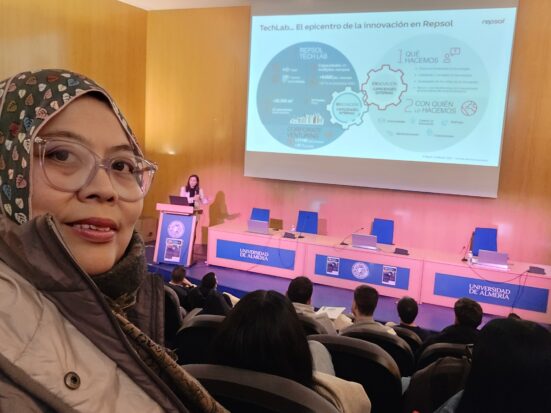
Dr Hasrinah’s first official academic engagement was participation in the Chemical Engineering Department Congress, an annual event organised by UAL for undergraduate and postgraduate students. The congress featured speakers from prominent industry players such as Repsol, Técnicas Reunidas, and Aqualia, alongside representatives from other local and multinational companies. Designed to bridge academic learning with industrial practice, the event exposed students to real-world engineering challenges, innovation trends, and diverse career pathways.
In the context of UAL, where agriculture represents a dominant disciplinary focus, such initiatives play a critical role in sustaining the relevance and visibility of chemical engineering programmes. The congress demonstrated effective models of industry–academia engagement, providing valuable insights into how structured professional exposure can enhance graduate employability and curriculum relevance in various process-related industries.
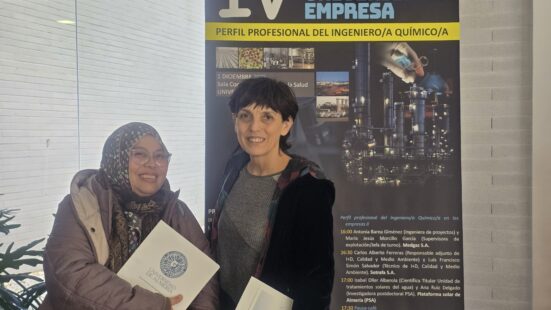
During the event, Dr Hasrinah was formally introduced to Prof. Dr María José Ibáñez González, Director of the Chemical Engineering Department, as well as to academic colleagues, students, and alumni who returned to share their professional experiences. Although the programme was conducted primarily in Spanish, the engagement offered meaningful insight into UAL’s pedagogical approaches, departmental culture, and stakeholder engagement strategies.
Campus Familiarisation and Institutional Engagement
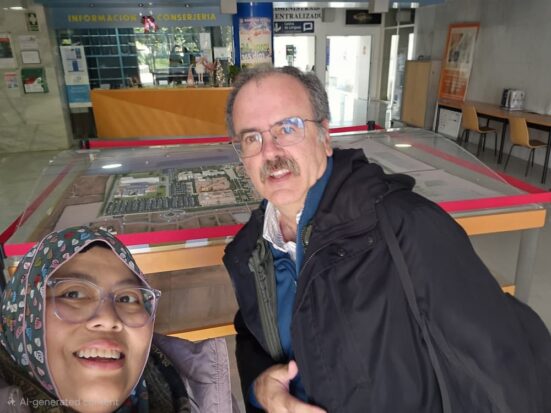
Following the congress, Dr Hasrinah completed her official registration with the International Office and engaged with key administrative units, including the finance department. A guided campus tour highlighted UAL’s compact yet comprehensive design, with multiple faculties, teaching spaces, and research facilities integrated within a single coastal campus.
Situated opposite the Mediterranean Sea, UAL offers a scenic and conducive environment for academic and research activities. The visit also included a briefing at UAL’s corporate office, where long-term campus development strategies, infrastructure planning, and institutional governance models were presented. This session provided valuable institutional-level insights relevant to benchmarking and strategic planning at UTM.
Cultural Immersion as an Enabler of Global Academic Exchange
The second day of the mobility was dedicated to cultural immersion, a core component of the Erasmus+ experience that complements academic engagement by fostering intercultural understanding. Discussions with the International Office focused on expanding future staff and student mobility opportunities, strengthening bilateral coordination mechanisms, and enhancing support structures for visiting researchers.
Positive feedback was shared regarding UTM students who had previously undertaken research attachments at UAL. Their strong research performance and distinctive working styles were highlighted, reinforcing the value of cross-cultural academic exposure in shaping adaptable, globally competent researchers.
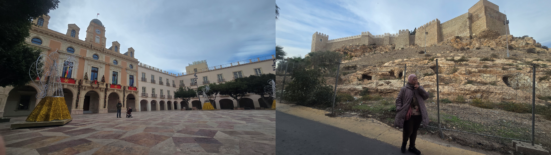
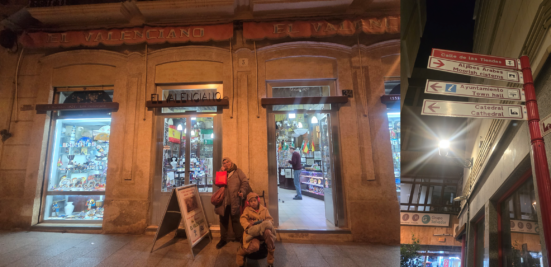
The cultural programme included visits to iconic historical landmarks such as the Alcazaba of Almería, a monumental Moorish fortress symbolising Andalusia’s Islamic heritage, and the Cathedral of Almería, renowned for its unique blend of religious and defensive architectural features. These visits offered a deeper contextual appreciation of Almería’s historical evolution, resilience, and cultural diversity.
Research Knowledge Transfer in Membrane Technology
A central highlight of the mobility was Dr Hasrinah’s invited academic sharing session titled “From Dirty to Drinkable: Membrane Fundamentals, Functions and the Future.” Recognising that UAL does not currently host a dedicated membrane fabrication research group, the session was strategically designed to emphasise fundamental principles, functional performance, and application-driven innovation in membrane technology.
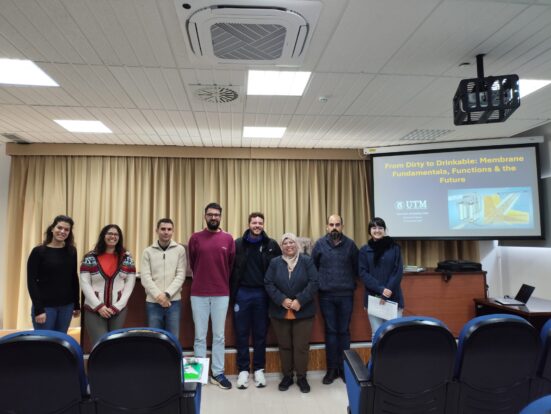
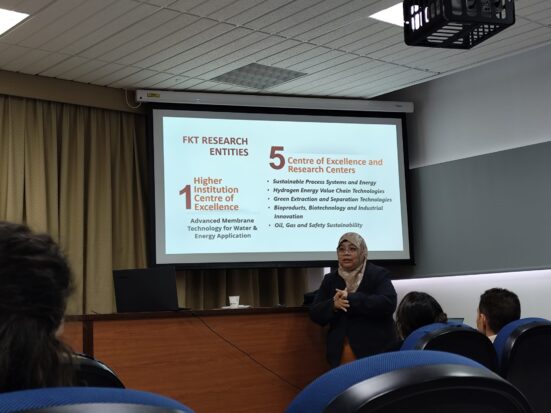
The session began with an overview of UTM, the Faculty of Chemical and Energy Engineering (FKT), and the Advanced Membrane Technology Research Centre (AMTEC), positioning UTM as a top 200 world university and regional and international leader in membrane research. DDrHasrinah presented detailed insights into membrane fabrication techniques, supported by laboratory videos and real-world examples from AMTEC, before discussing application areas including water treatment, wastewater reuse, and resource recovery.
The session generated strong engagement among UAL academics and researchers, many of whom currently rely on commercial membrane systems in their work. Discussions explored the potential for membrane modification, customisation, and performance optimisation, opening concrete pathways for collaborative research projects, joint publications, and future grant applications.
Laboratory Visits and Collaborative Research Exploration
Following the sharing session, Dr Hasrinah visited several of UAL’s chemical engineering laboratories, beginning with teaching facilities for separation processes and unit operations. While the core equipment was comparable to that at UTM, UAL’s laboratories feature a more open, factory-style layout that supports flexible experimentation and student-led configurations.
The visit continued to Dr Drnia’s research laboratory, where ongoing projects focus on water purification, algae cultivation, pigment extraction, and fruit juice processing using commercial membrane technologies. In-depth technical discussions examined the feasibility of integrating membranes fabricated at AMTEC into UAL’s experimental workflows, particularly to enhance selectivity, fouling resistance, and overall process efficiency.
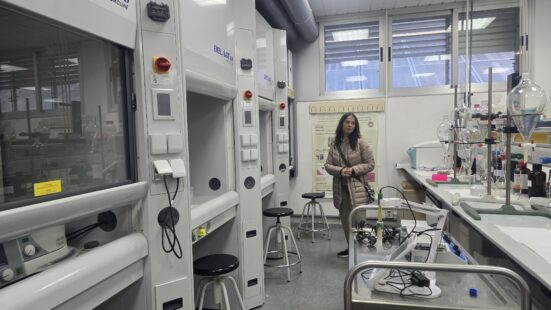
Dr Dria also showcased UAL’s pilot-scale algae cultivation facility, which achieves high productivity during warmer seasons. Observations on seasonal performance variation provided valuable insights into climate-dependent process optimisation, highlighting opportunities for comparative studies and joint research proposals between Malaysia and Spain.
Expanding Interdisciplinary Research Networks
On the final day, Dr Hasrinah met with Professor Dr Roberto Romero González from the Department of Analytical Chemistry, who had previously hosted another of Hasrinah’s PhD students under the Erasmus+ programme. Discussions revisited the student’s research outcomes and explored interdisciplinary intersections between analytical chemistry, food science, and solvent extraction technologies.
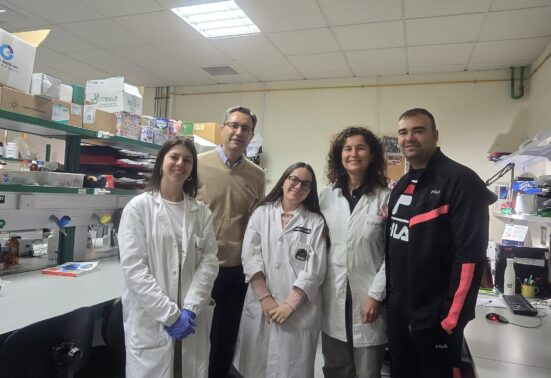
A tour of the analytical laboratories revealed advanced facilities supporting postgraduate training, postdoctoral research, and high-impact scientific studies. The engagement reinforced the potential for interdisciplinary collaboration that integrates membrane technology with analytical evaluation and food-related applications.
Erasmus+ Mobility as a Strategic Driver for Global Academic and Research Impact
Overall, the Erasmus+ Staff Mobility Programme at the UAL represented far more than a short-term academic visit; it functioned as a strategic platform for deepening research excellence, accelerating international collaboration, and reinforcing UTM’s global research footprint. The mobility enabled meaningful, high-level research dialogue, facilitated direct knowledge transfer in membrane science, and identified clear, actionable pathways for sustained collaboration in water treatment, resource recovery, and application-driven membrane innovation.
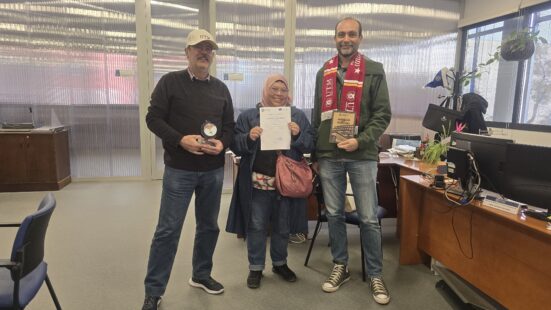
Through this engagement, UTM’s AMTEC was positioned not only as a centre of technical expertise but also as a potential global research partner capable of contributing customised membrane solutions to address real-world challenges faced by international collaborators. The interactions at UAL highlighted the complementary strengths of both institutions and laid a strong foundation for future joint research proposals, co-supervision of postgraduate students, shared publications, and expanded Erasmus+ participation.
Dr Hasrinah expressed her sincere appreciation for the warm hospitality, professional support, and openness to collaboration demonstrated by the UAL. The city of Almería, with its rich historical heritage, coastal landscape, and vibrant academic ecosystem, provided an intellectually stimulating environment for scholarly exchange and reflective engagement.
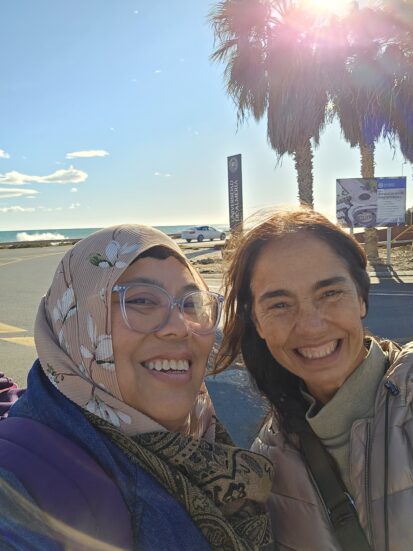
Ultimately, this mobility experience reaffirmed that Erasmus+ is not merely an exchange mechanism but a long-term investment in research sustainability, talent development, and global academic leadership. For UTM, such engagements directly support the university’s aspiration to be a globally recognised research-intensive institution, where international collaboration translates into tangible scientific impact, societal relevance, and enduring partnerships across borders.
