
📝 Summary
Universiti Teknologi Malaysia (UTM) made its debut institutional engagement at the 9th World Islamic Economics & Finance Conference (WIEFC 2026) in Lahore, Pakistan. UTM contributed to international discussions on Islamic economics and finance through keynote addresses and panel discussions, highlighting Malaysia’s experience with Islamic FinTech and the importance of establishing ethical guardrails for artificial intelligence in economic systems. The conference marked a valuable opportunity for academic exchange and potential future collaboration between UTM and Minhaj University Lahore.
LAHORE, Jan 25 – Universiti Teknologi Malaysia (UTM) participated in the 9th World Islamic Economics & Finance Conference (WIEFC 2026) held at Minhaj University Lahore (MUL), Pakistan, marking its initial institutional engagement with the conference while contributing to international discussions on Islamic economics and finance.
UTM took part in the conference as an international academic partner, engaging with scholars, policymakers, and practitioners in deliberations centred on the theme “Envisioning the Next Frontier in Islamic Economics & Finance: AI Transformation and Geopolitical Realignments.” The conference served as a platform for scholarly exchange on emerging issues, including artificial intelligence, digital finance, governance, and geopolitical developments influencing the future direction of Islamic economic systems.
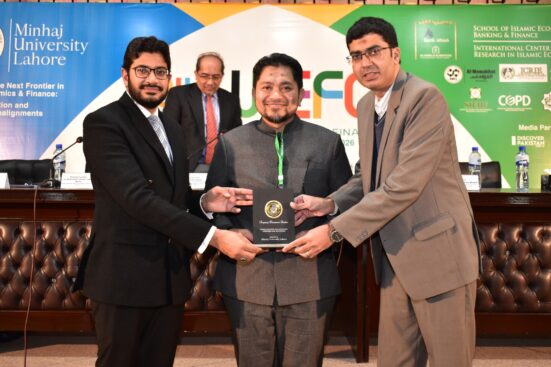
Assoc. Prof. Dr. Mohd Fauzi Abu Hussin represented UTM and delivered a keynote address entitled “Advancing Islamic Social Welfare Finance through Islamic FinTech: The Malaysia Experience.” This marked his second academic engagement with the WIEFC series. In his presentation, he outlined Malaysia’s experience in applying Islamic FinTech within zakat, waqf, and broader social welfare financing initiatives, highlighting the role of technology and policy coordination in supporting efficiency, accountability, and inclusive socioeconomic outcomes.
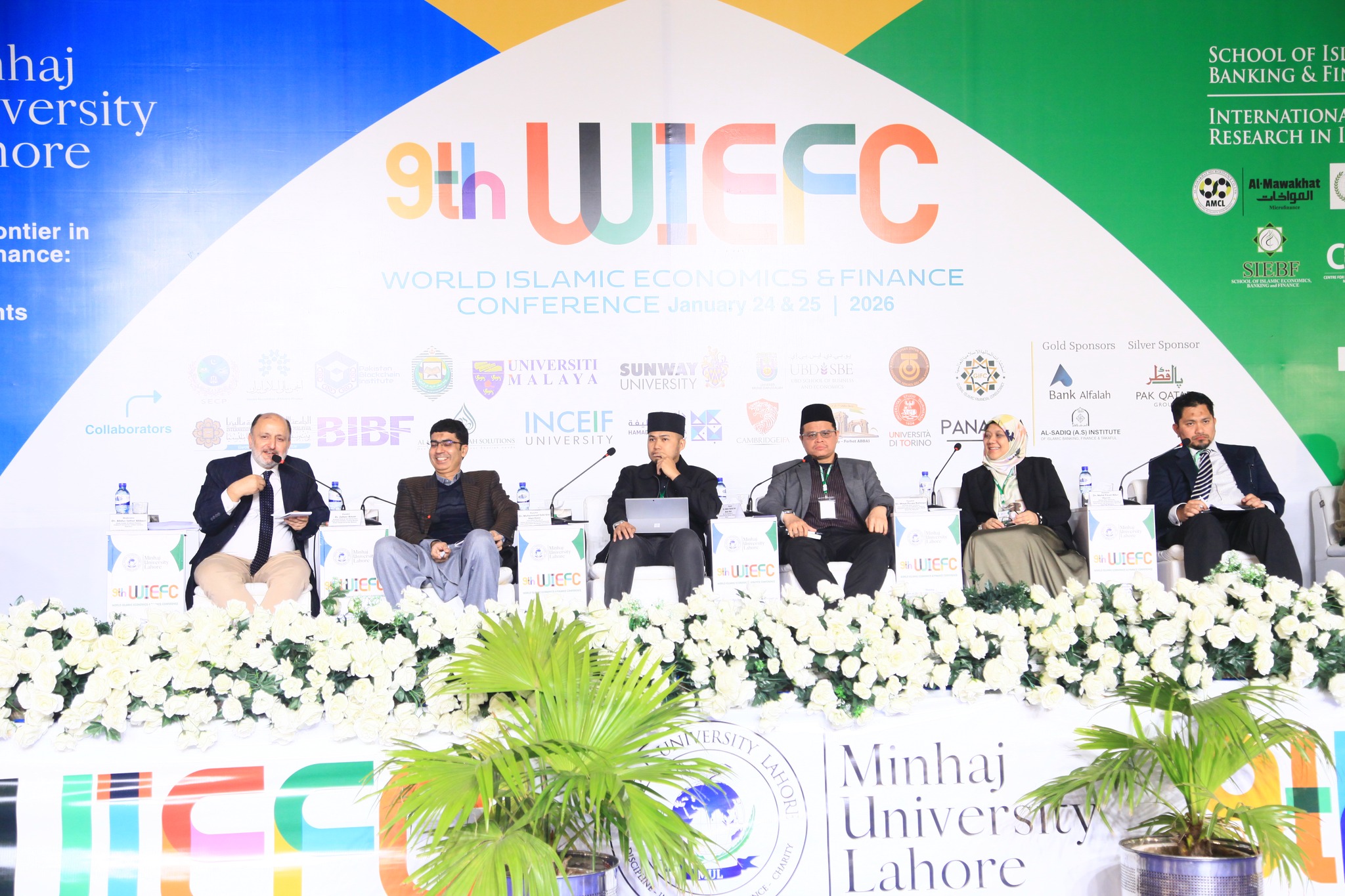
In addition to his keynote address, Assoc. Prof. Dr. Mohd Fauzi also contributed as a panelist in a panel discussion session that brought together international scholars and experts to deliberate on contemporary challenges in the era of artificial intelligence and future directions in Islamic economics and finance. During the discussion, he stressed the importance of establishing Islamic ethical guardrails and value-based principles to guide the responsible use of artificial intelligence (AI) in economic and financial systems, ensuring that technological advancement remains aligned with justice, accountability, and maqasid objectives.
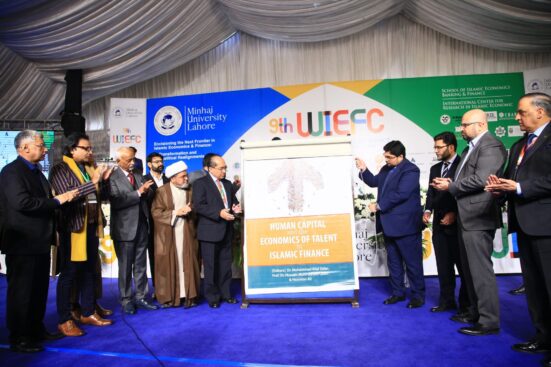
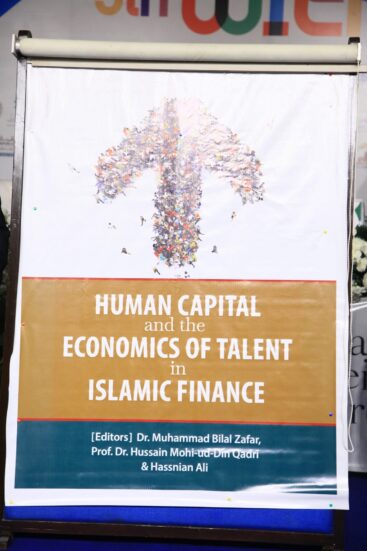
UTM was also represented by Dr. Muhammad Bilal Zafar, who presented his research online during the conference, contributing to scholarly discussions on the intersection of artificial intelligence and Islamic finance. A notable highlight of WIEFC 2026 was the official launch of a scholarly book co-authored by Dr. Muhammad Bilal Zafar and Prof. Dr. Hussain Mohi-ud-Din Qadri, Deputy Chairman of the Board of Governors of MUL. The book, titled Human Capital and the Economics of Talent in Islamic Finance, has been accepted for publication by Emerald, an international academic publisher indexed in Scopus and Web of Science (WoS). The book launch took place during a dedicated session and reflected the conference’s emphasis on knowledge production and academic contribution to the field.
Reflecting on UTM’s participation, Assoc. Prof. Dr. Mohd Fauzi noted, “WIEFC 2026 provided a valuable opportunity for academic exchange and engagement with international scholars working on Islamic economics and finance. UTM appreciates the platform offered by Minhaj University Lahore and looks forward to exploring future areas of academic collaboration.”
Looking ahead, UTM remains committed to strengthening international research collaboration with Minhaj University Lahore and other global partners, while continuing to contribute scholarly and policy-relevant research in the field of Islamic economics and finance.