
📝 Summary
The UIB–UTM International Workshop 2025 provided a valuable platform for outbound learning, bringing together students and academics from Universiti Teknologi Malaysia and Universitas Internasional Batam to explore mangrove conservation and cultural landscapes in Batam, Indonesia. Through lectures, fieldwork, design development, and cultural exchange, participants gained hands-on experience in ecological management while strengthening cross-cultural understanding and institutional collaboration. The workshop fostered experiential learning, environmental stewardship, and lasting academic and professional connections among future built environment practitioners.
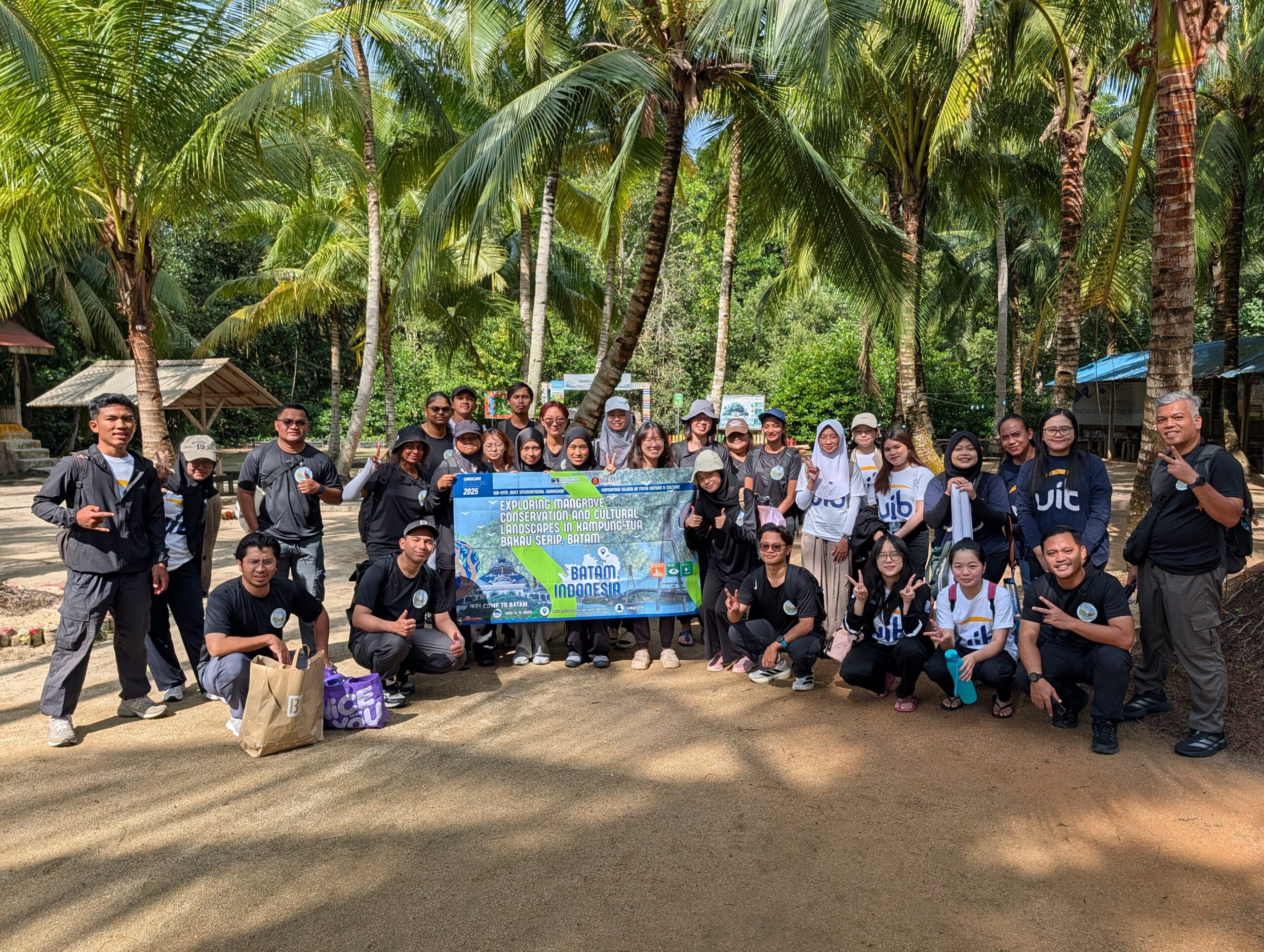
BATAM, Nov 12 – The Batam International University (UIB)–Universiti Teknologi Malaysia (UTM) Joint International Workshop 2025, titled “Mangrove Conservation and Cultural Landscape Exploration,” was held from 6 to 9 November 2025 at Kampung Tua Bakau Serip and Universitas Internasional Batam (UIB).
UIB-UTM workshop was brought together by participants from the Architecture Study Program, UIB and the Landscape Architecture students of the Faculty of Built Environment and Surveying (FABU), UTM. This workshop was coordinated by Dr. Lee Yoke Lai and Dr. Rohana Mohd Firdaus, who guided twenty undergraduate students from the mainstream programme and School of Professional and Continuing Education’s (SPACE) programme.
This four-day workshop was conducted as part of the course SBEZ 4922: Professional Mobility, with the primary aim of fostering students’ awareness of global citizenship and cross-cultural perspectives through outbound mobility experiences.
Planning for the workshop began in September 2025 and involved a series of coordination meetings between both universities, including the preparation of administrative documentation and the arrangement of financial and logistical matters. The workshop focused on mangrove conservation and the exploration of cultural landscapes on Batam Island, with key objectives to enhance students’ understanding of coastal landscapes, natural heritage, and sustainability, while promoting the protection of the natural environment.
Day 1 – Workshop Opening Ceremony and Input Lecture
The UIB–UTM Joint International Workshop commenced with a welcoming ceremony, marking the first formal academic collaboration between students and academic staff from both institutions. Opening remarks and institutional introductions were followed by a briefing on the overall workshop programme.
The workshop focused on documenting mangrove ecological and cultural values, analysing habitat conditions, and developing a conservation plan to support sustainable development aligned with Sustainable Development Goals (SDGs) 11, 13, and 15. An ice-breaking session encouraged interaction among participants and helped establish a collaborative and engaging atmosphere for four days of shared learning, creative exchange, and on-site exploration across Batam Island.
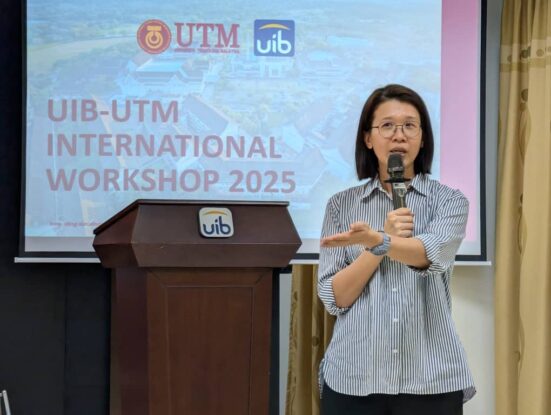
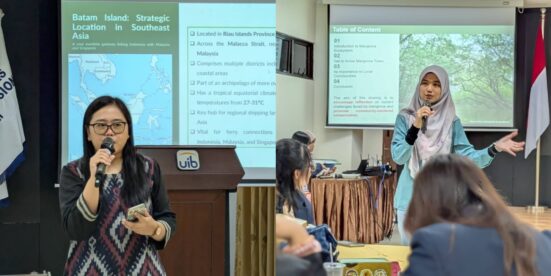
Following two engaging lectures, participants of the UIB–UTM International Workshop explored the unique context and development of Batam Island. Assoc. Prof. Dr. Stivani Ayuning Suwarlani introduced Batam City and Kampung Tua Bakau Serip, highlighting the island’s historical evolution, cultural heritage, vibrant communities, and rich natural resources.
In the second session, Dr. Rohana Mohd Firdaus brought mangrove ecosystems to life by explaining their ecological significance and demonstrating techniques for identifying mangrove species through their distinctive root structures. The lectures emphasised the importance of protecting coastlines and mangroves to sustain biodiversity, local livelihoods, and eco-tourism. Through these sessions, students gained a deeper appreciation of the delicate balance between people, place, and ecology within the mangrove environment.
Day 2 – Workshop Site Visit and Mangrove Planting
All workshop delegates participated in mangrove ecotourism (ekowisata mangrove) fieldwork at Kampung Tua Bakau Serip. The programme began with an introductory briefing by Amirati who shared insights into mangrove protection initiatives led by non-governmental organisations (NGOs). This was followed by a demonstration of mangrove planting techniques by Gari Dafit Semet, a dedicated mangrove activist.
Participants then took part in a mangrove species identification session guided by Amirati and Yulia, S.M., both local community members with extensive experience in leading mangrove ecotourism tours. The activities continued with a Bioblitz (biological survey) facilitated by Dr. Rohana Mohd Firdaus, during which participants used the iNaturalist application to document and map local flora and fauna. In addition, Azrul Ikhsan Mohd Salleh, a student participant, demonstrated the herbarium collection process, including plant sampling, pressing, and drying techniques.
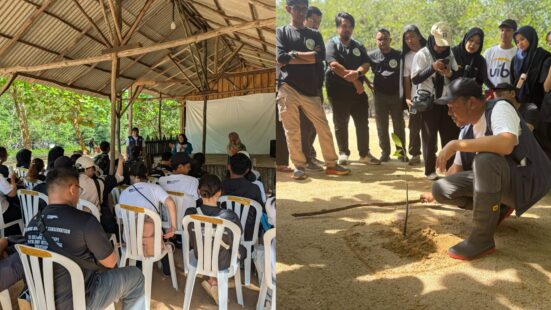
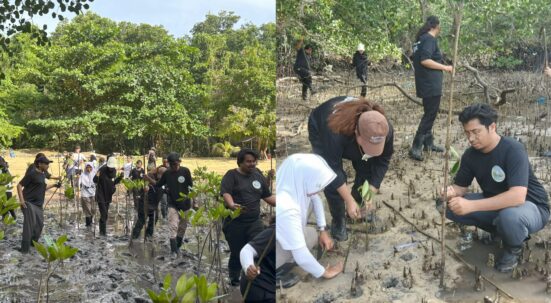
During the afternoon session, workshop participants enjoyed local delicacies prepared by local community and took part in prayers before resuming their field activities. Participants were then divided into eight groups, each assigned to specific locations for data collection and site observation, including plant sampling, fauna identification, and analysis of physical and ecological site characteristics.
The session continued with a mangrove planting activity, carried out safely as the tide receded and exposed the muddy mangrove zone. This hands-on experience reinforced the message, “Save the mangrove, save the environment,” inspiring participants to appreciate the importance of active conservation efforts.
Overall, the session aimed to deepen students’ understanding of mangrove conservation and to foster a strong sense of environmental responsibility among future landscape architects and architects.
Day 3 – Design Development, Presentations and Closing Ceremony
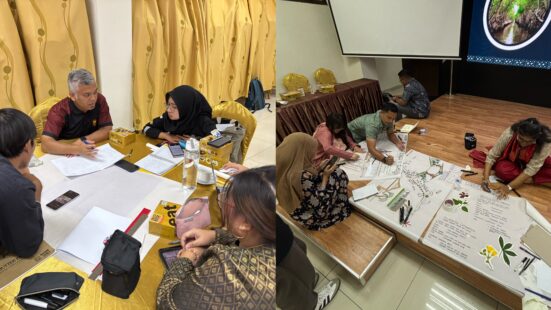
On the final day of the UIB–UTM workshop, participants focused on design development, synthesising insights gained from the mangrove fieldwork at Kampung Tua Bakau Serip.
Students from both universities worked collaboratively in groups to prepare presentations showcasing their proposed strategies for mangrove conservation, enhancement of landscape amenities, and ecological management.
The design proposals incorporated cultural interpretations that reflected the local village’s identity within its mangrove setting. Each group’s presentation highlighted a comprehensive site inventory, analysis, and synthesis, supported by a SWOT (strength, weakness, opportunities, and threats) analysis to clearly justify their proposed design and planning strategies.
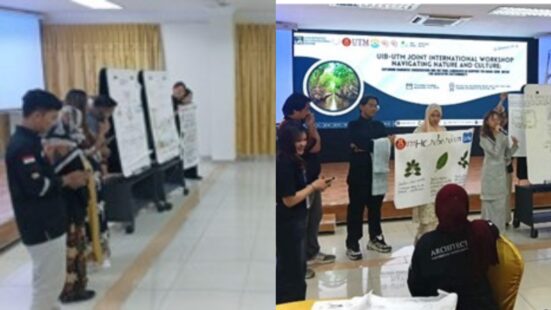
Each group presented their findings and proposed design concepts to workshop facilitators and peers, showcasing diverse approaches to landscape planning and the integration of ecotourism for sustainable development.
The presentation session fostered collaborative and experiential learning, while open discussions and shared perspectives enhanced participants’ understanding of design thinking, ecological sensitivity, and cross-cultural collaboration in addressing real-world environmental and community challenges. Lathifa Nursyamsu, a lecturer at UIB, coordinated the reflection sessions, during which she provided written feedback and suggestions using sticky notes. Selected participants also shared their reflections, highlighting key insights and meaningful experiences gained throughout the workshop.
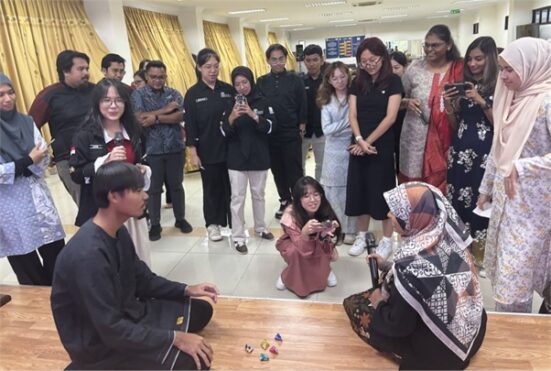
The workshop concluded with a lively cultural exchange activity organised by UTM students, featuring traditional games and a craft session that celebrated Malaysia’s multicultural heritage.
The programme ended with an exchange of appreciation gifts between the two universities, marking the successful completion of the workshop. Participants enthusiastically engaged in the activities, creating joyful moments that strengthened friendships and fostered cross-cultural bonds, reinforcing the spirit of collaboration that had been cultivated throughout the workshop.
Day 4 – Sekupang Taman Rusa
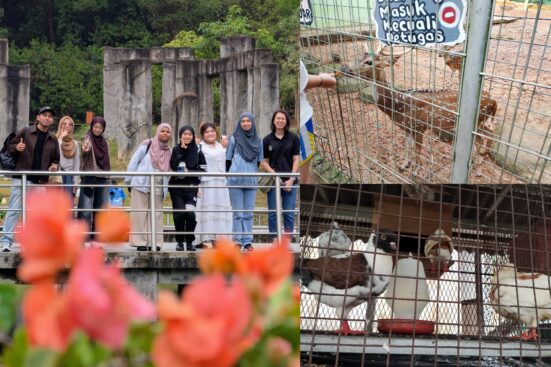
The visit to Sekupang Deer Park formed part of the workshop’s technical visit, designed to provide participants with practical, real-world insights into landscape architecture, urban planning, and ecological management. Unlike conventional classroom learning, technical visits allow students to observe and analyse existing sites, understand design and management strategies in practice, and reflect on how theoretical principles are applied in real-world contexts.
At Sekupang Deer Park, students examined how urban green spaces can successfully integrate recreational amenities, ecological design, and community engagement, offering a valuable model for sustainable and educational landscape planning. Such visits enhance experiential learning, enabling students to connect field observations with their design proposals and conservation strategies developed during the workshop.
Beyond serving as a platform for student outbound learning, the UIB–UTM International Workshop successfully strengthened academic and institutional networking between the two universities. The UIB–UTM International Workshop 2025 was a transformative experience that enabled participants to gain hands-on expertise in mangrove conservation and cultural landscapes, while fostering lasting friendships through meaningful cross-cultural exchange.
The collaborative journey bridged disciplines within the built environment, reinforcing a shared commitment to environmental stewardship and sustainable development. We extend our deepest gratitude to the FABU and UTM International for their generous sponsorship, as well as to our gracious hosts at UIB, particularly Assoc. Prof. Dr. Stivani Ayuning Suwarlani, Theodesia Lady Pratiwi, and Lathifa Nursyamsu, for their warm hospitality and invaluable support. The bonds forged and lessons learned through this workshop will undoubtedly continue to develop academic and learning experiences of participants at UTM.
